
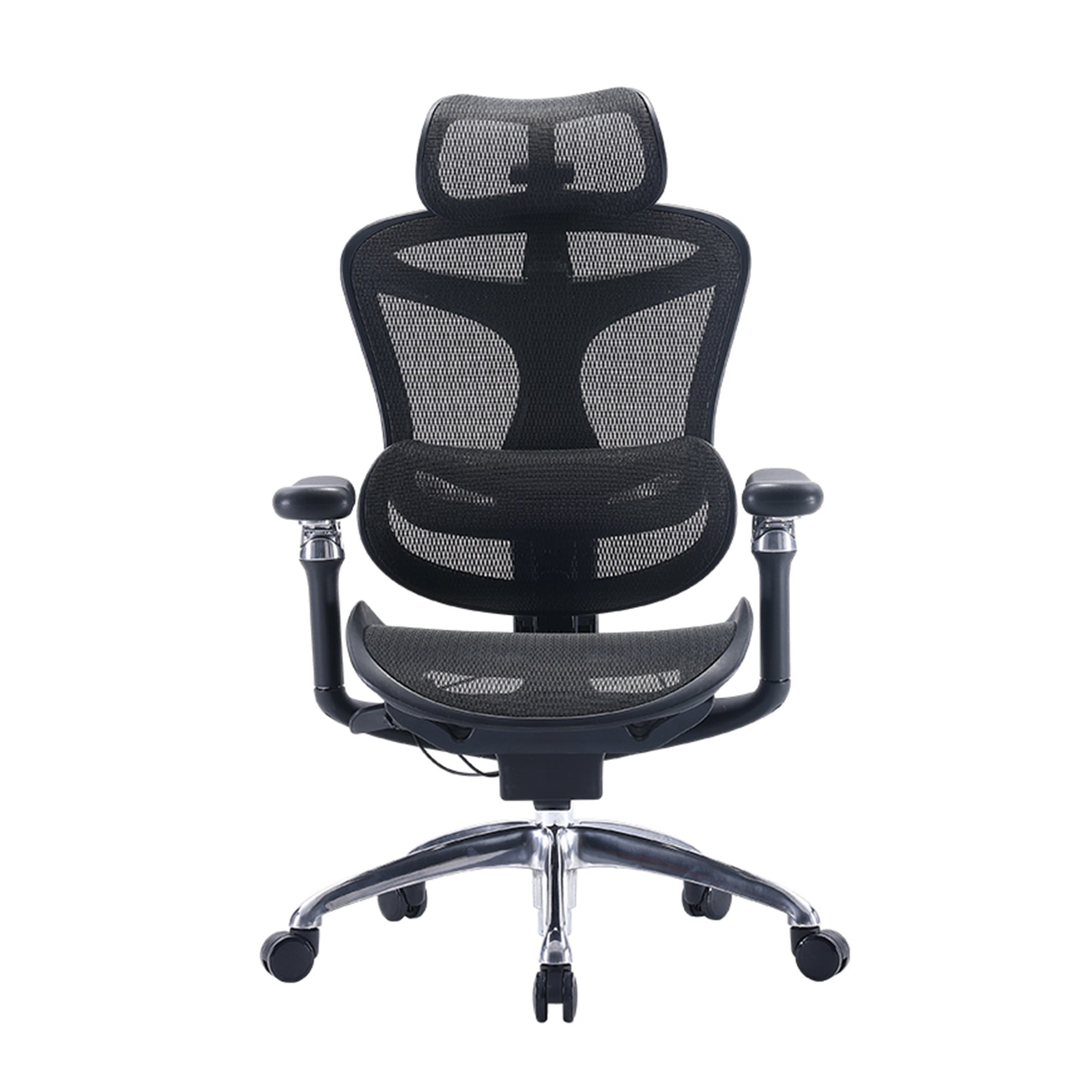
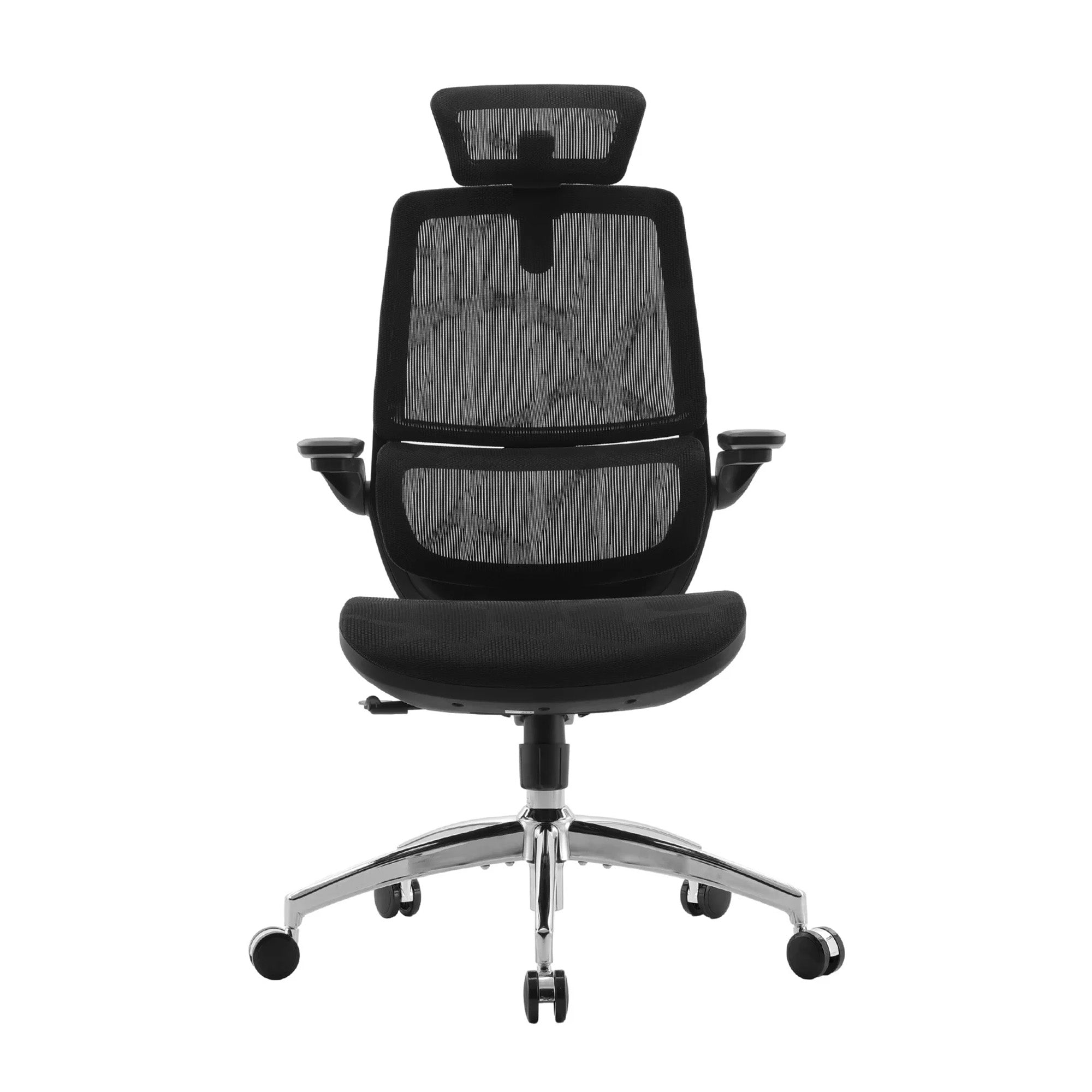
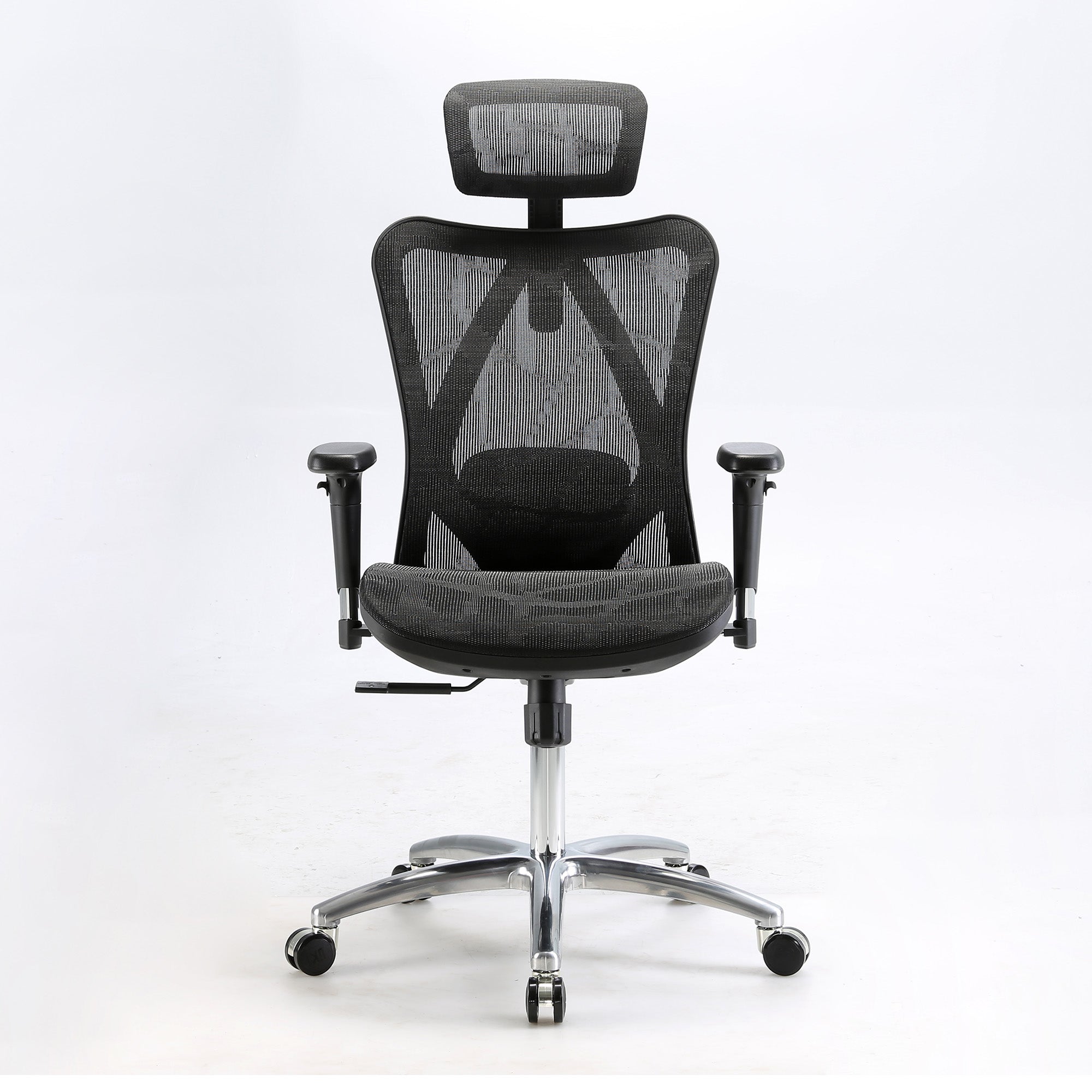
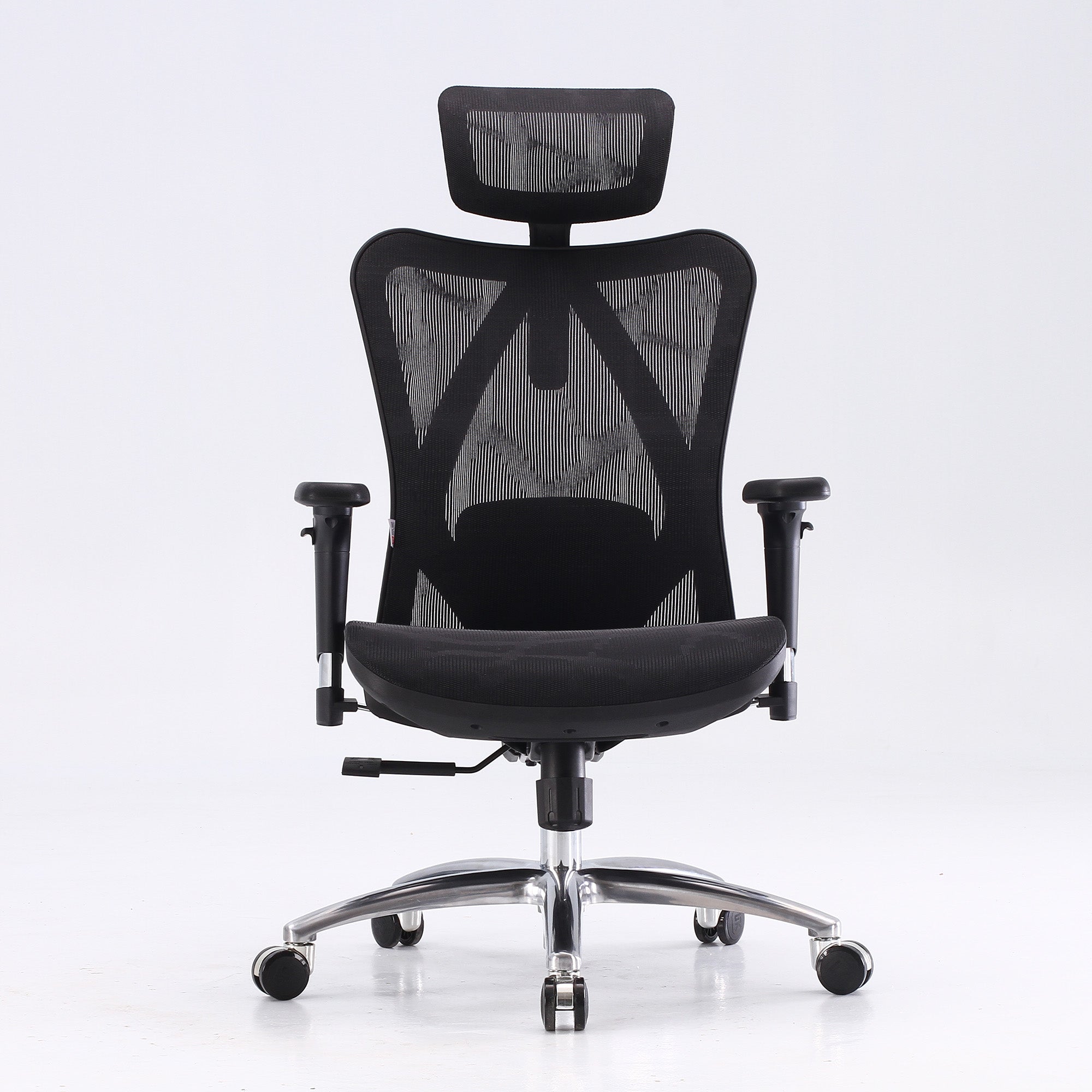

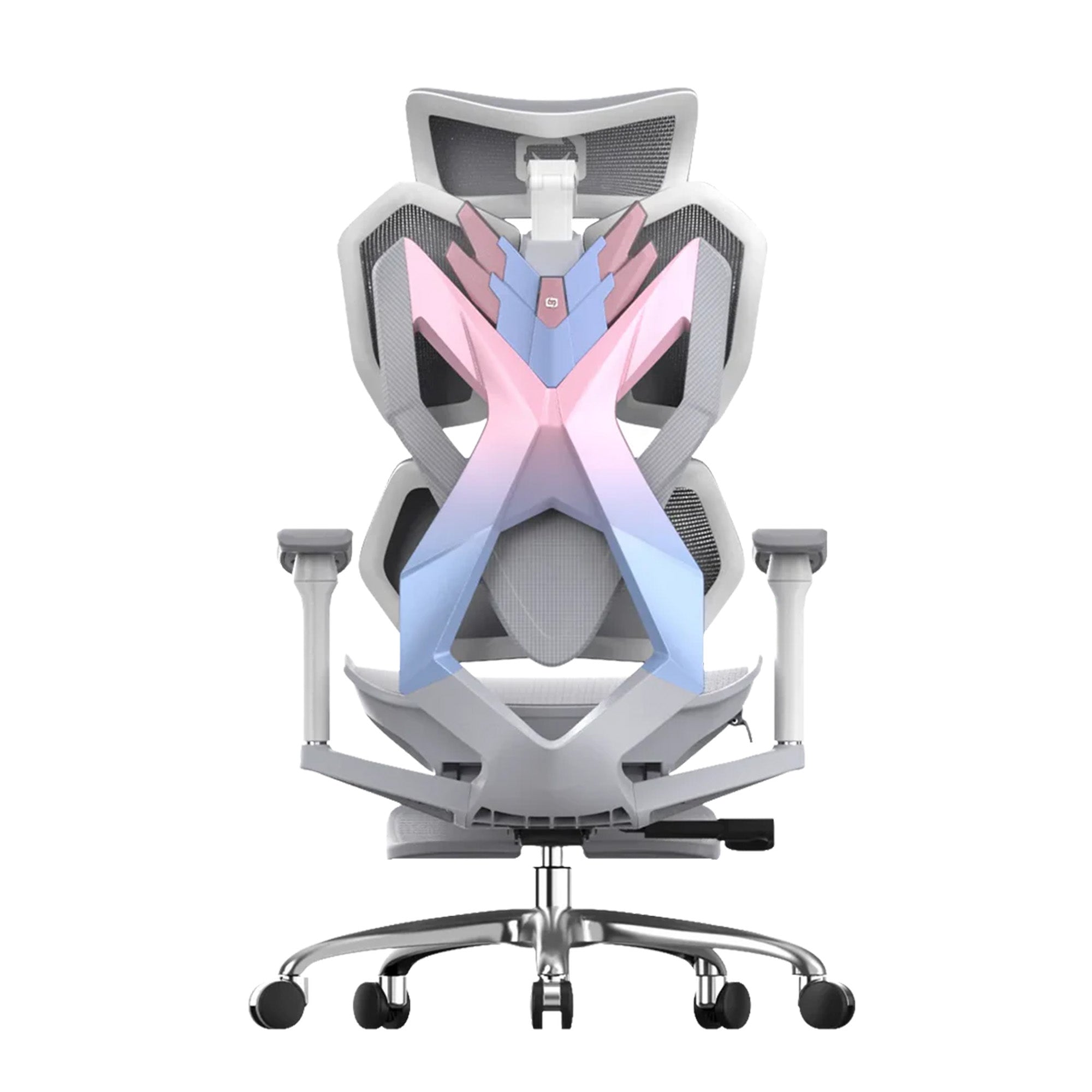
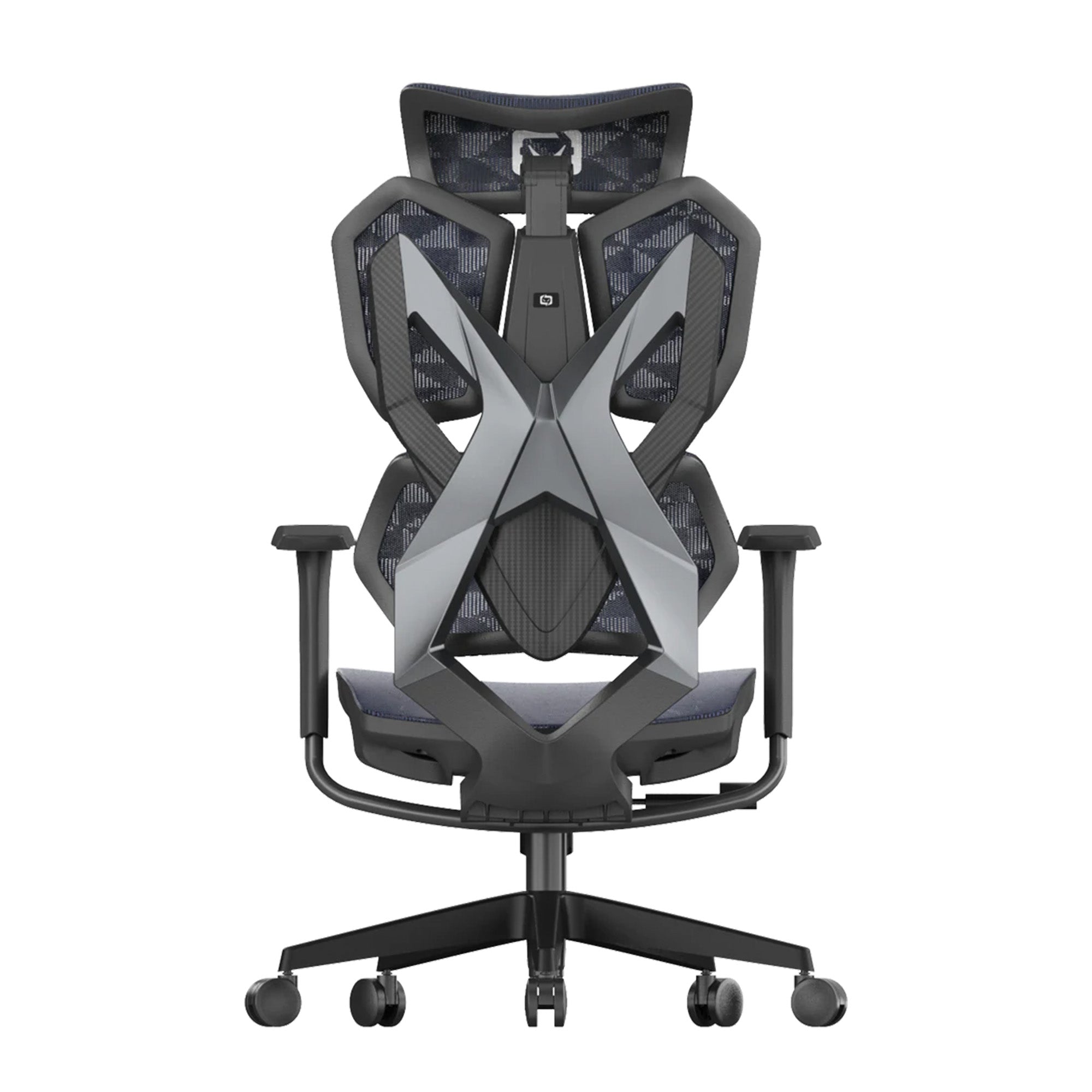

1. Adjusting Seat Cushion Height for Proper Foot Placement
The correct sitting posture on an ergonomic chair requires adjusting the seat cushion height so that your feet lie flat on the ground and your thighs form a 90° angle.
2. Setting Seat Cushion Depth to Support the Thighs
The correct seat cushion depth must be adjusted so that you can place your hips on the innermost part of the seat cushion, and adjust the depth of the seat cushion appropriately so that the seat cushion can effectively support more than 2/3 of the area of the thigh. The bending angle between the thigh and the calf is 90°.
3. Correct Armrest Height to Prevent Shoulder Pain
The correct height of the armrest should be adjusted to make the angle between the arm and the elbow 90°. At this time, the arm hangs down naturally, and we feel comfortable without any feeling of hanging shoulders. Long-term unsupported or poorly supported arms can cause shoulder pain or frozen shoulder, which significantly impacts health.
4. Proper Back Cushion Angle for Full Back Support
The back cushion with a correct angle should enable the entire back to attach to it completely. The back spine can be relaxed to a certain extent, and the fatigue of the back spine can be effectively relieved, and chest and back pain can be reduced and prevented.
5. Adjusting Lumbar Support for a Healthy Spine
The correct waist height should be adjusted to the third, fourth, and fifth lumbar spine because when the human body is in a sitting position, except for the legs and hips, the entire person's weight is borne by the lumbar spine. Therefore, the correct adjustment of the waist height helps prevent tendonitis or fasciitis, intervertebral disc herniation, spine sliding, lumbar muscle sprain, degenerative spondylitis, sciatica, etc.
6. Ensuring Seat Cushion Slides Smoothly with Back Support
When we adjust the seat cushion depth, the seat cushion needs to slide out, relying on the strength of the hips. At this time, the back needs to rely on a fixed back cushion to force the hips. If the back cushion is not in the locked state, the back doesn't have the strength to rely on, making the hips unable to exert force, and the seat cushion does not slide smoothly.
7. Ergonomic Armrest Pads to Protect Hands and Elbows
The armrest pad with a correct angle on the ergonomic chair should be able to provide moderate support to your hand or elbow joint anytime and anywhere. Long-term lack of proper authorization on the hand or elbow joint can easily cause carpal tunnel syndrome and elbow joint syndrome. Of course, it is related to the protection of the cervical spine.
8. Headrest Height Adjustment for Cervical Spine Support
The correct height of the headrest should be adjusted to the third to the seventh section of the cervical spine so that the cervical spine can be adequately supported, which effectively relieves the fatigue of the cervical spine and prevents bone spurs or chronic spine degeneration.
9. Lean Back Elasticity Adjustment for Comfortable Recline
The correct adjustment of the lean back elasticity of the back cushion should be based on the weight after the back is relaxed to adjust the lean back elasticity properly. If the elasticity is greater than the weight of the back, it will cause that it is challenging to recline, which will cause discomfort. If the elasticity is less than the weight of the back, it will produce a feeling of insufficient support or a sense of insecurity because of inadvertently rapid backward leaning.
Frequently Asked Questions
Proper posture in an ergonomic chair involves sitting with your feet flat on the floor, knees at a 90-degree angle, and thighs parallel to the ground. Your lower back should be supported by the lumbar cushion, shoulders relaxed, and elbows close to your body. Using a SIHOO Australia ergonomic chair ensures these adjustments can be customized for your body, helping you sit comfortably and safely.
The best sitting posture keeps the spine neutral and relaxed. Hips should be positioned at the back of the seat, with the seat supporting at least two-thirds of the thighs. Knees should bend at approximately 90°, and feet should stay flat on the floor or on a footrest. Shoulders remain relaxed, elbows close to the body, and forearms supported. The backrest should be slightly reclined at around 100–110° to relieve lumbar pressure, and the head should stay aligned with the spine without leaning forward.
Seat height should allow feet to rest flat and knees at a right angle. Seat depth must support most of the thighs while keeping the hips at the back. The backrest angle should allow full contact with the spine while slightly reclining for comfort. Lumbar support should align with the lower spine’s natural curve, around the third to fifth lumbar vertebra. Armrests need to be adjusted so elbows are at 90° without causing shoulder tension. The headrest should support the cervical spine from C3 to C7, and the recline tension should feel stable, supporting the back without resistance or insecurity.
Ergonomic posture is a sitting position designed to reduce strain, maintain joint alignment, and support the natural curves of the spine while sitting for long periods. It promotes comfort, health, and productivity by reducing pressure on the back, neck, shoulders, and hips. Ergonomic posture also encourages small movements throughout the day, which help prevent musculoskeletal discomfort, fatigue, and other posture-related problems.
Proper setup of an ergonomic chair is essential for long-term health because it prevents chronic pain and injuries related to poor posture. A correctly adjusted chair supports the spine, reduces muscle fatigue, and minimizes pressure on joints, which can help prevent conditions such as sciatica, tendonitis, or herniated discs. Additionally, proper ergonomics improve circulation, reduce discomfort during long work sessions, and increase focus and productivity by allowing the body to remain supported and relaxed.
Shop products from this article


Save up to 40% this Oktoberfest Sale. Pay in 4 interest-free instalments with Afterpay.
SHOP NOWRecommended Posts


Ergonomic Chairs Vs. Traditional Chairs
Sep 28, 2026