
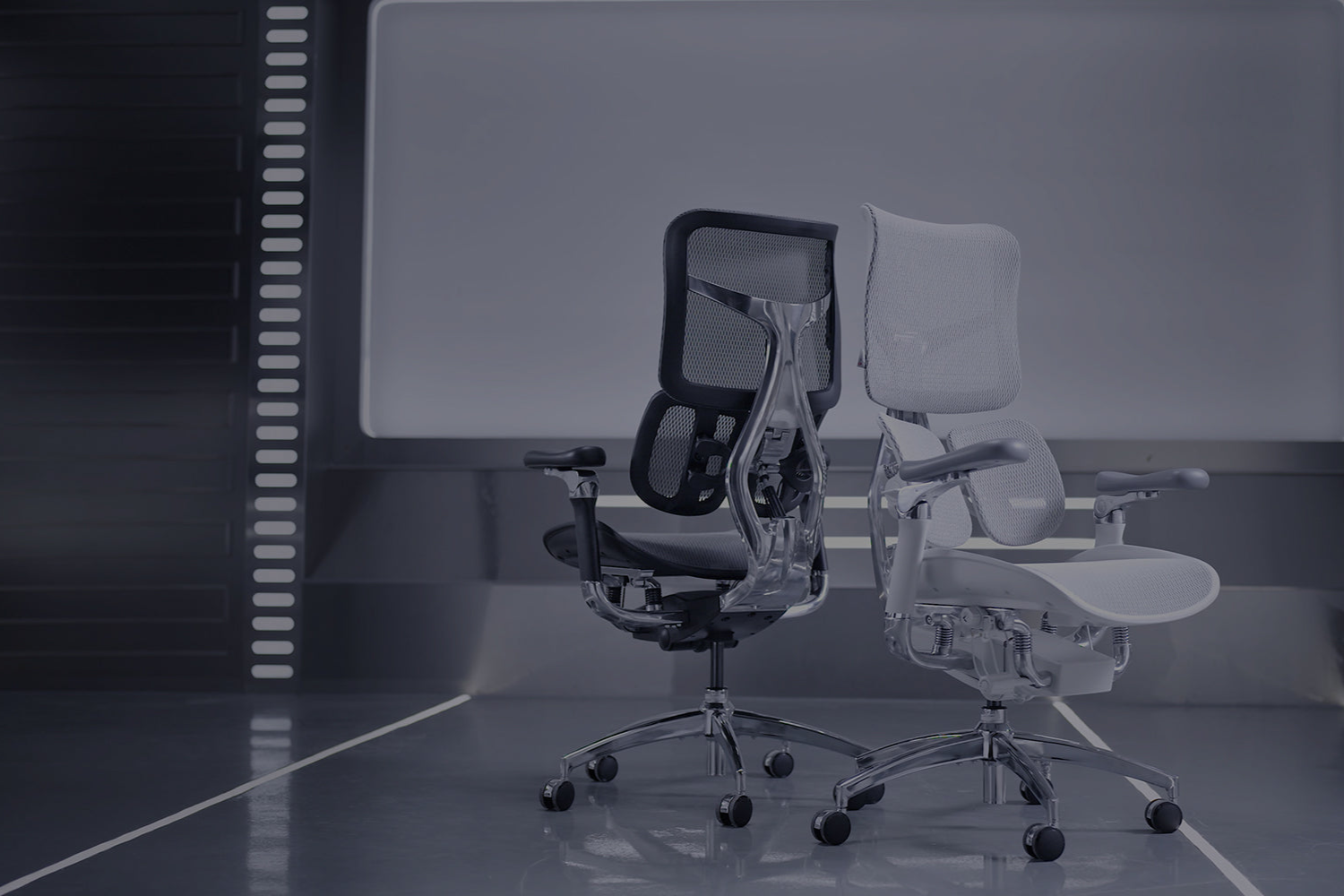
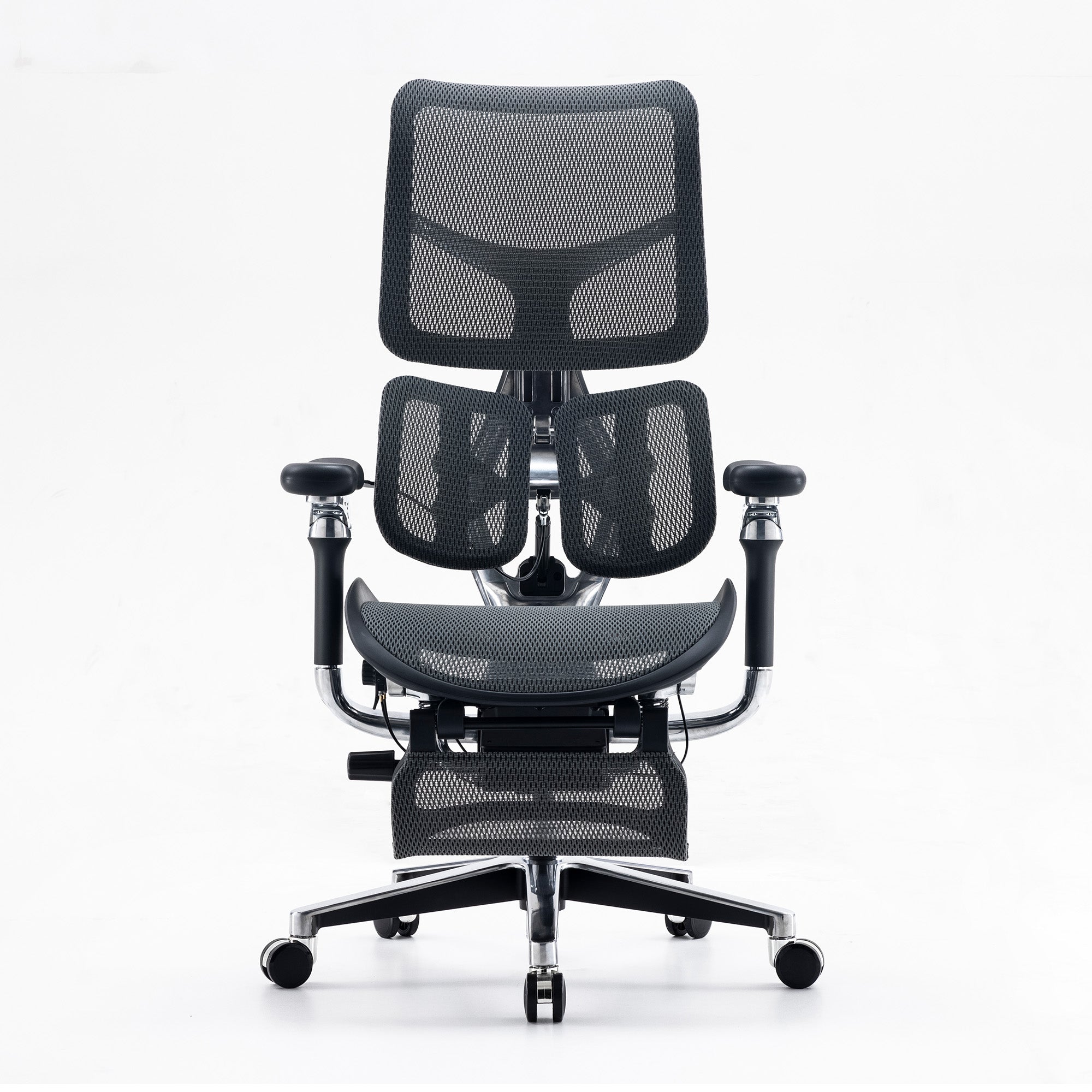
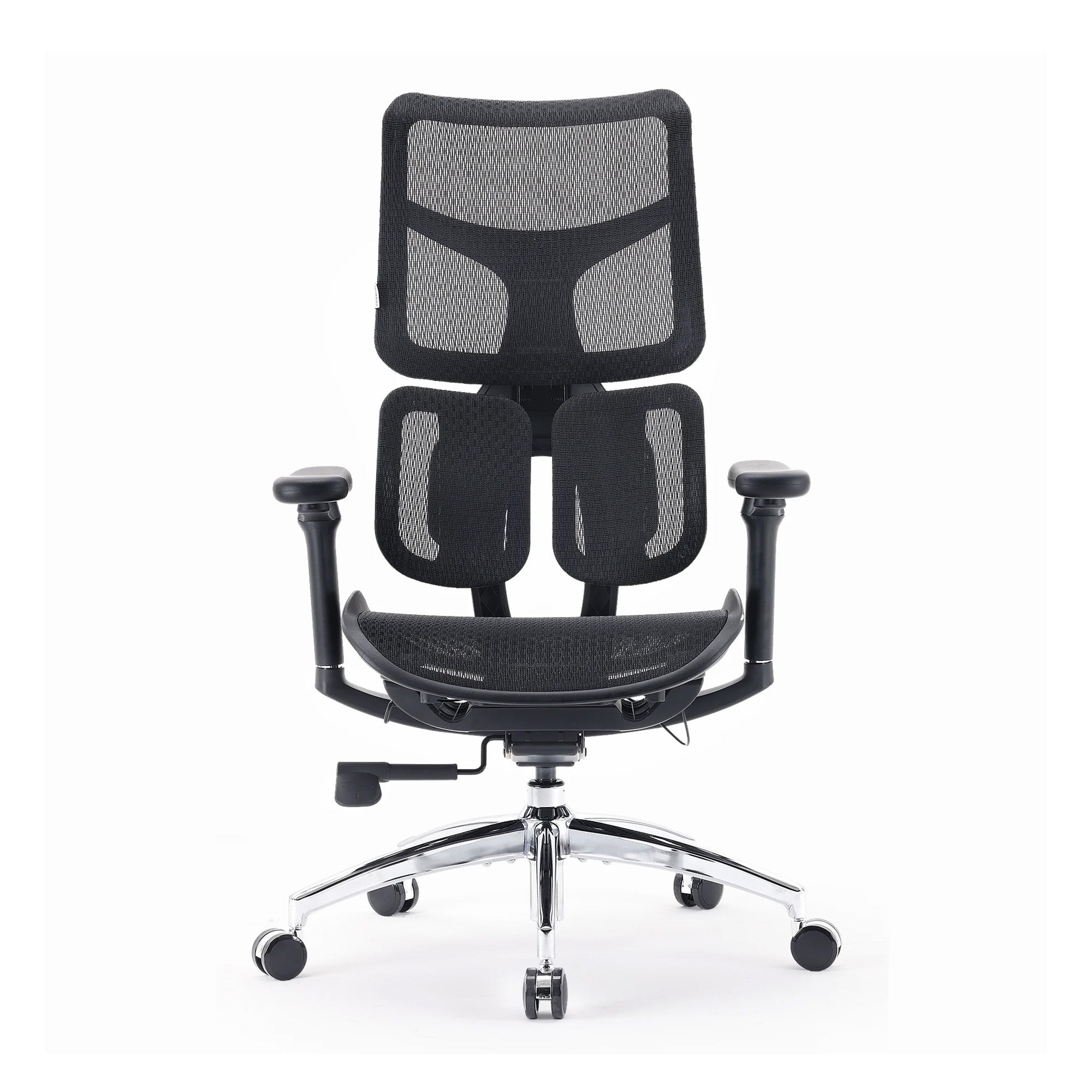
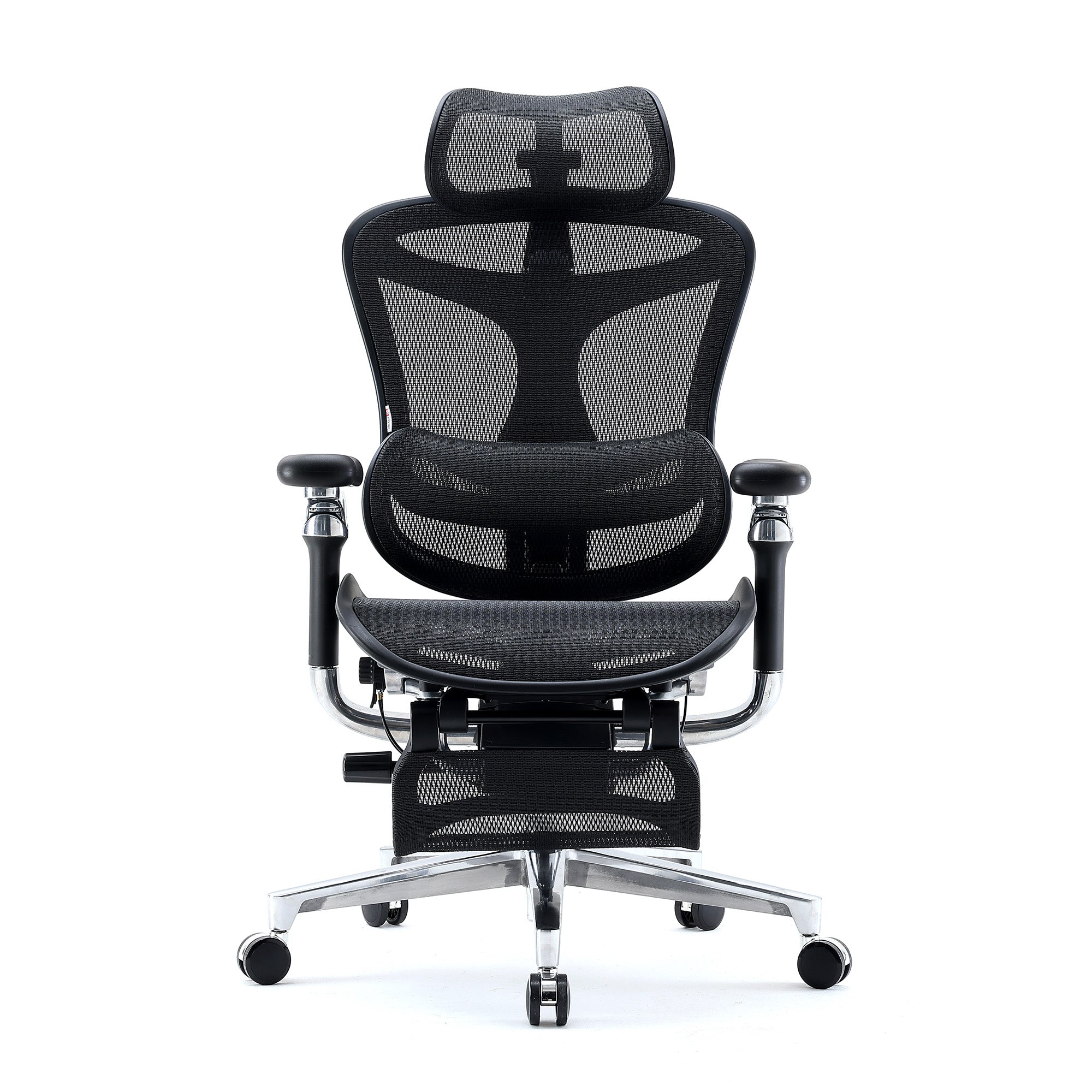
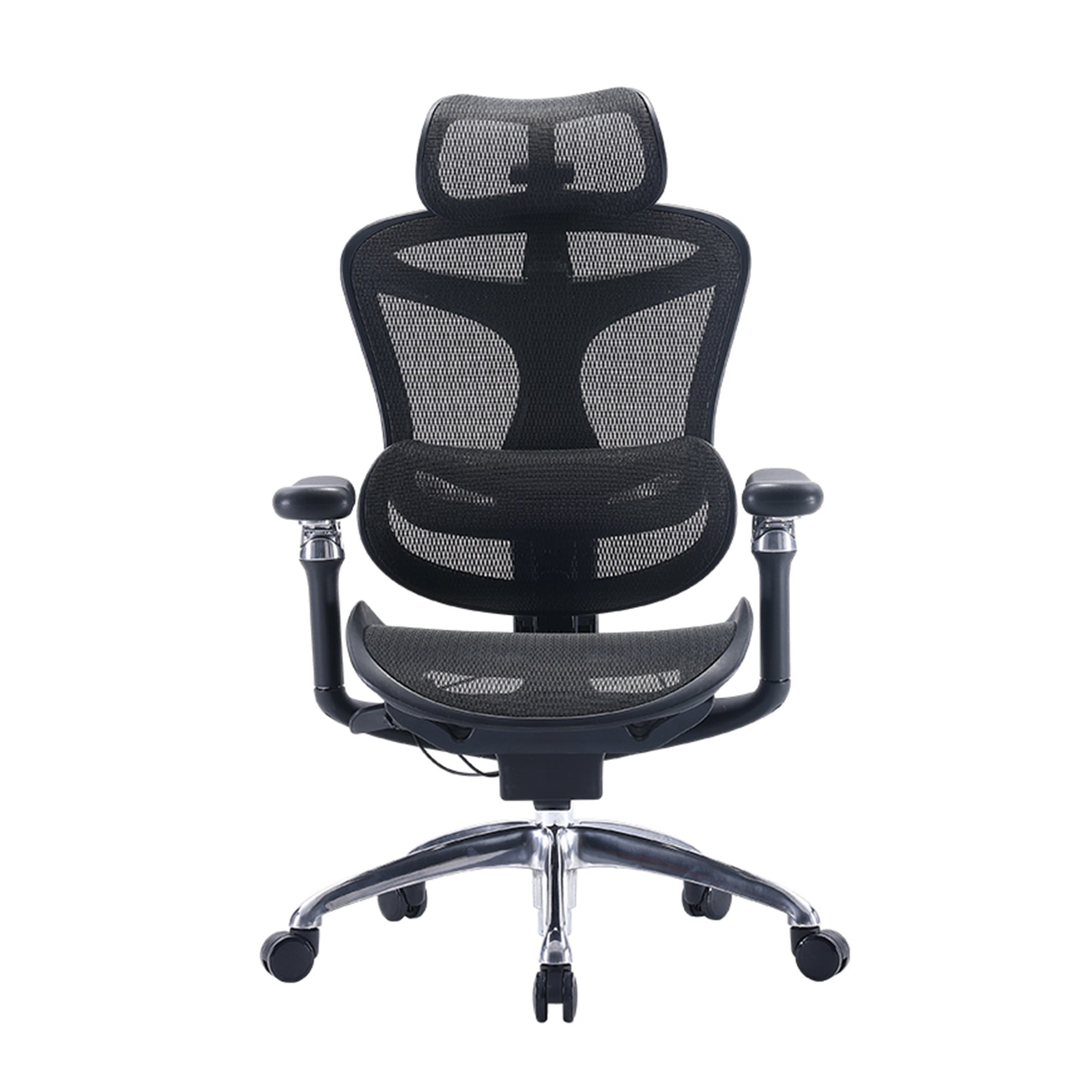
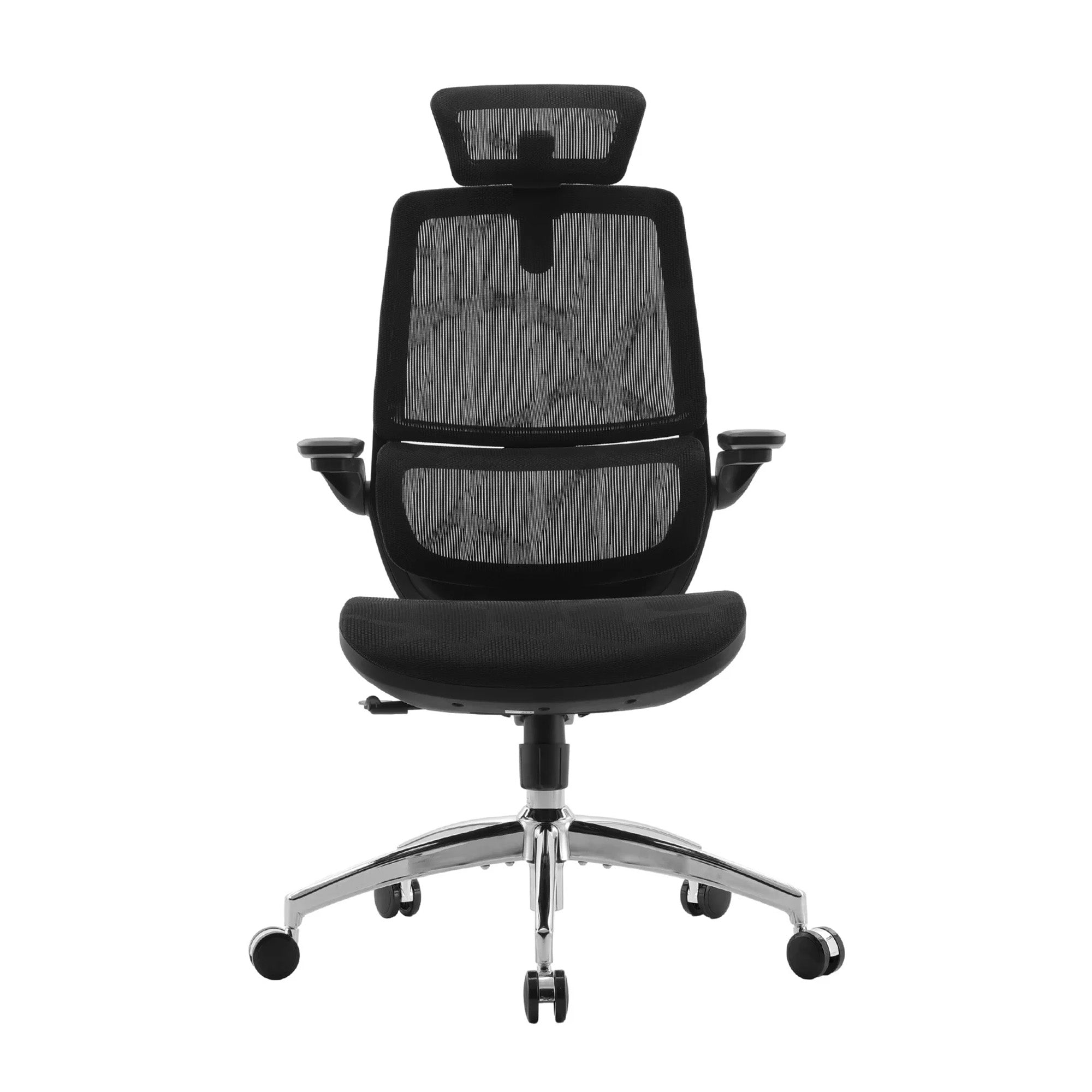
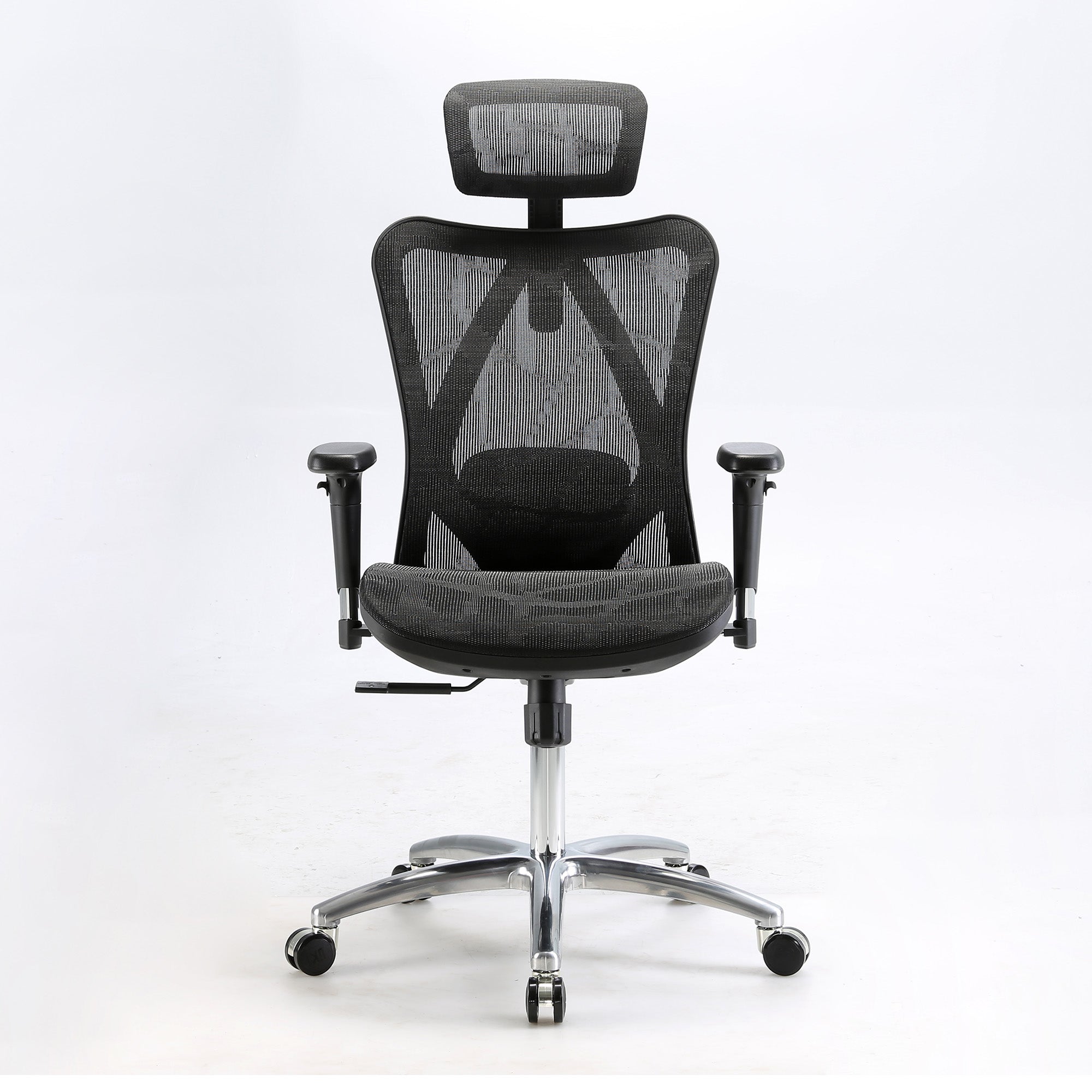
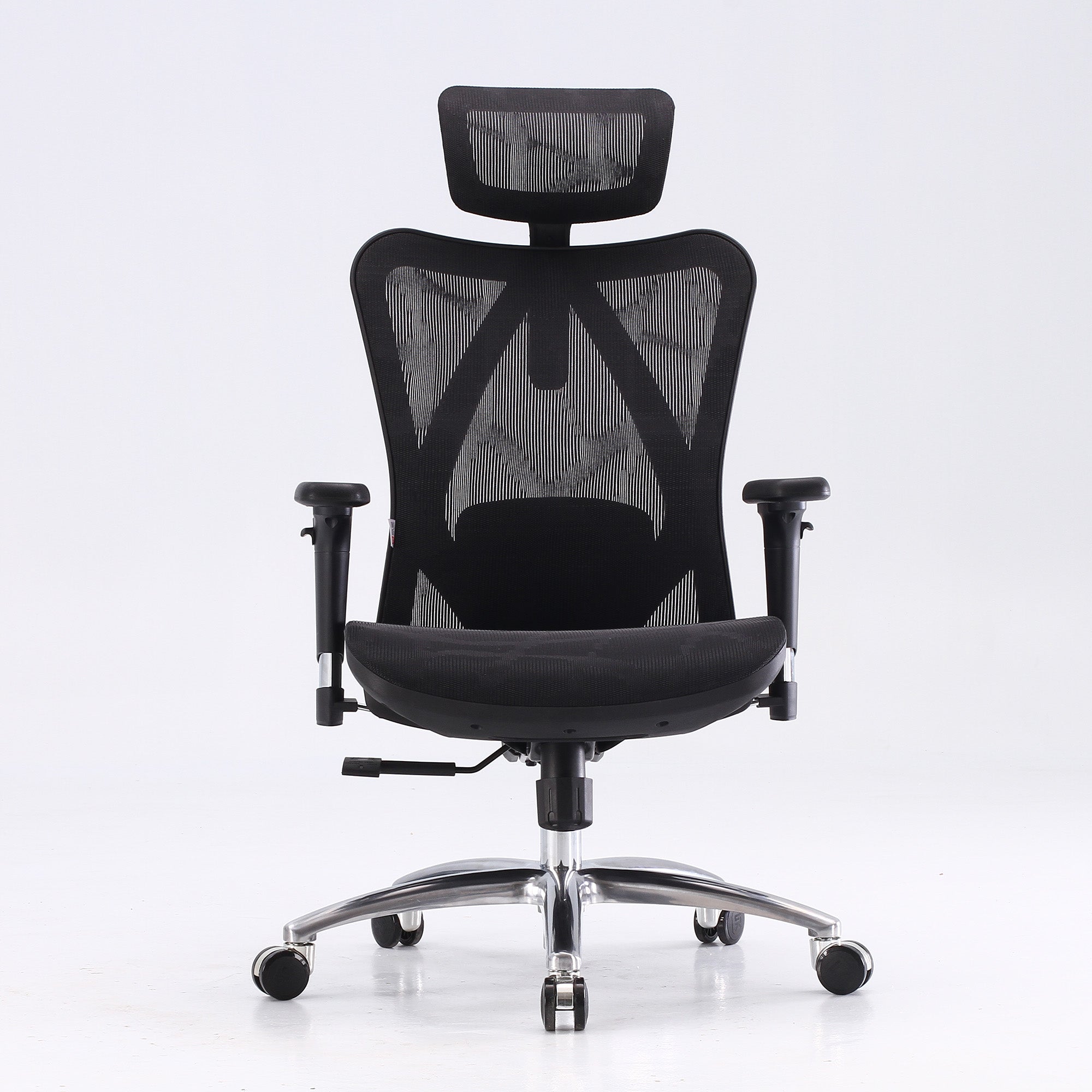
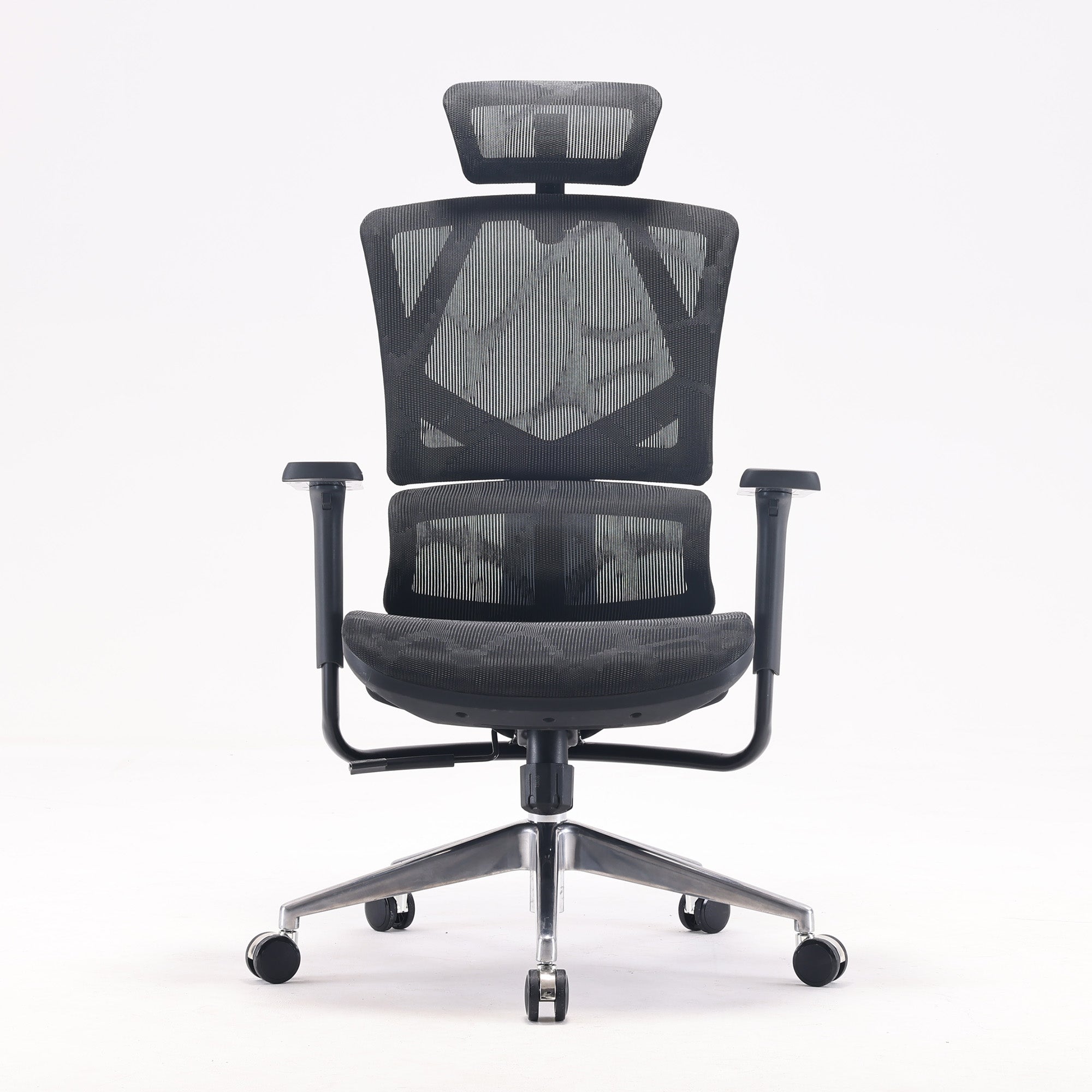
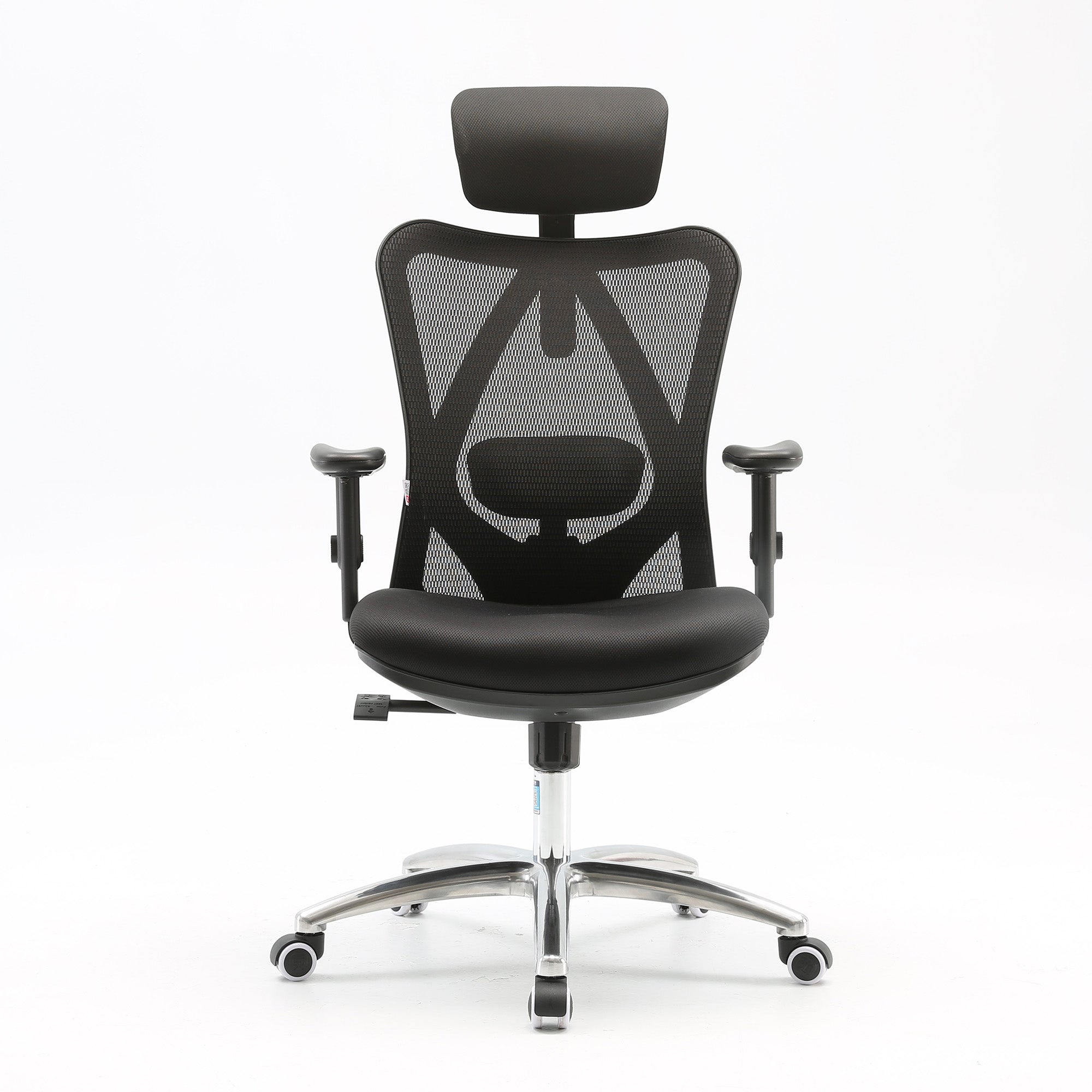
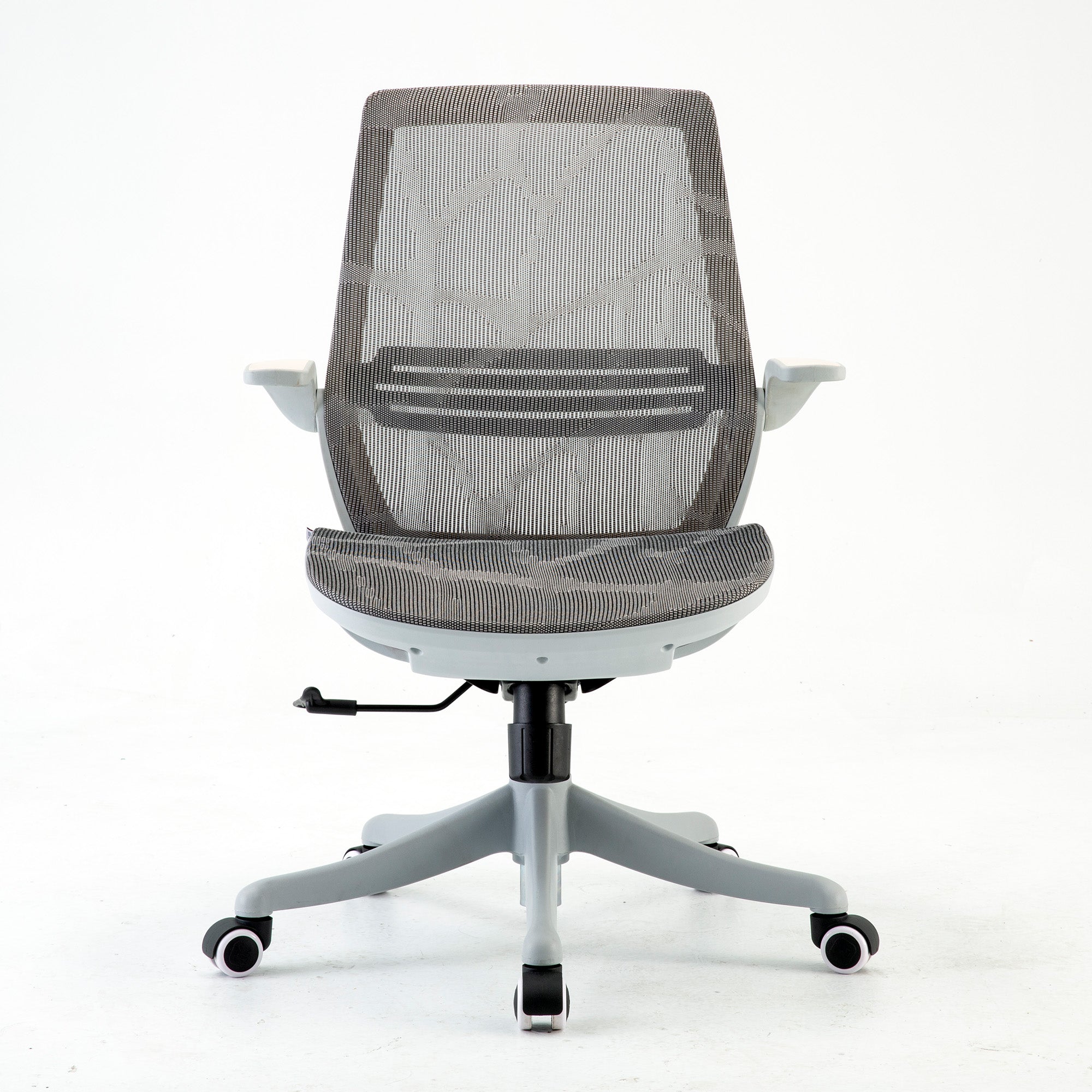
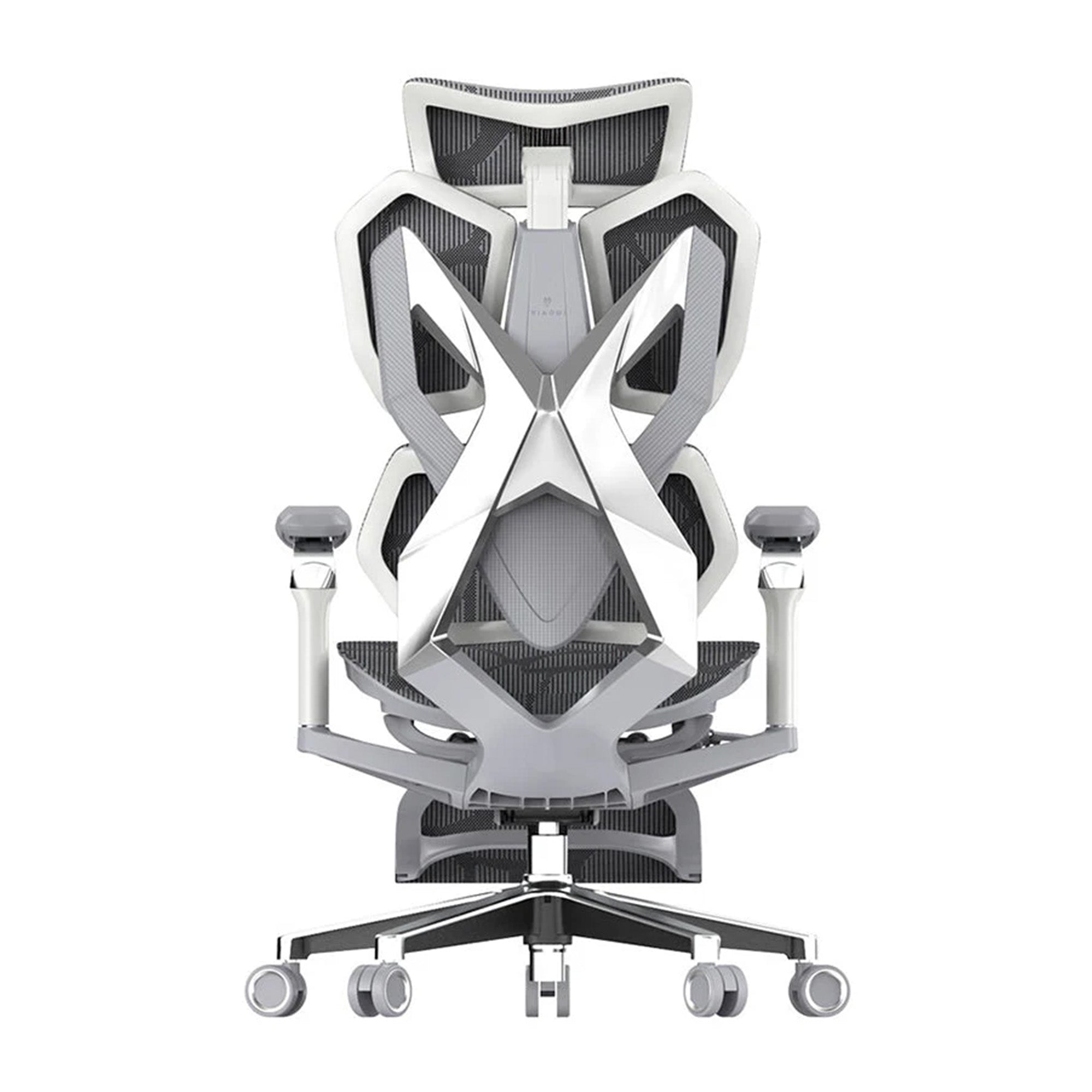

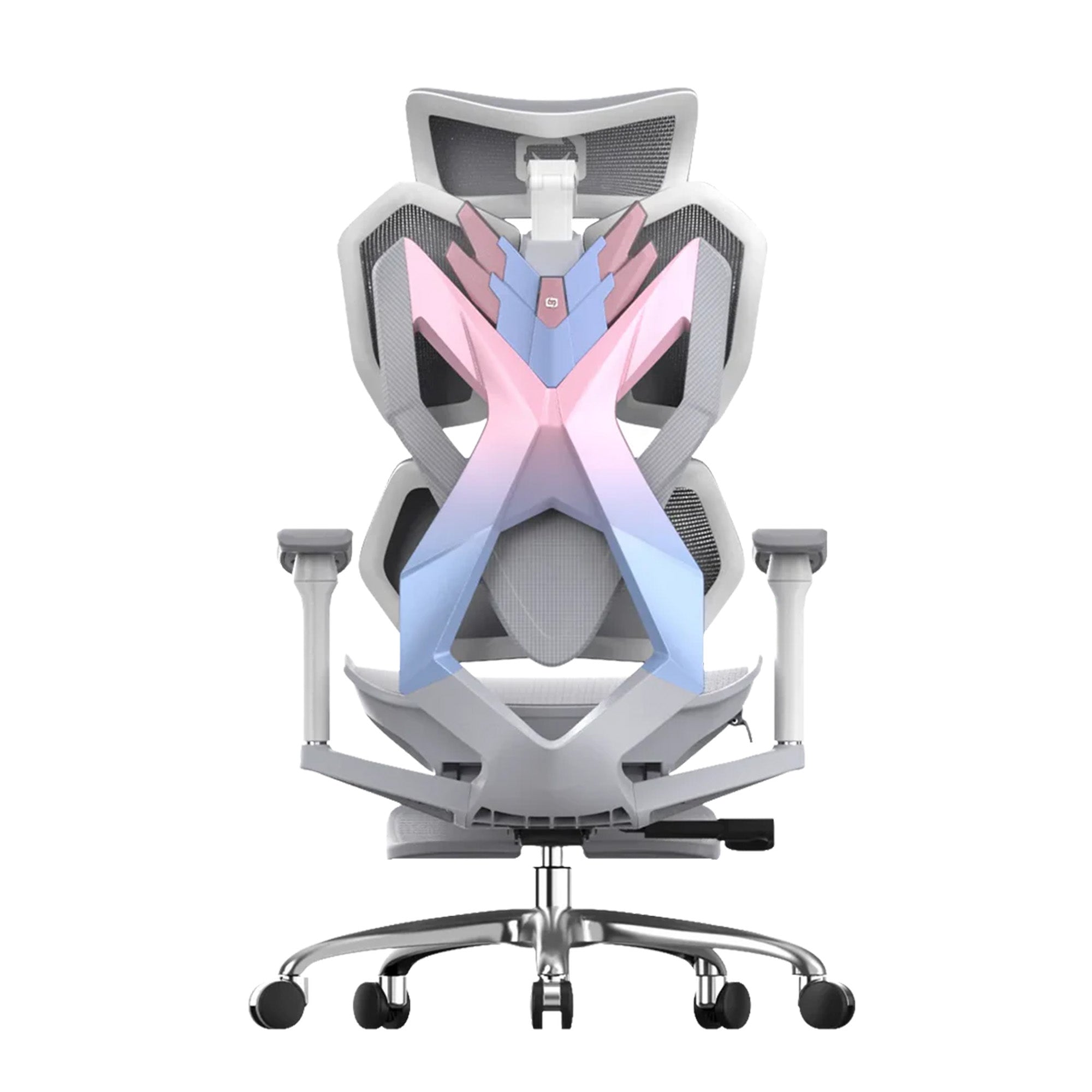
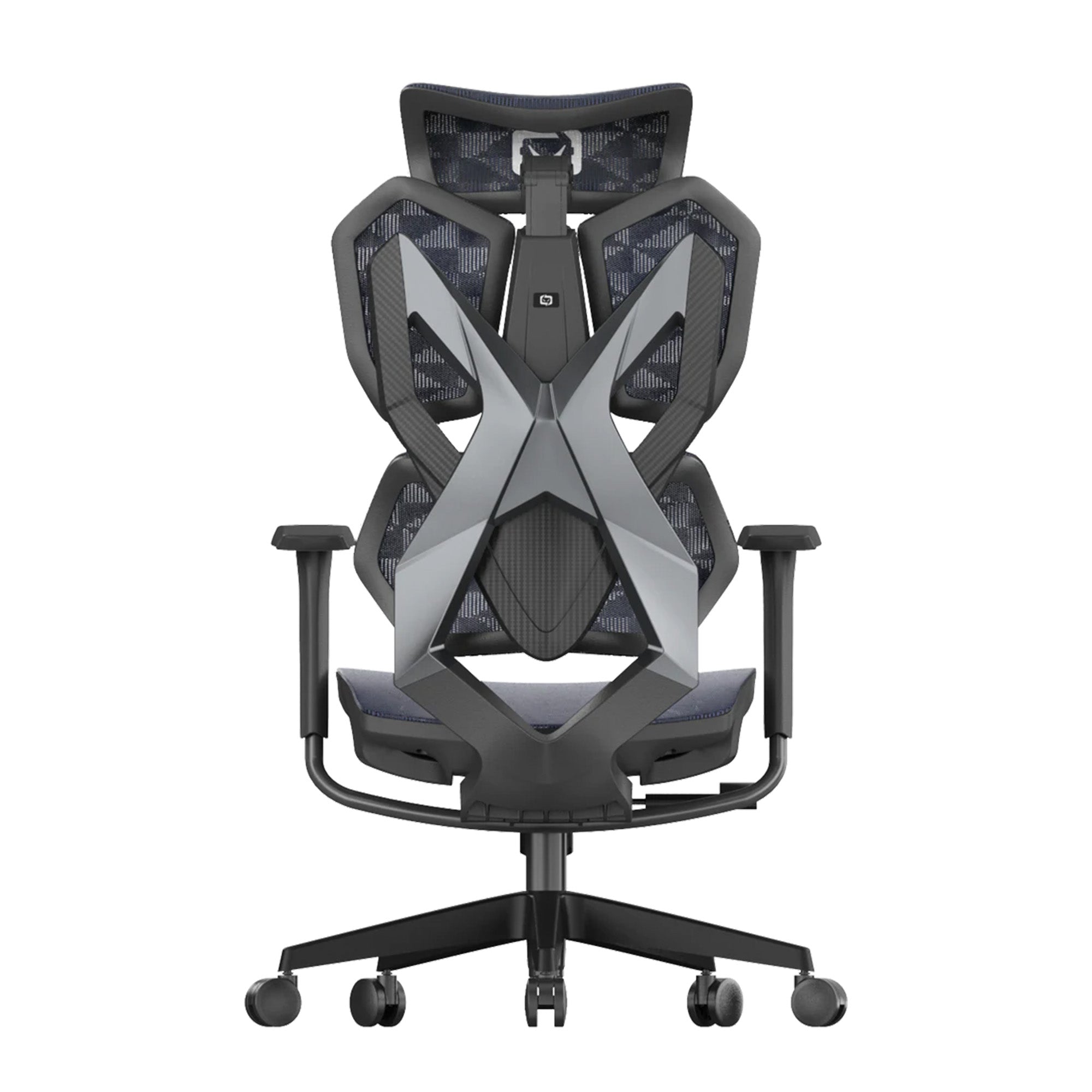

Ergonomic chairs stand out from ordinary office chairs with their wide range of sizes, adjustable features, and thoughtful structural design tailored to support different body types. Unlike typical one-size office chairs, ergo chairs offer customizable elements such as the backrest, lumbar support, waterfall-shaped cushions, fully adjustable armrests, and seat depth options that enhance comfort and promote healthy spine alignment. Premium models also use high quality materials, certified pneumatic bars, and different wheel types suited for various floor surfaces, making them more supportive, safer, and more versatile for everyday use.
1. Sizes of the Ergo Chair
Ordinary office chairs usually only have one size. Because the height and width of different office chairs are not the same, the suitable body shape of a certain chair depends on the size of the relevant product. In contrast, the ergo chair has a variety of adjustment functions, so the range of suitable body shape is wider, and some ergonomic chairs will provide multiple sizes to choose from, such as Herman Miller's Aeron. But not all ergonomic chairs can meet all human body types, such as Humanscale's Different World ergonomic chair, which is not suitable for tall and fat people to sit on.
2. Structures of the ergo chair
Headrest:
It can be found that many ergonomic chairs do not have a headrest. Why? The headrest function is nothing more than the support of the head when the rest is leaning back, and the function of the headrest is zero under the state of working and sitting usually. Therefore, the presence or absence of a headrest is not the key to the ergo chair, but it is better than nothing. The ergo chair of the Freedom series manufactured by Humanscale is equipped with the most comfortable headrest, which will be explained in detail below.
Chair back:
The chair back can be said to be the main part of the ergo chair. This is also the most important difference from ordinary office chairs. It is not a difference that a simple curve can remove. The material used, the fit of the human spine, and the method of reclining adjustment are the keys to the chair's back. A good chair back should enable people to feel relaxed and comfortable, without pressure, weight, and stuffiness.
Lumbar support:
Most ergonomic chairs will have adjustable lumbar support, and of course, there are some products without lumbar support. Adjustable lumbar support is divided into up and down adjustment, left and right, strength, or asymmetric strength. The adjustment method is not the most important, and the important thing is whether the lumbar support + chair back can play a perfect role in supporting the spine and lumbar spine.
Cushion:
Different materials have a big difference in the sitting feeling of the SIHOO ergonomic chair in Australia. I have talked about the main categories above, and I will not repeat them here. The "high-end" ergo chairs are mostly made of patented materials, so the sitting feelings are even more varied. In addition to the material of the seat cushion, the ergonomic chair is very different from the ordinary office chair in terms of the shape design and the adjustment method of the seat cushion. The front end of the ergonomic chair cushion is usually waterfall-shaped to reduce the pressure on the hip and leg nerves and blood vessels when compressed. Secondly, the seat depth adjustment can be divided into front and rear adjustment (without changing the length of the cushion, but changing the distance to the back of the chair) and curling adjustment (not changing the distance to the back of the chair, but changing the length of the cushion). Steelcase's Leap, Gesture, etc., use front and rear adjustments, while Herman Miller's Embody and Mirra2 use curled adjustments
Armrest:
Whether the armrests are connected to the back of the chair is related to the overall comfort of the ergo chair. Only when they are connected, the armrests can maintain the same angle with the back of the human body when reclining so that the arms can be comfortably supported. At the same time, the front, rear, left, and right adjustment of the armrest is also very important. Herman Miller recently launched a new fully ergonomic chair named "Cosm." Whether the original vane armrest can become a classic will not be answered until it is officially released.
Chair leg:
The legs of the ergo chair for sale usually use five-star feet, while ordinary office chairs also use four-legged, arched feet, etc., in addition to five-star feet. There are three main materials for the chair's legs: nylon, steel, and aluminium alloy. Strength: aluminium alloy>steel>nylon. As far as the human body's weight is concerned, the chair legs made of nylon are sufficient to bear.
Pneumatic bar:
The office chair exploded because of the use of inferior pneumatic bars. The more well-known brands of pneumatic bars are South Korea KGS, South Korea SHS, etc. According to my discovery, most of the famous ergo chairs use the pneumatic bars of South Korea SHS. As long as other brands of pneumatic bars have passed quality certification, there is no problem with safety.
Chair wheel:
Most ordinary office chairs use hard wheels, while usually there are two chair wheels for the ergo chair(hard wheels and soft wheels) to choose from. The hard wheels are suitable for carpets, and the soft wheels are ideal for wooden floors and porcelain floors.
Frequently Asked Questions
Ergonomic chairs are specifically designed to support the natural alignment of the spine and adapt to various body types, whereas ordinary office chairs typically offer a fixed shape with minimal adjustability. Ergonomic chairs feature adjustable lumbar support, seat depth, armrests, and sometimes headrests, helping to reduce strain on the back, neck, and shoulders during prolonged sitting. Ordinary chairs generally lack these customisable elements, making them less supportive and less suitable for long-term use.
A chair can be considered ergonomic if it offers features that support healthy posture and comfort. Key indicators include adjustable seat height and depth, flexible lumbar support, multi-directional armrests, and a backrest that conforms to the spine. Additionally, ergonomic chairs often have a waterfall-shaped seat edge to relieve pressure on the legs and may offer reclining mechanisms and high-quality materials designed to improve circulation and reduce fatigue.
Yes, ergonomic chairs provide better support and comfort compared with ordinary chairs, particularly for long hours of sitting. They help maintain proper posture, reduce the risk of musculoskeletal disorders, and alleviate common issues like back pain, neck strain, and shoulder discomfort. Ergonomic chairs also improve focus and productivity by keeping the body comfortable, which reduces the need for constant adjustments or breaks due to discomfort.
A task chair is often smaller, lighter, and designed for shorter periods of use, typically featuring limited adjustability. Ergonomic chairs, on the other hand, are built for extended sitting with extensive customization options for lumbar support, seat depth, armrests, and back tilt. While task chairs may suffice for short tasks, ergonomic chairs are superior for long-term health, comfort, and productivity.
When selecting an ergonomic chair, the most important features include adjustable lumbar support, seat height and depth, multi-directional armrests, a supportive backrest, and a stable five-star base with smooth-rolling casters. Breathable, durable materials also enhance comfort, and additional features like headrests, reclining mechanisms, and high-quality pneumatic bars improve long-term support and overall sitting experience.
Shop products from this article


Save up to 40% this Oktoberfest Sale. Pay in 4 interest-free instalments with Afterpay.
SHOP NOWRecommended Posts


Ergonomic Chairs Vs. Traditional Chairs
Sep 28, 2026