


Sources checked 26 October 2026
Four o'clock.
The chair has not moved all afternoon, and neither has the person in it.
A hand drifts to the lower back. Shoulders have crept forward. The laptop is still bright, but the body started complaining an hour ago. Plenty of people in their thirties know this scene well, and many tell themselves it is just tiredness.
It is not always tiredness. Long, still hours in a poorly fitted seat load the same muscles again and again. If you are comparing an ergonomic office chair before the sale season starts, it helps to know what each feature is meant to do. This guide covers Ergonomic Desk Chairs for Home and Office in Australia that suit people whose back starts to complain in their thirties.
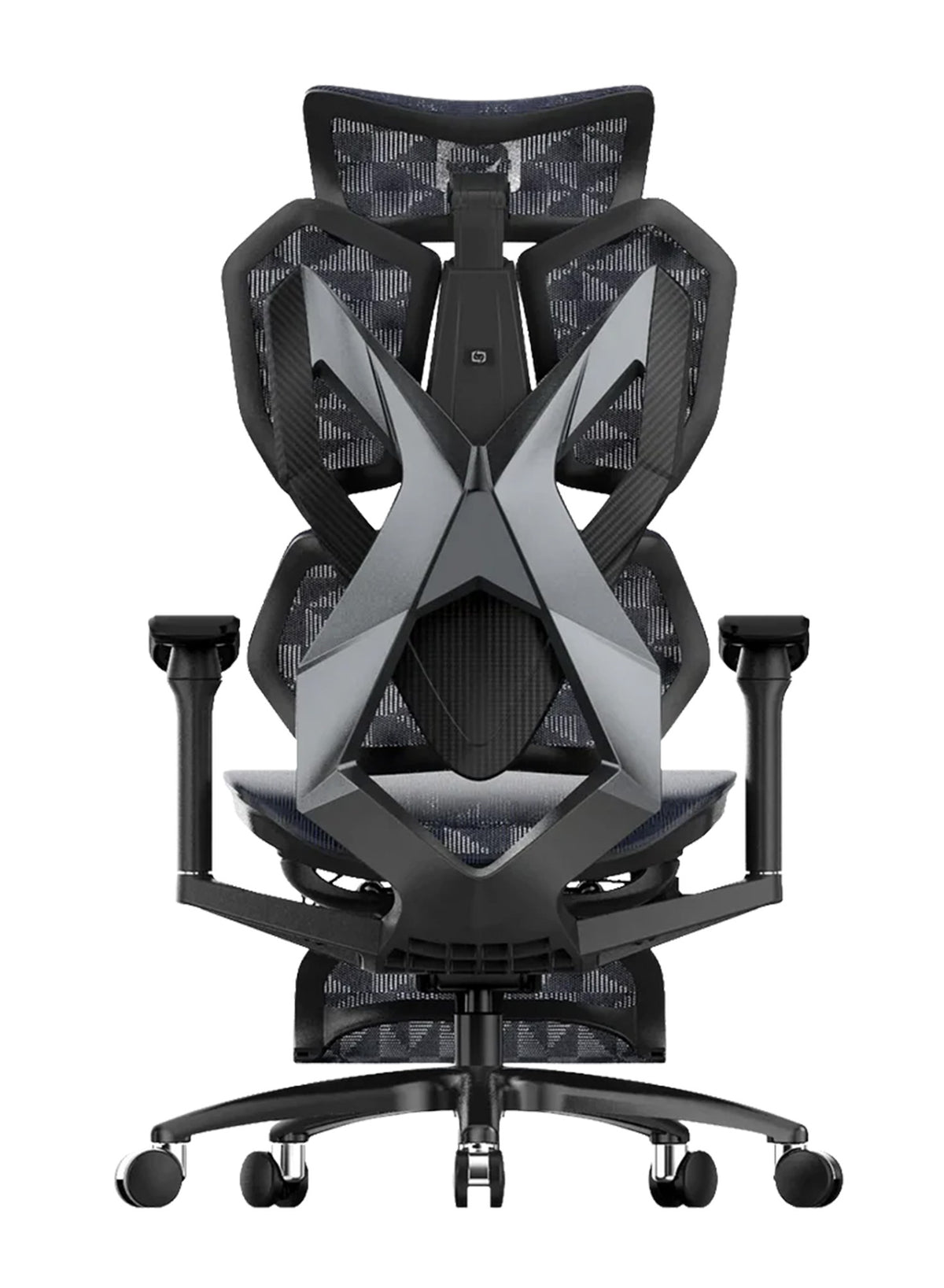
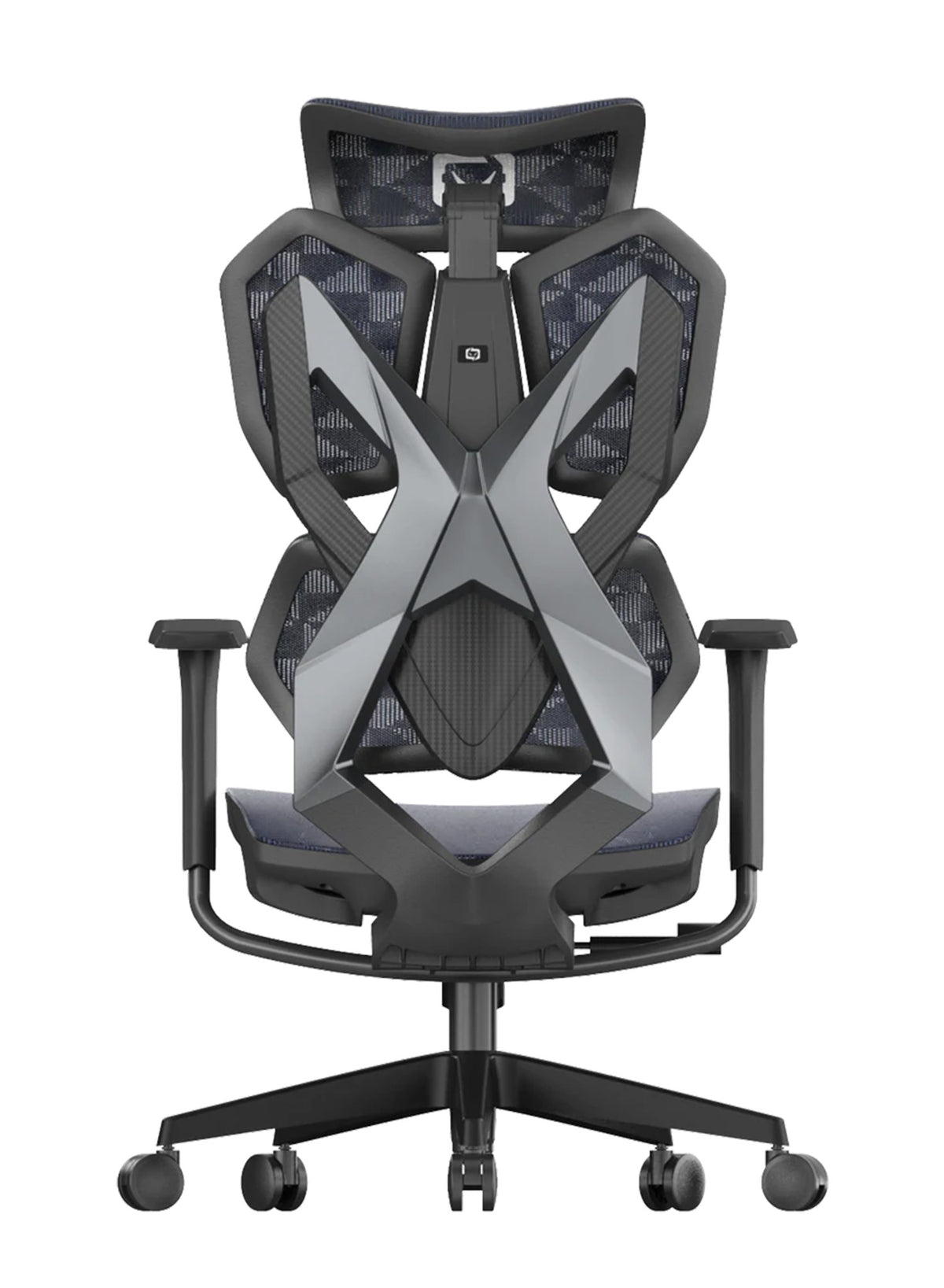
Quick answer: Check four things: lumbar support, seat depth, armrests and recline. On the pages we read on 26 October 2026, the Doro S300 lists the widest set of these, and the Sihoo V1 lists a lower-cost mix with sliding seat depth. A chair does not fix pain. If you have red flag symptoms, see a GP before you shop.

Back pain at a desk is common, and it rises with age
Think of the person who never had a sore back at 25 and now notices one at 35. Nothing dramatic happened. The hours added up.
The Australian Institute of Health and Welfare (AIHW) reports that about 4.0 million people in Australia, or 16 percent, had back problems in the 2017-18 National Health Survey. The page says prevalence increased with age and was similar for males and females. It gives no separate figure for people in their thirties in the text, so we will not guess one. It does show how low the early years are: 3 percent of males and 4 percent of females aged 0 to 24.
Work claims point the same way. Safe Work Australia's Key Work Health and Safety Statistics Australia 2025 reports 50,600 serious claims for body stressing in 2023-24, which was 34.5 percent of 146,700 serious claims. The median time lost was 9.2 weeks and the median compensation paid was $19,400.
Those are preliminary figures for all occupations, not only desk work. Body stressing is a broad claims category, so it does not show that chairs cause back pain.
For teams, the point is simple. Body stressing is a large share of serious claims, so a sore workforce is a planning issue, not only a personal one.
Why back pain tends to show up in your 30s at a desk
Picture a typical week. Meetings, deadlines, a long stretch of screen time, and a seat that was never set up for you.
We cannot say one thing causes back pain in your thirties.
What we can point to is a plausible mechanism from one small study. Waongenngarm, Rajaratnam and Janwantanakul (2016, Safety and Health at Work, 7(1), 49 to 54, doi.org/10.1016/j.shaw.2015.08.001) had 30 office workers sit for one hour in upright, slumped and forward-leaning postures. Discomfort grew in the neck, shoulders, upper back, lower back and buttocks in every posture. Muscle fatigue, measured by electromyography, showed up only in the internal oblique and transversus abdominis muscles during slumped sitting.
Read that with care. It is a small study, with only one hour of sitting, and it shows an association, not proof that slumping causes lasting back pain. We could not open the full text to check the age range of the participants, so we do not claim it explains pain specifically in your thirties.
It does suggest that a seat which lets you slump may cost your deep trunk muscles something by the end of a long sitting stretch.
A chair that supports your back and lets you change position makes it easier to avoid slumping. It does not do the work for you.
Movement matters as much as the chair
Before any purchase, it is worth knowing what no chair can replace. Anyone who has sat through a three-hour block knows the stiffness that follows.
Alan Hedge of Cornell University Ergonomics gives a ballpark of 20 minutes sitting in a good posture, then 8 minutes standing, then 2 minutes of standing and moving. Moving means gentle stretching or walking. His sit-stand page calls this a ballpark goal for organising work, and the numbers are not fixed.
The page carries no date, so we cannot say how recent the advice is. It also assumes you can stand, which suits a sit-stand desk better than a fixed one.
You can still borrow the idea without a standing desk. Stand for calls, walk to refill your water, and set a timer if you forget.
A good seat makes the 20 minutes easier. It does not remove the need for the 2.
Managers can help here. A team norm of stepping away from the screen for short breaks costs nothing and does not depend on anyone's furniture budget.
The four chair checks that matter most
Imagine the same afternoon in two chairs. In one, your thighs are pressed against the front edge, your lower back floats away from the backrest and your arms hang. In the other, the seat, back and arms meet you where you are.
Four features do most of that work. Here is what each one does, and what to ask.
Lumbar support: does it meet the curve of your lower back?
Lumbar support fills the gap between your lower back and the backrest. Fixed lumbar is set by the factory. Adjustable and dynamic lumbar can be moved or can follow you as you shift. Our lumbar support guide explains the difference in more detail.
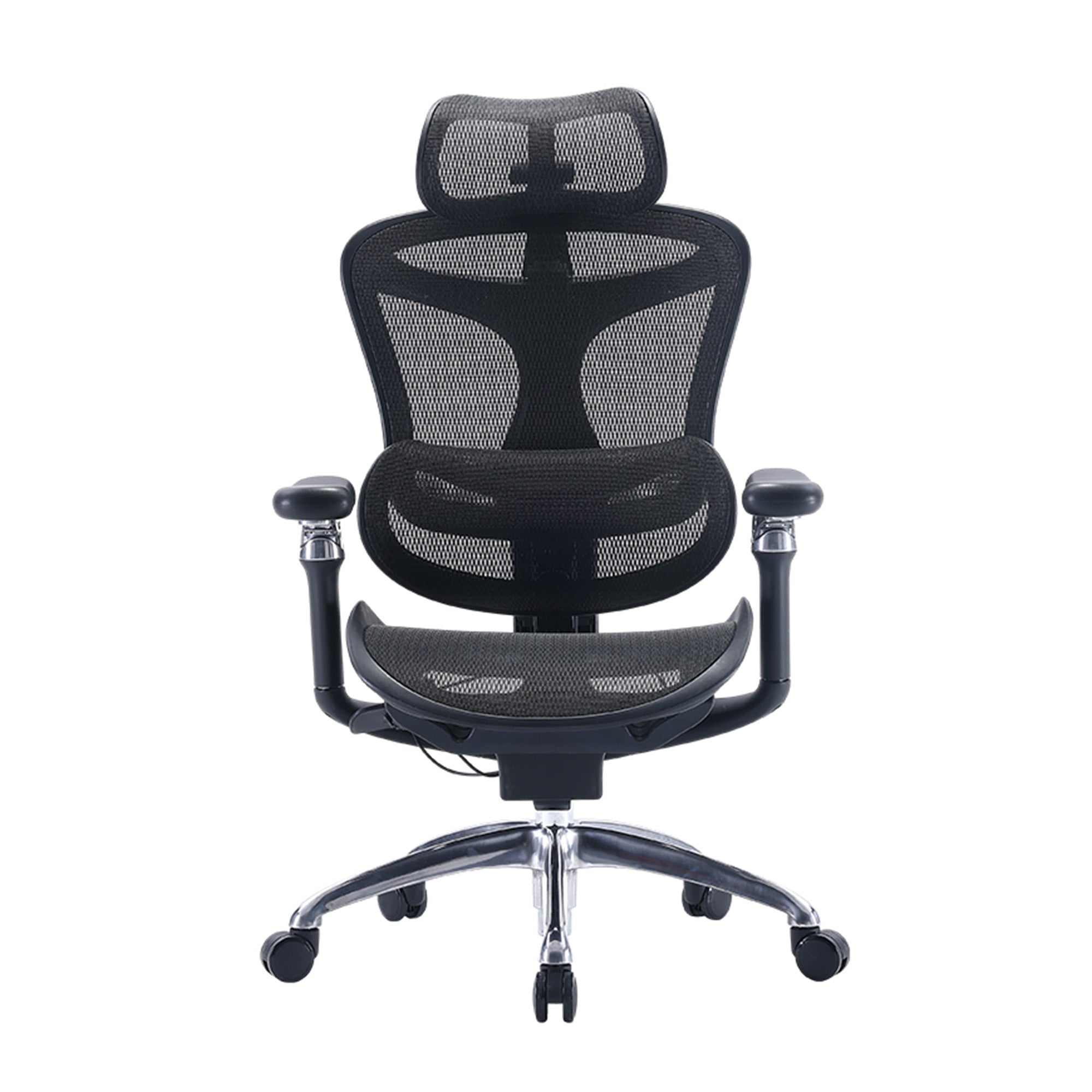
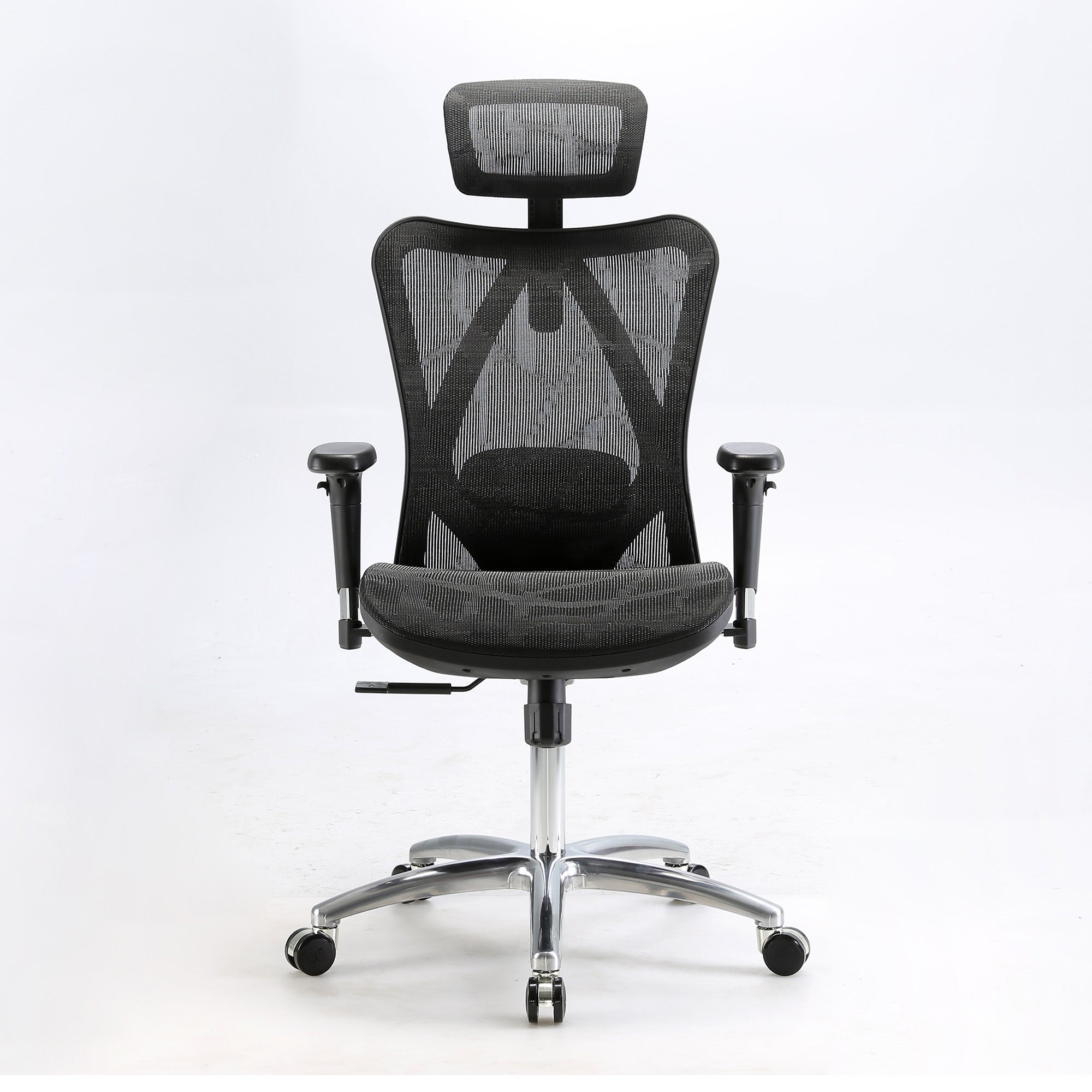
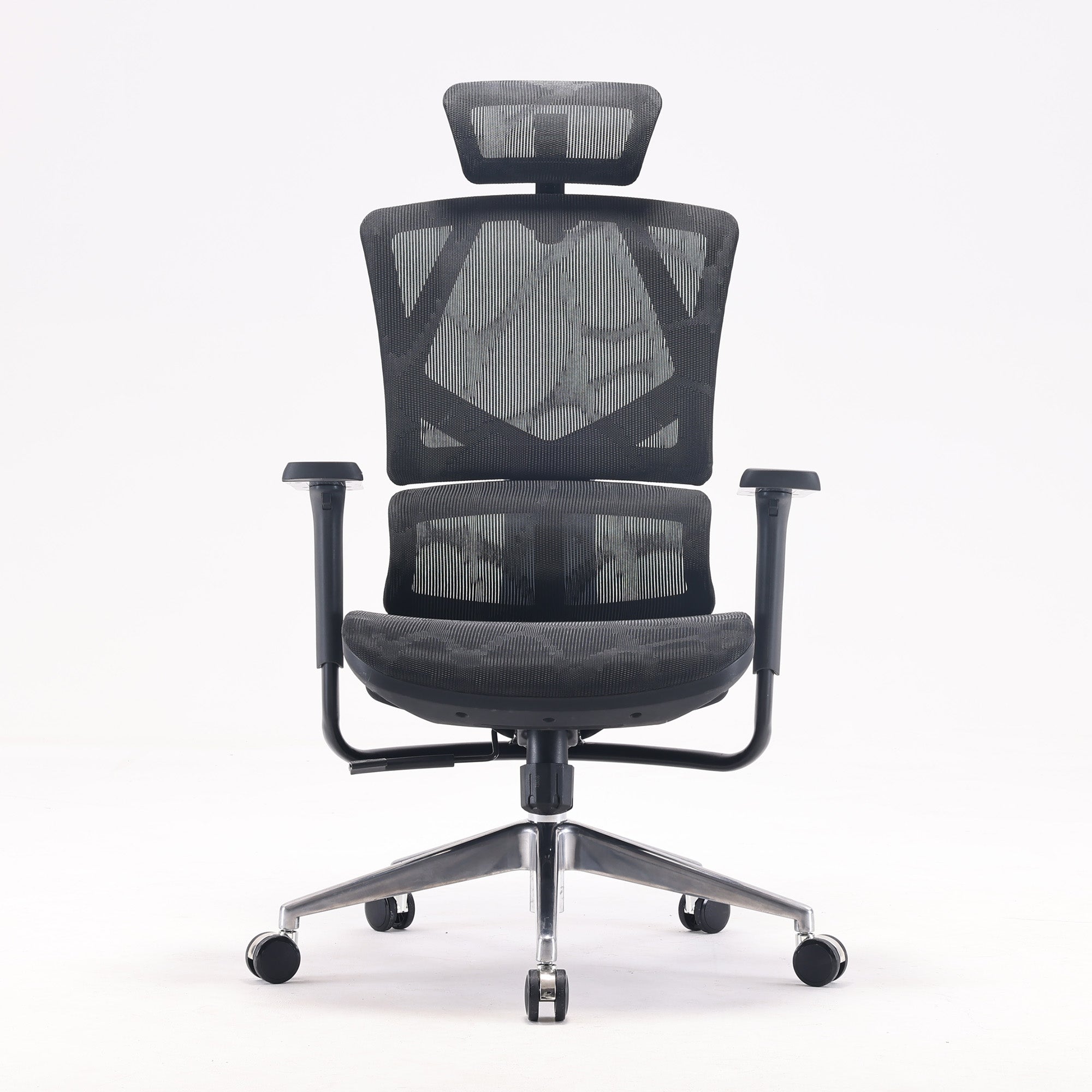
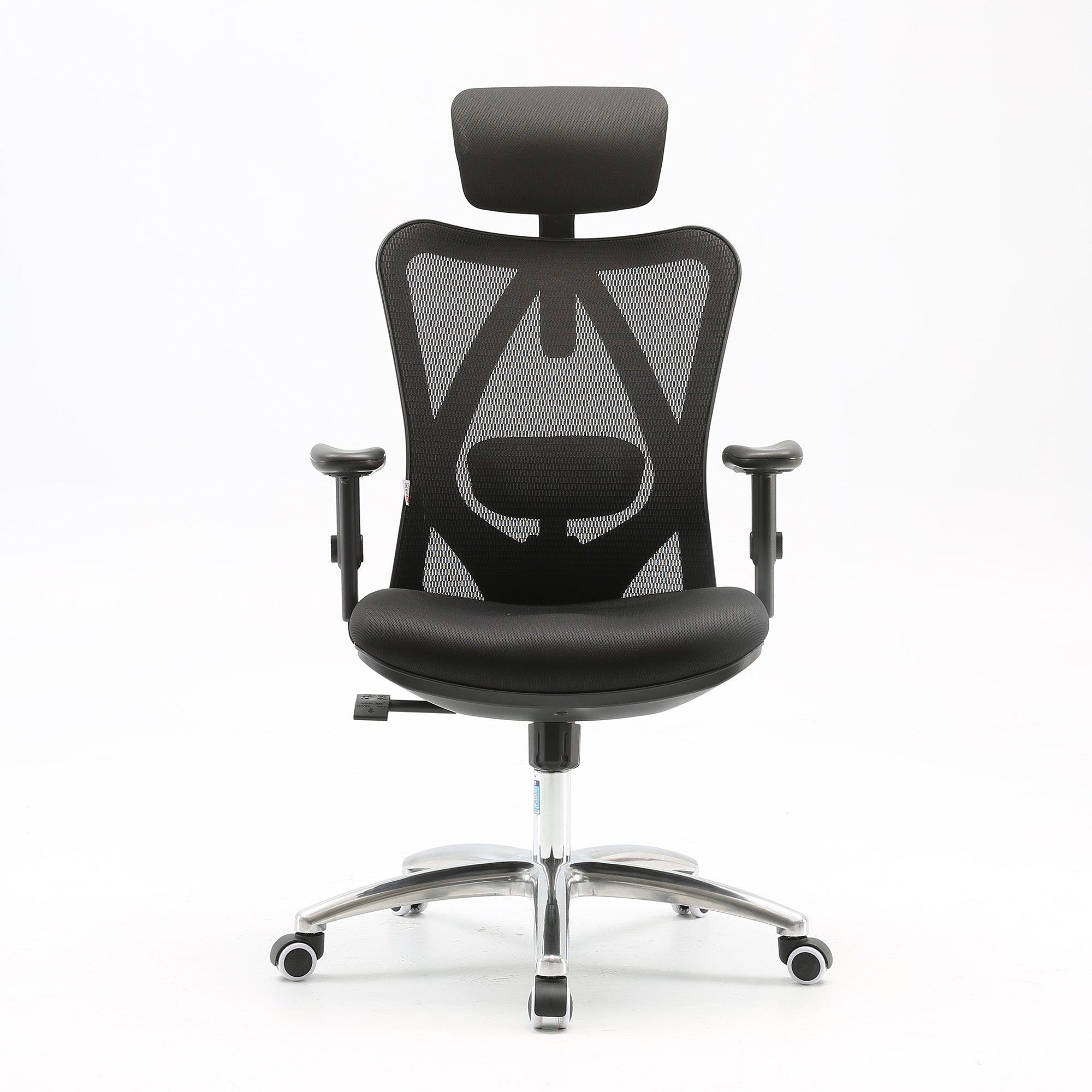
The V1 page lists cushioned lumbar support with height and depth adjustment. The Doro S300 page lists adjustable dual dynamic lumbar support with two pads, and says a gas lift adjusts the lumbar support between 90 and 105 degrees. The M57 Pro page describes adaptive lumbar in its summary text. Each one is a different approach, so sit in the idea of it, not only the name.
For a team, lumbar adjustment matters more when people share desks or rotate seats, because one fixed shape will not suit everyone.
Seat depth: can you sit back without pressure behind your knees?
If the seat is too deep, you either perch forward or the front edge presses behind your knees. Either way, the backrest stops doing its job. A seat depth control lets you slide the seat so you can sit fully back with a gap between the seat edge and your knees.
The V1 page lists sliding seat-depth adjustment, with a seat depth of 44.5 to 49.5 cm. The S300 page lists seat depth among its controls but gives no measurement. The Doro S100 page lists a 5 cm seat depth adjustment range (38.5 to 43.5 cm). The M57 Pro page text we fetched did not state seat depth adjustment, so we cannot say it has one.
For workplaces with a mix of heights, seat depth is one of the quickest ways to make one model fit several people.

Armrests: do they take weight off your shoulders?
When arms hang, shoulders and neck work harder. Armrests that sit close to desk height let your forearms rest while you type.
The V1 page lists 4D adjustable armrests. The S300 page lists 6D adjustable armrests. The S100 page lists 4D coordinated armrests, and the M57 Pro page describes 4D linkage armrests in its summary.
More directions of movement give you more ways to line the pads up with your desk. They do not help if your desk is too high, so check the desk first.
In a shared office, ask whether staff can set armrests without tools, because settings people cannot find tend to stay at default.
Recline: can you change position through the day?
Recline lets you lean back, take load off your spine and then return to work. It is not a replacement for walking around, but it gives your trunk muscles a break from one fixed angle.
The V1 page lists recline from 90 to 140 degrees with multiple lock positions. The S300 page says you can recline at any angle and the backrest does not need to be locked, but gives no degree figure. The S100 page lists recline up to 135 degrees, and the M57 Pro page shows 134 degrees in its image text.
Teams that share spaces often prefer tension and lock controls that are easy to find and read.
Symptom-to-feature table
Use this table to turn what you feel into a question to ask. It lists what each Sihoo product page stated on 26 October 2026, and nothing the page did not say. A blank means the page did not state it, not that the chair lacks it.
|
What you notice |
Feature to check |
V1 |
Doro S300 |
M57 Pro |
|---|---|---|---|---|
|
Lower back aches or tires after an hour or two |
Lumbar support type and adjustment |
Cushioned lumbar, height and depth adjustable |
Adjustable dual dynamic lumbar, two pads |
Adaptive lumbar (summary text) |
|
Pressure behind the knees, or you perch forward |
Seat depth adjustment |
Sliding seat depth, 44.5 to 49.5 cm |
Seat depth control, no measurement given |
Not stated on page |
|
Neck and shoulders feel tight |
Armrest adjustment |
4D adjustable |
6D adjustable |
4D linkage (summary text) |
|
Stiff in one position |
Recline range and lock |
90 to 140 degrees, multiple lock positions |
Any angle, no lock needed |
134 degrees (image text) |
|
Sweaty back in summer |
Backrest material |
Mesh |
Mesh |
Full mesh body, foam in seat |
The Doro S100 is not in the table because its page showed 2.6 out of 5 from only 5 reviews on 26 October 2026. That is a very small sample, but we would want to see more feedback before pointing a back-pain shopper to it.
What the three chairs offer, and where each falls short
Say you have narrowed the list to three. This is how they compare on what the pages state. Check sihoo.com.au for current pricing before you decide.
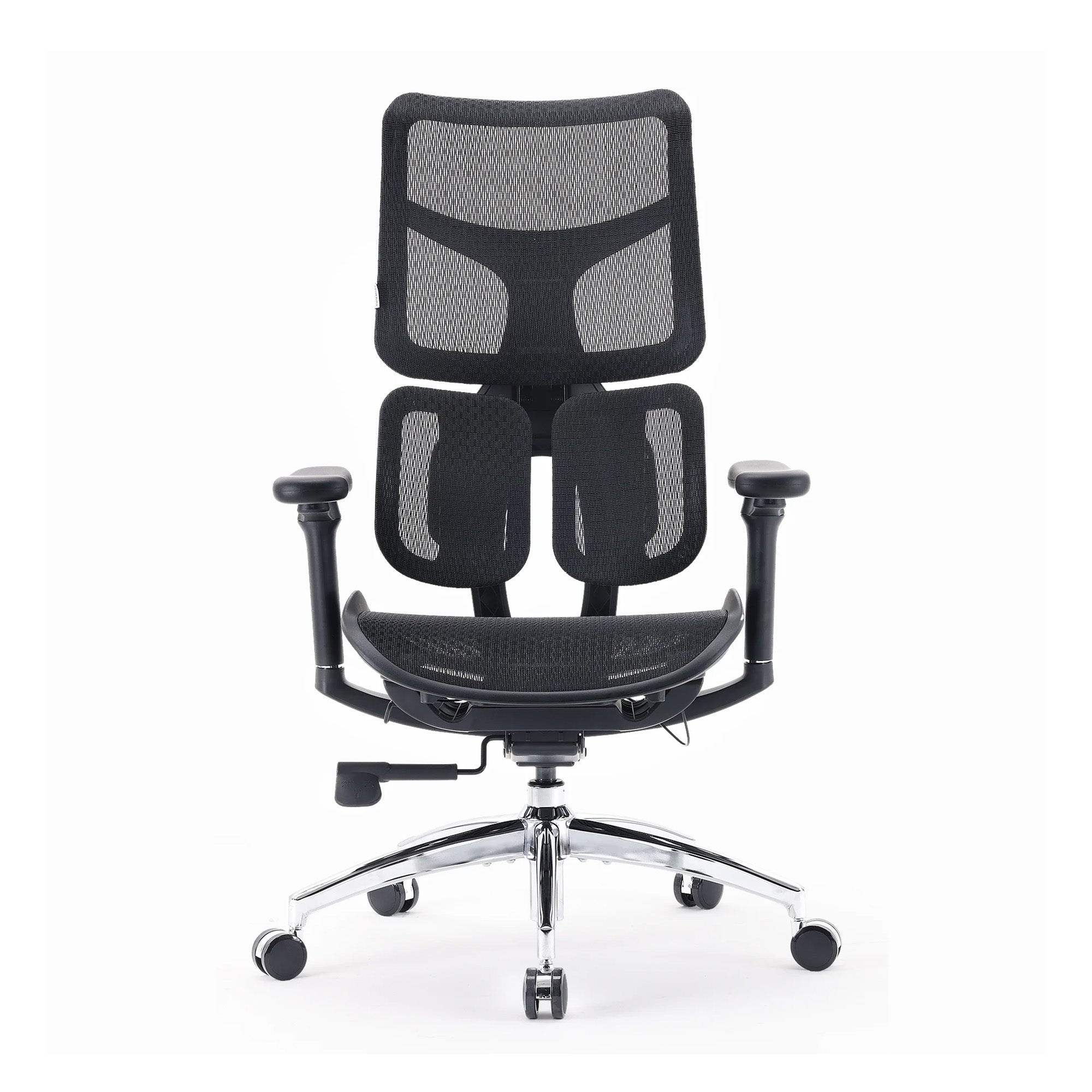
Sihoo V1: sliding seat depth at a lower cost
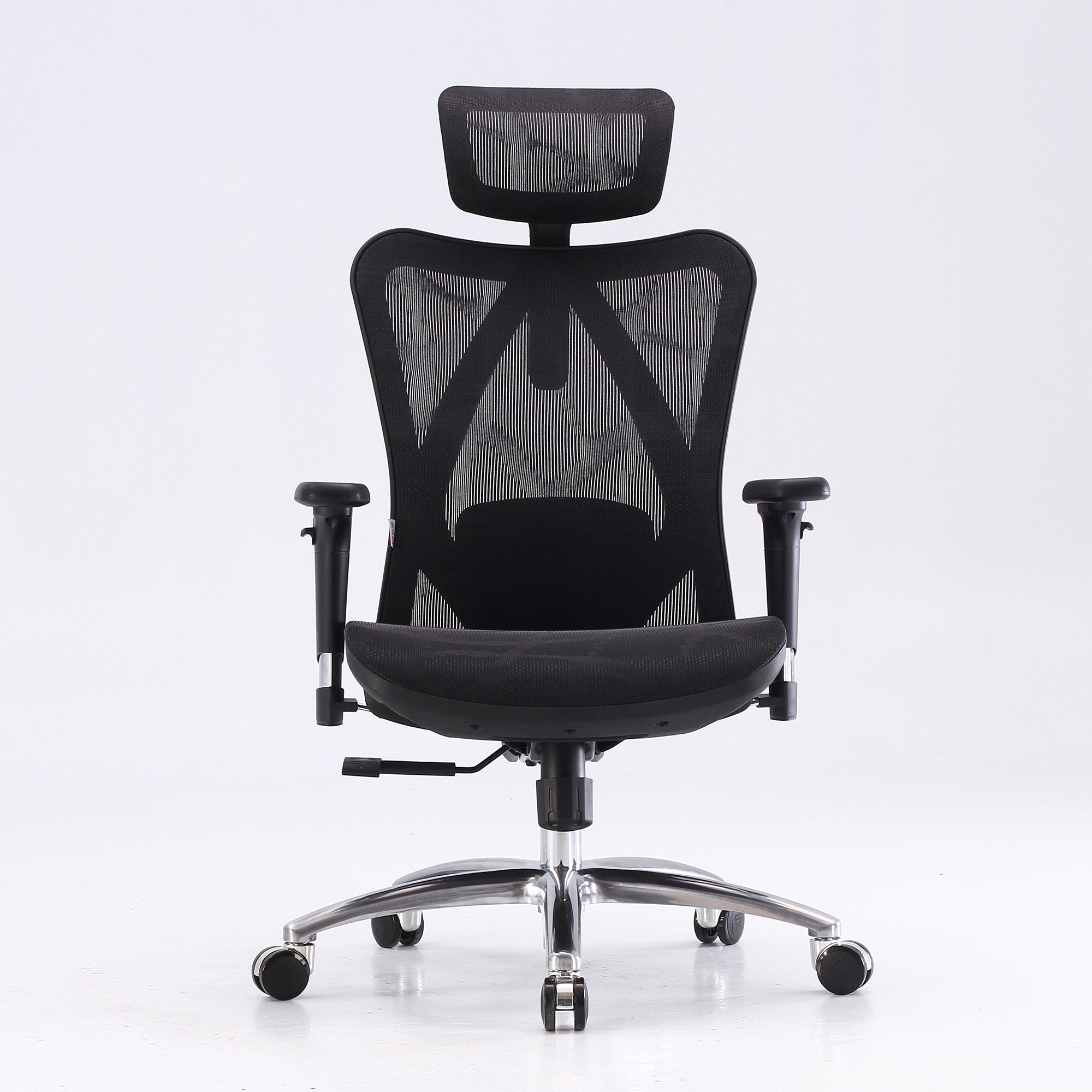
The V1 listing showed "From $529". The black-with-leg-rest variant showed $569 against a compare-at price of $849 on 26 October 2026. The page lists 3-year warranty, a 136 kg maximum user weight, sizing for 150 to 190 cm users, and a 4.6 out of 5 rating from 74 reviews.
Its limits: it lists cushioned lumbar rather than the dual dynamic lumbar of the S300, and it has 4D armrests, not 6D. If you sit for long days and want the widest set of adjustments, the S300 lists more.
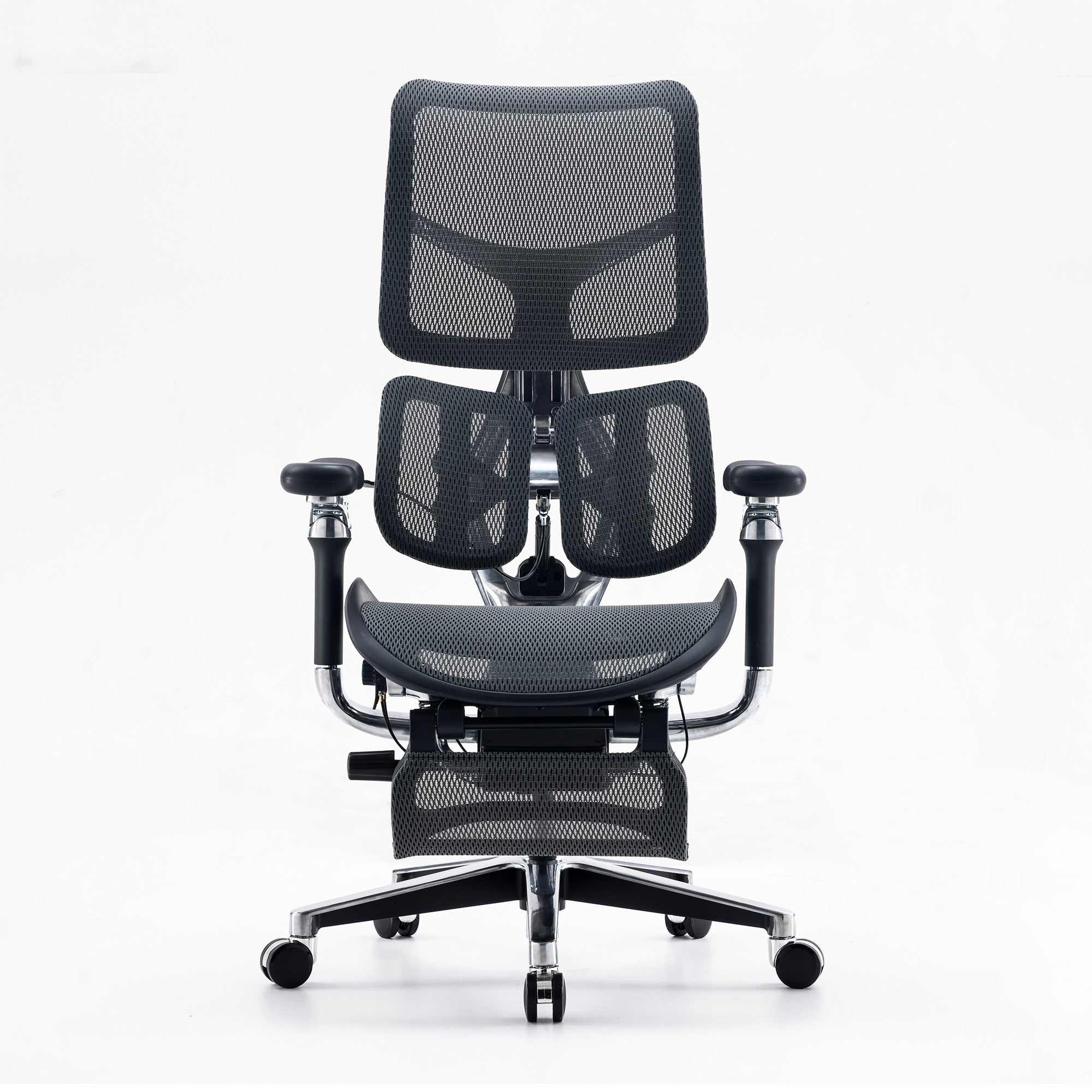
Doro S300: the most adjustment on our list
The S300 page showed $949 against a compare-at price of $1,599 on 26 October 2026. It lists a 5-year warranty, a 150 kg rating in the page summary, 6D armrests, dual dynamic lumbar and seat depth control. Its rating was 4.6 out of 5 from 82 reviews.
Its limits: it costs the most of the three. The page gives no seat dimensions or recline degrees in text. One review mentions a 3-year warranty, which conflicts with the listing. Check the warranty with the store before you buy.
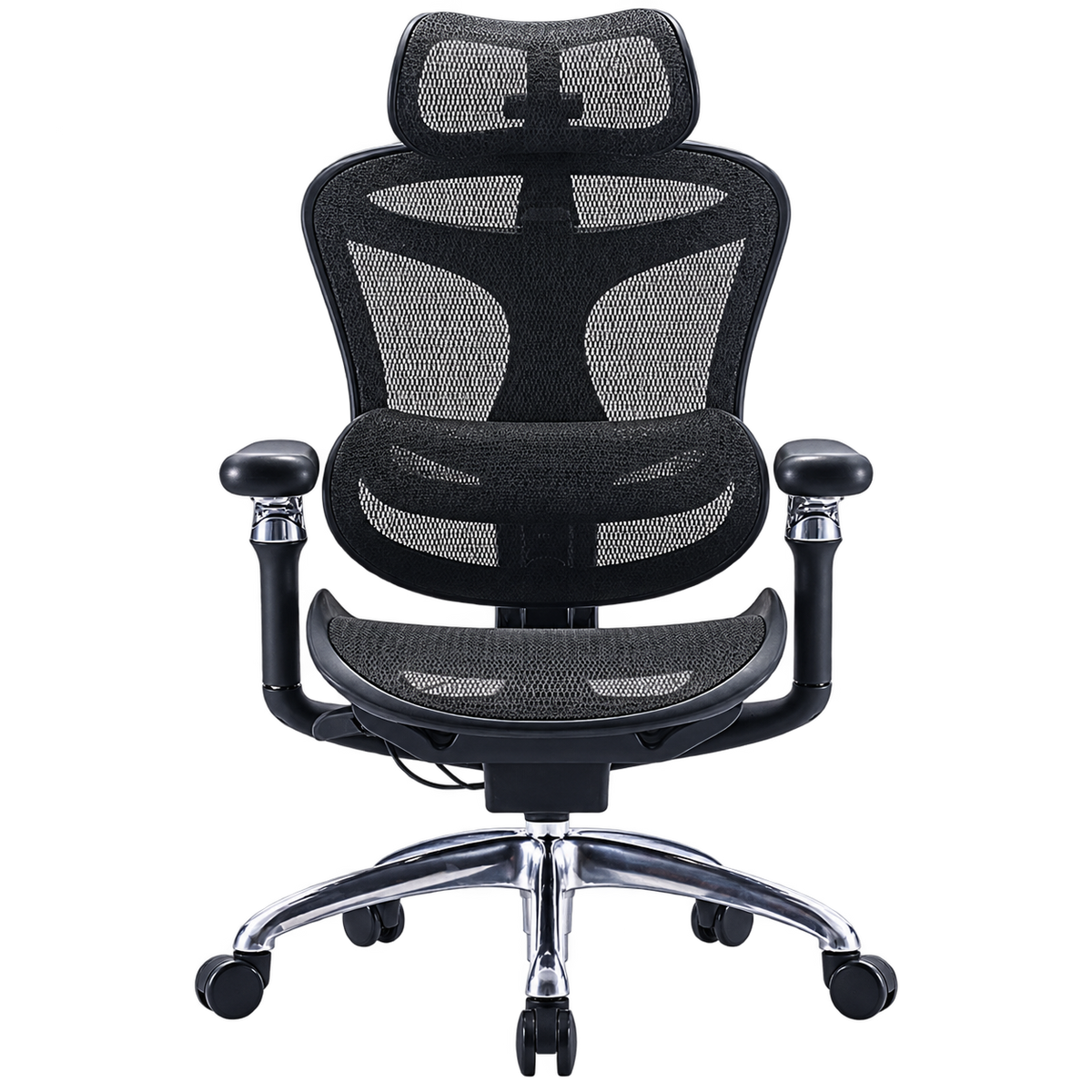
M57 Pro: a lower price, with fewer listed adjustments
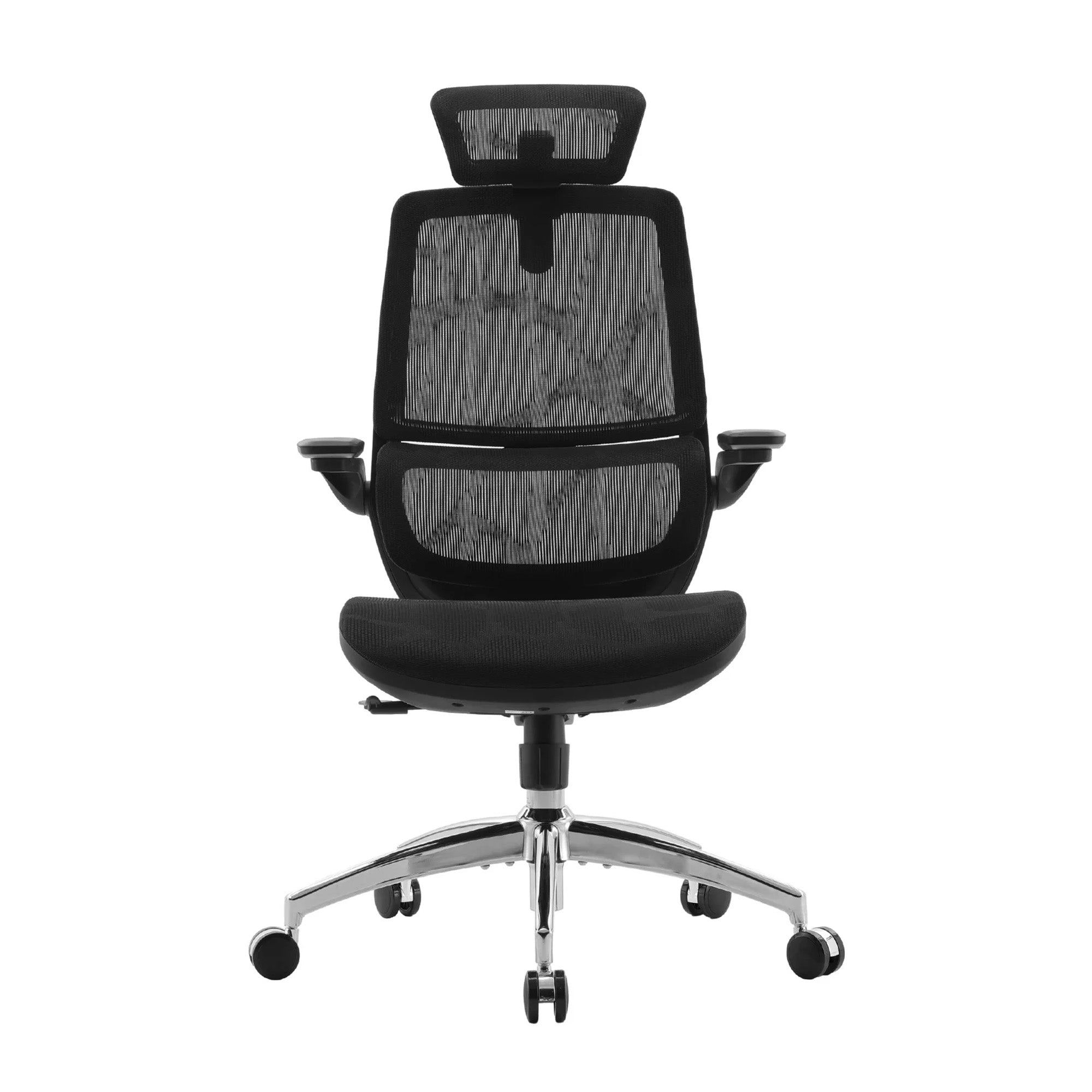
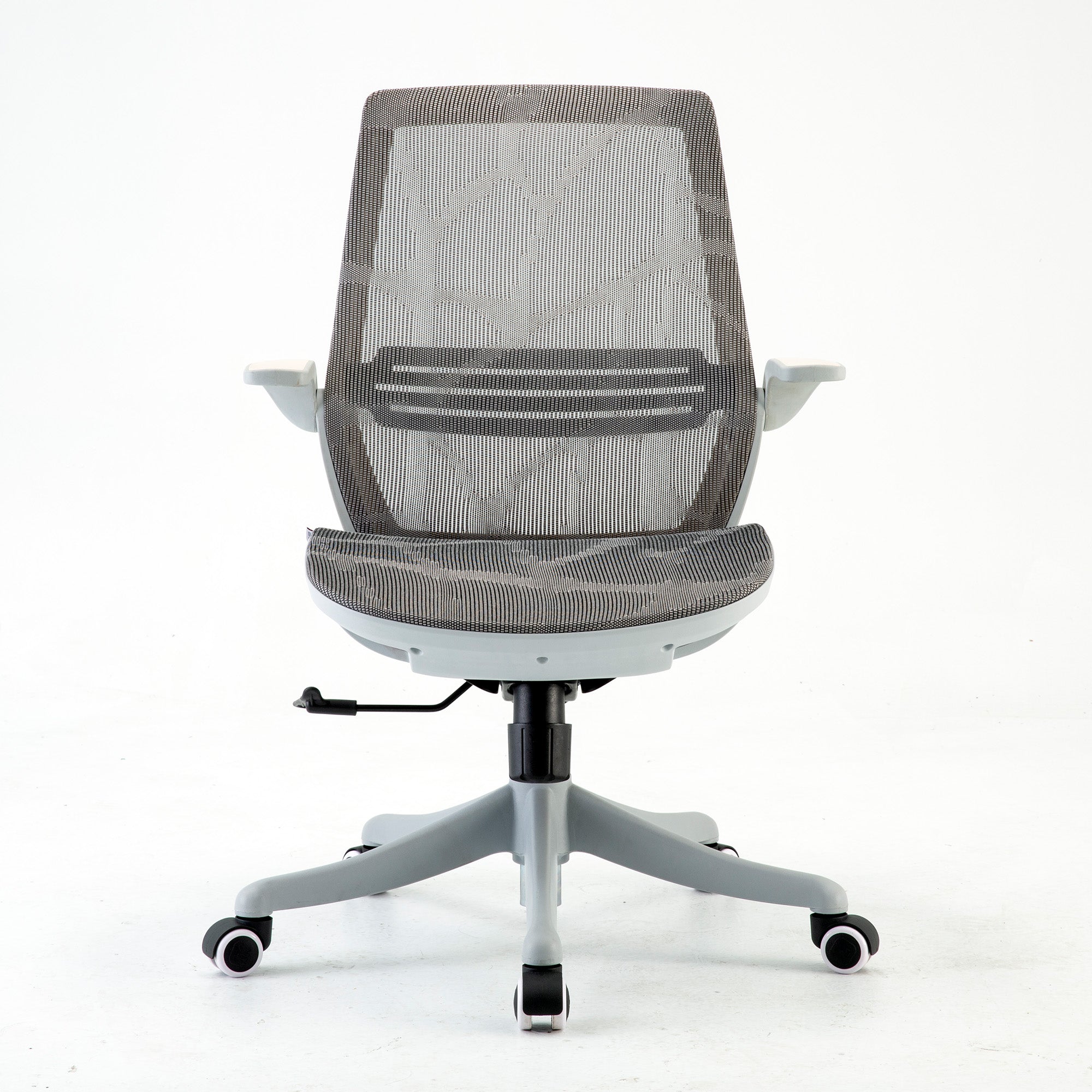
The M57 Pro page showed $399 against $499 on 26 October 2026. It lists a 3-year warranty, a 150 kg rating, adaptive lumbar and 4D linkage armrests, with a 4.4 out of 5 rating from 126 reviews. One reviewer said the height suits people up to about 5 foot 10 or 11. That is customer opinion, not a spec.
Its limit for this topic: the page text did not state seat depth adjustment. If thigh pressure is your main issue, this is the model to check carefully before buying.
How to read a sale this season
If a sale is running, you will likely see crossed-out prices, countdown clocks and "up to" banners. We cannot tell you what any retailer, including us, will advertise, because Sihoo has not confirmed sale details to the team writing this post.
What we can do is point to the regulator. In media release 33/26 (14 April 2026), the ACCC described concerns from its November 2025 Black Friday sweep. The concerns were:
• Time claims such as "3 days only", and countdown timers that do not match the real sale length.
• Sitewide claims that have exclusions.
• Fine print that narrows a headline offer.
• "Up to X% off" claims where the wording is not prominent or few products get the top discount.
• Misleading was/now or strikethrough prices.
That is not a comment on any one seller. It is a checklist.
Open the product page and compare the spec list, not the discount. Think of it as Black Friday, Better Back: the right chair is the one that fits your body, not the one with the biggest banner.
A procurement lead can use the same list. Ask any supplier for the spec sheet and the warranty in writing.
When to see a GP or physiotherapist instead
Maybe your back has hurt for weeks. Perhaps there is pain that wakes you at night. No chair is a treatment, and some symptoms need a professional first.
SA Health's page "When to seek help for low back pain" (published 19 May 2025, last modified 26 June 2025) lists symptoms that need a doctor straight away. They include a large weakness or loss of feeling in your legs, genital or bottom area. Another is a change in bowel or bladder function that makes it hard to get to a toilet in time.
The page also lists losing weight for no reason, a fever with no reason, a history of cancer, and pain after a fall or trauma. It adds that in a medical emergency you should call Triple Zero (000).
Red flags: see a doctor first. Large weakness or loss of feeling in your legs, genital or bottom area. Bowel or bladder changes that make it hard to reach a toilet in time. Unexplained weight loss or fever. A history of cancer. Pain after a fall or trauma. Pain that gets worse, or has not improved after 4 to 6 weeks of treatment. Source: SA Health, "When to seek help for low back pain" (May and June 2025). In an emergency, call 000.
The Australian Physiotherapy Association has a quick guide for physiotherapists based on the Low Back Pain Clinical Care Standard. At a review at 2 to 6 weeks, it says to refer patients whose pain is persisting or worsening and who have disabling pain or limited function. It names the GP for review and pain management.
We do not give medical advice. If you are unsure, see a GP or physiotherapist, and do it before you spend money on a chair.
For managers: if a team member raises back pain, a referral to their GP or a physiotherapist is the first step, and furniture comes second.
Conclusion
Back pain at your desk in your thirties is common enough to take seriously and complex enough to avoid easy promises.
The evidence we found is modest. Back problems rise with age, and body stressing is a large share of serious claims. One small study linked slumped sitting with trunk muscle fatigue. None of it says a chair will cure your pain.
What a chair can do is make a good position easier to hold.
Check lumbar support, seat depth, armrests and recline against what the product page states, and ignore anything it does not. On the pages we read, the S300 lists the widest set of adjustments, and the V1 is a lower-cost option with sliding seat depth. If thigh pressure is your main issue, check the M57 Pro with extra care. If it is not what you need, a cheaper chair or no chair at all may be the right call.

When you are ready to compare, browse the best ergonomic office chairs in Australia and read our guide on how to adjust your chair. If back pain is your main concern, see our guide to the best ergonomic chair for lower back pain. Then take breaks, and see a GP or physiotherapist if pain persists or any red flag appears.
Sources Referenced
• Australian Institute of Health and Welfare, Back problems (2017-18 National Health Survey data), https://www.aihw.gov.au/reports/chronic-musculoskeletal-conditions/back-problems and the age breakdown at https://www.aihw.gov.au/reports/chronic-musculoskeletal-conditions/musculoskeletal-conditions/contents/back-problems, checked 26 October 2026
• Safe Work Australia, Key Work Health and Safety Statistics Australia 2025 (October 2025), p.16, https://data.safeworkaustralia.gov.au/sites/default/files/2025-10/Key_Work_Health_and_Safety_Statistics_Austraila_2025.pdf, checked 26 October 2026
• Waongenngarm P, Rajaratnam BS, Janwantanakul P. Internal Oblique and Transversus Abdominis Muscle Fatigue Induced by Slumped Sitting Posture after 1 Hour of Sitting in Office Workers. Safety and Health at Work, 2016;7(1):49-54, https://doi.org/10.1016/j.shaw.2015.08.001 (abstract record at https://doaj.org/article/973108ddd1684b3e9946ecae73733674), checked 26 October 2026
• Alan Hedge, Cornell University Ergonomics Web, Sit-Stand Working, https://ergo.human.cornell.edu/CUESitStandPrograms.html (undated page), checked 26 October 2026
• SA Health, When to seek help for low back pain (published 19 May 2025, modified 26 June 2025), checked 26 October 2026
• Australian Physiotherapy Association, Low Back Pain Clinical Care Standard: Quick guide for physiotherapists (undated), checked 26 October 2026
• ACCC, media release 33/26, ACCC investigating retailers making concerning Black Friday claims (14 April 2026), https://www.accc.gov.au/media-release/accc-investigating-retailers-making-concerning-black-friday-claims, checked 26 October 2026
• Sihoo V1, Doro S300, M57 Pro and Doro S100 product pages on sihoo.com.au, checked 26 October 2026
Frequently Asked Questions
There is no single answer. The AIHW reports that back problems become more common with age, and long, still hours add load. A small 2016 study found fatigue in two deep trunk muscles after an hour of slumped sitting, but it shows an association only. Pain that lingers needs a GP or physiotherapist, not just a new chair.
There is no single winner, because bodies differ. Start with lumbar support that meets your lower back, then check that seat depth lets you sit fully back. Armrests and recline come next. Sit in the chair for several days if the return policy allows, and check the current terms on the Sihoo site.
No. A chair can make a good posture easier to hold, but it cannot treat a medical problem.
Movement breaks matter too. Cornell's Alan Hedge gives a ballpark of 20 minutes sitting, 8 standing and 2 moving. See a GP if pain continues.
It depends on what you need. The S300 page lists 6D armrests, dual dynamic lumbar and a 5-year warranty, while the V1 lists sliding seat depth, 4D armrests and a lower starting price. If the V1 meets your needs on a trial, the extra cost may not be needed. Compare current prices on sihoo.com.au.
Treat it as a claim to check, not a fact. The ACCC has flagged misleading was/now pricing as a concern from its November 2025 sweep. Compare the spec list and the current price, not the percentage off.
Start with a conversation and a referral to a GP or physiotherapist if the pain persists. Check each person's chair setup after that. Do not assume a new chair is the answer.
Ask for spec sheets, the warranty in writing and the weight and height ranges. Look for seat depth, lumbar and armrest adjustment, since people differ. Pilot one or two chairs with a few staff before a large order.
Cornell's Alan Hedge suggests a ballpark of 20 minutes sitting, 8 standing and 2 moving. His page says the numbers are not fixed. Many teams find that short, regular breaks are easier to keep than a strict rule, and they cost nothing.
Shop products from this article


