



Sources checked 26 October 2026
The box sat unopened.
Beside it, a laptop balanced on the dining table, and a rolled towel propped up a tired lower back. Every few minutes the sitter shifted, sighed, and opened another tab full of chair deals. It was late October, and the shopping had started early.
Sale season pushes you to decide fast. The trouble is that a chair is not a toaster. Your thigh length, your desk and your daily hours all change what a good chair means for you.
That is why a short plan made before the rush beats a long scroll made during it. If you want an ergonomic office chair that still feels right in March, start with your own numbers.
This guide is for anyone shopping for Ergonomic Desk Chairs for Home and Office in Australia. We call the idea "Get Ahead of the Rush": do the measuring now, so a deal is a bonus and not the reason you buy.
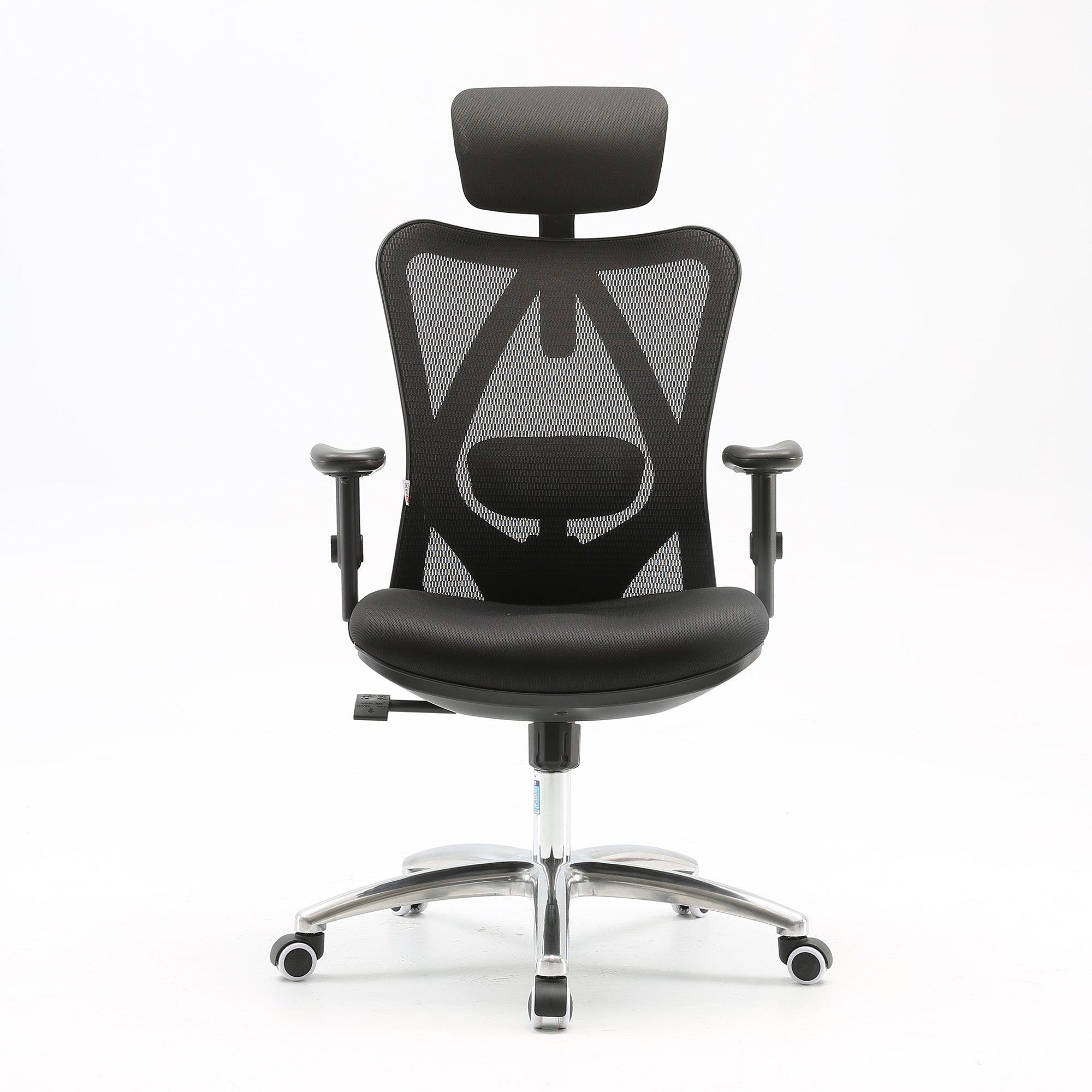
Quick answer: For most people who sit under about six hours a day and do not need to adjust seat depth, the Sihoo M57 is the sensible starting point. If seat depth matters to you, look at the Sihoo V1 or the Sihoo Doro C100. If you sit under three hours a day, you may need no new chair at all. We explain each choice below.
Six answers decide which work-from-home chair fits you
Most chair mistakes are fit mistakes. A chair can be well made and still be wrong for your desk or your legs. So we boil the choice down to six questions you can answer in about fifteen minutes, with a tape measure and a notepad.

The six are: desk height, seat depth, lumbar type, armrest type, daily sitting hours, and budget. Write each answer down before you open a single product page. Then the sale prices cannot nudge you toward a chair that fails one of the six.
Work from home is not a niche habit either. The Australian Bureau of Statistics reported that 36.2 percent of employed people usually worked from home in August 2025. That is a lot of dining tables doing the job of a desk.
For teams, the same six questions work as a quick checklist. A manager buying for staff who work from home can send them out and collect the answers before any order is placed.
Your desk height sets the limits before any chair does
Picture a new chair rolling up to a desk and stopping short. The armrests hit the desktop, and the sitter perches back with their elbows in the air. It is a common sale-season regret, and it has nothing to do with the chair's quality.
Here is what to measure. First, the gap from the floor to the underside of your desk top or drawer unit, whichever is lower. Second, the height of the desktop from the floor. Third, the width of any gap you want the chair to slide into.
Then compare those numbers with the product page. Some pages publish seat height ranges. The V1 lists 47.5 to 57 cm, the Doro C300 Pro lists 44 to 54 cm, and the Vito M90 lists 46 to 55 cm. A missing number means you should ask before buying, not guess.
Sydor and Hitka (2023, Biomimetics) give a simple rule in their chair design paper. Seat height should be no more than the popliteal height of the shortest user, which is the distance from floor to the back of the knee. In plain words, your feet should reach the floor. If they do not, a footrest or a lower seat height is the fix, not a taller desk.
We already cover the desk and room measuring steps in our fit guide for chair sales. Do that check first, then come back here for the seat and lumbar questions.
In a shared workspace or spare room that doubles as an office, one fixed-height desk often serves several people. Measure for the shortest regular user, then check the tallest. That one step prevents most mismatched orders.
Seat depth is the measurement most shoppers skip
Think of a chair seat that is a few centimetres too long. The sitter slides forward to keep the edge off the back of the knees, and the backrest stops doing its job. An hour later the lower back is working alone.
Sydor and Hitka make the same point in their paper. They write that a seat that is too deep makes it hard to use the backrest.
They add that too much seat depth presses on the tissue behind the thigh and affects blood flow to the legs. Their design rule is a seat depth about 10 cm shorter than the sitter's buttock to knee length. The paper limits that rule to standard adult proportions and excludes people with a BMI above 30. Treat it as a starting point, not a verdict.
How to measure your seat depth in two minutes
Sit on a firm chair with your back against the backrest. Have someone measure from the back of your buttocks to the back of your knee. This is your buttock to popliteal length.
Subtract about 10 cm. The result is a rough target for seat depth.
For example, if your measurement is 50 cm, the target is near 40 cm. If it is 55 cm, the target is near 45 cm. These are worked examples, not data about any person.
What the Sihoo pages publish for seat depth
Not every model lists a range. This table shows only what the pages said when we checked on 26 October 2026.
|
Model |
Seat depth on the product page |
Seat depth adjustable? |
|---|---|---|
|
Sihoo Doro S100 |
38.5 to 43.5 cm |
Yes, 5 cm range |
|
Sihoo Doro C300 Pro |
42.7 to 45.1 cm |
Yes, up to 4 cm |
|
Sihoo V1 |
44.5 to 49.5 cm |
Yes, sliding |
|
Sihoo Vito M90 |
46 cm fixed |
Not mentioned |
|
Sihoo Doro C100 |
Not published |
Yes, range not given |
|
Sihoo M57 |
Not in the page text |
Not mentioned |
Read the table with care. Brands may measure seat depth in different ways, so a number on one page may not match another brand's number. If your target sits near the edge of a range, ask Sihoo how the figure is measured before you order.
If you have long legs, the V1's longer range suits you best on paper. If you have shorter legs, the S100 range is the lowest on this list, but see the review note later. For a team, seat depth is the spec that most often splits one chair order into two or three models.
Lumbar support is either set by you or adapts on its own
Imagine two people with the same chair. One adjusts the lower back pad each morning until it feels right. The other never touches it because the chair follows the spine as they move. Both can be comfortable, but they are not the same buyer.
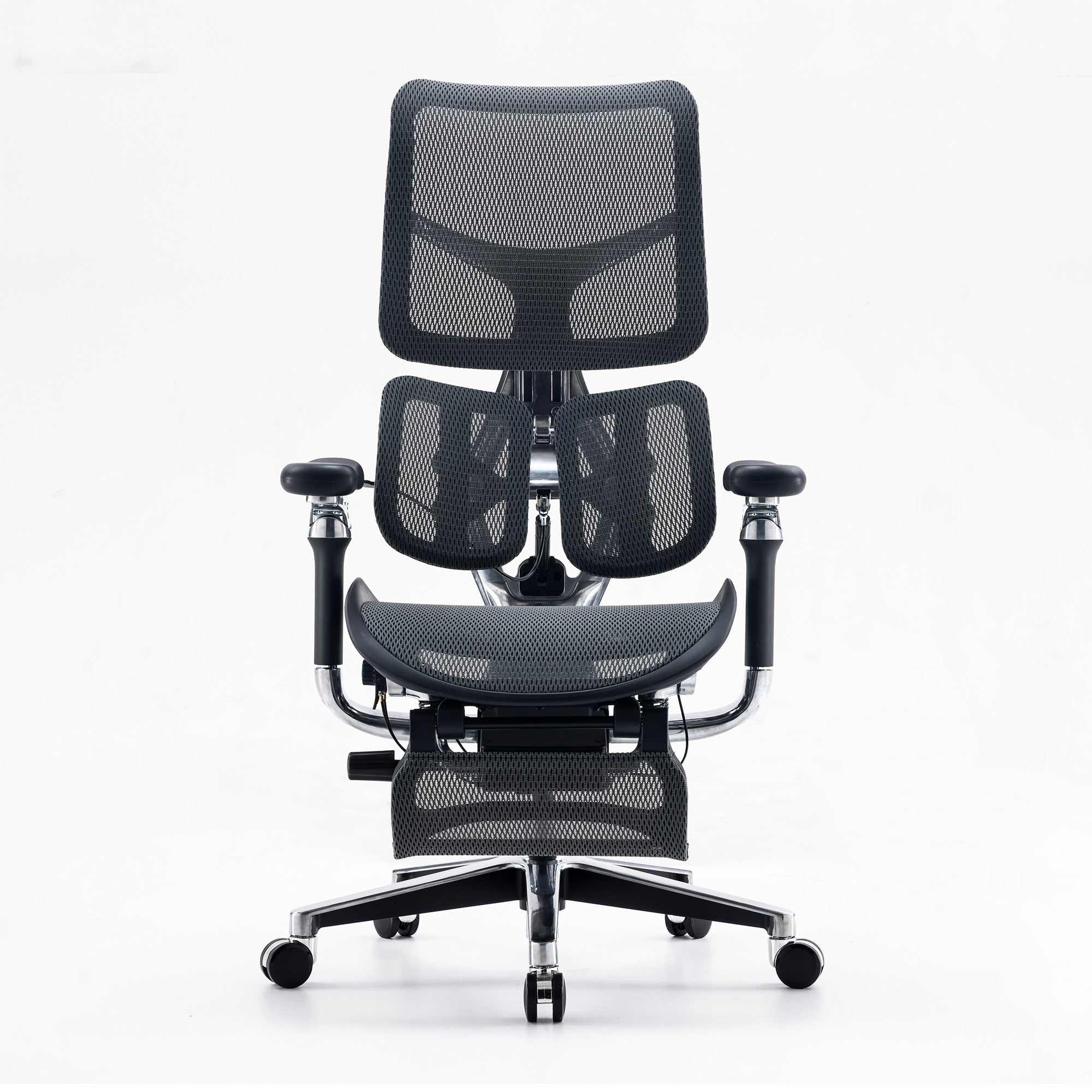
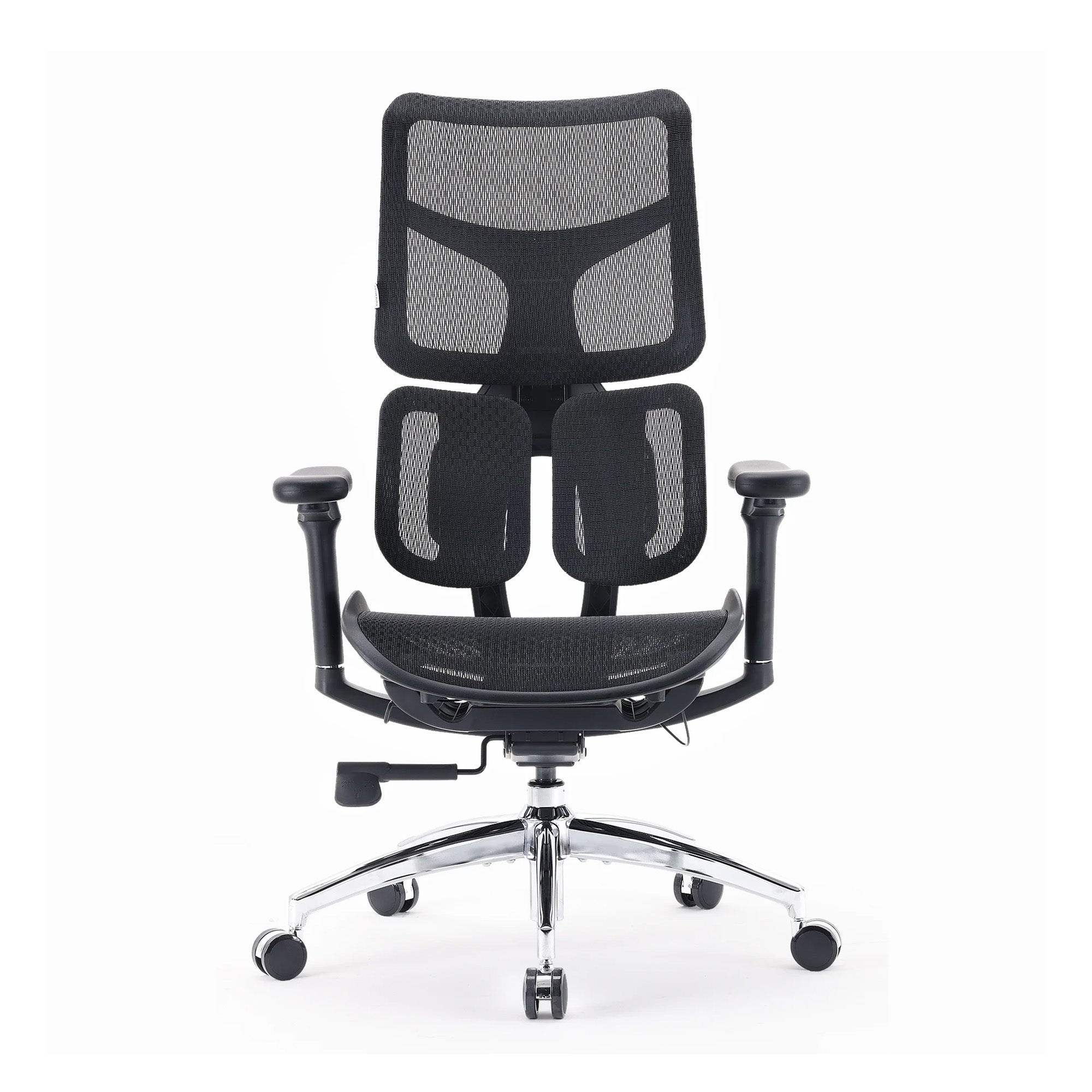
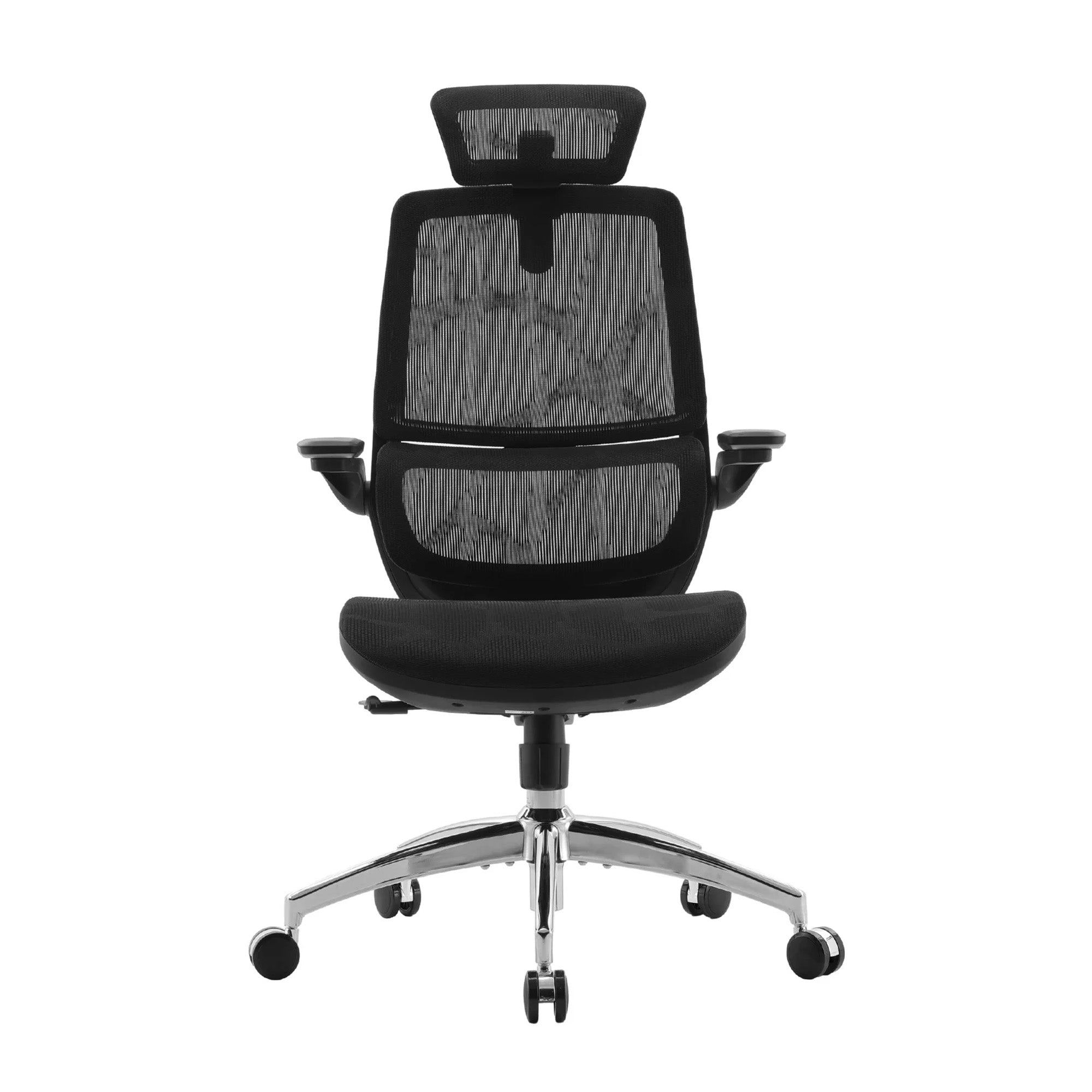
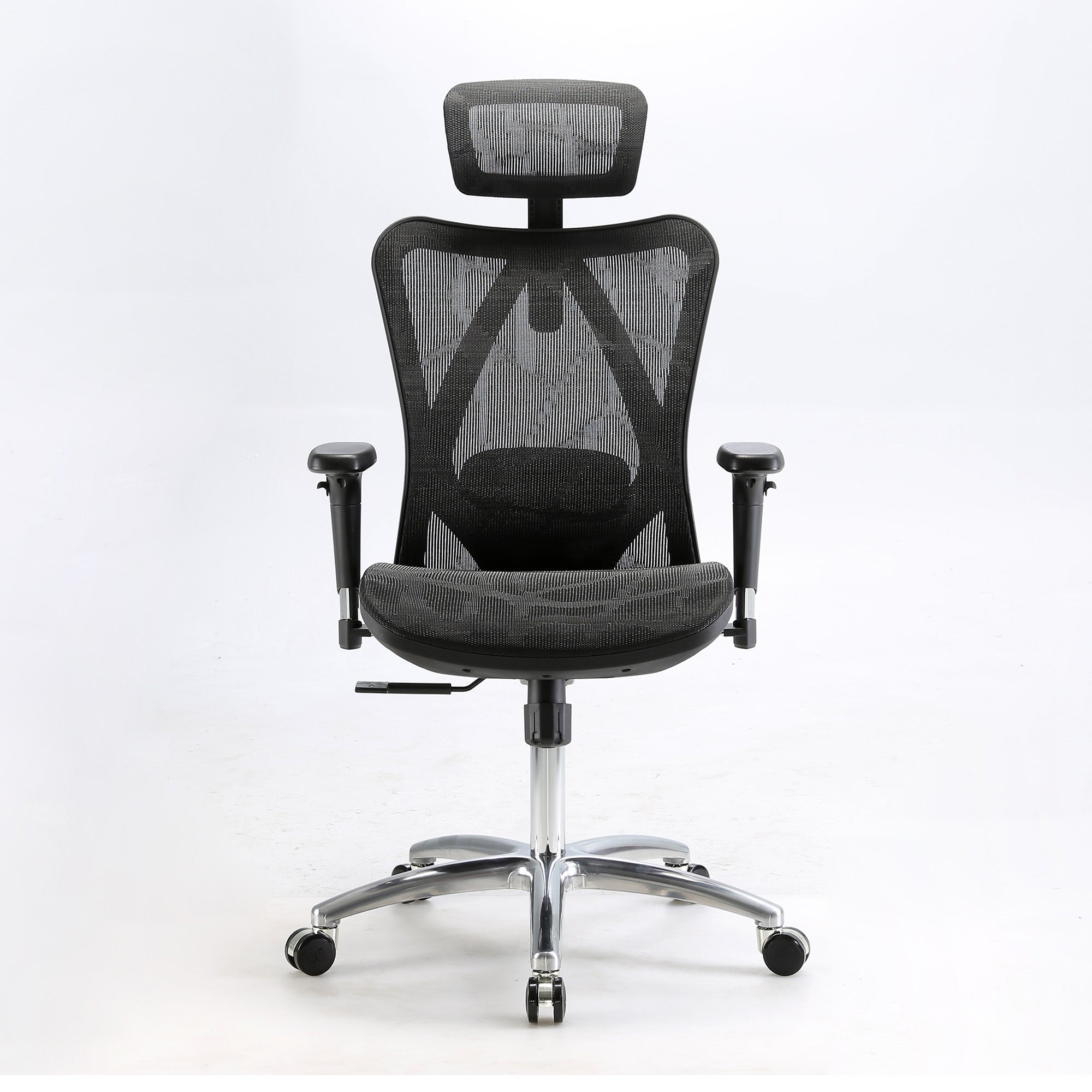
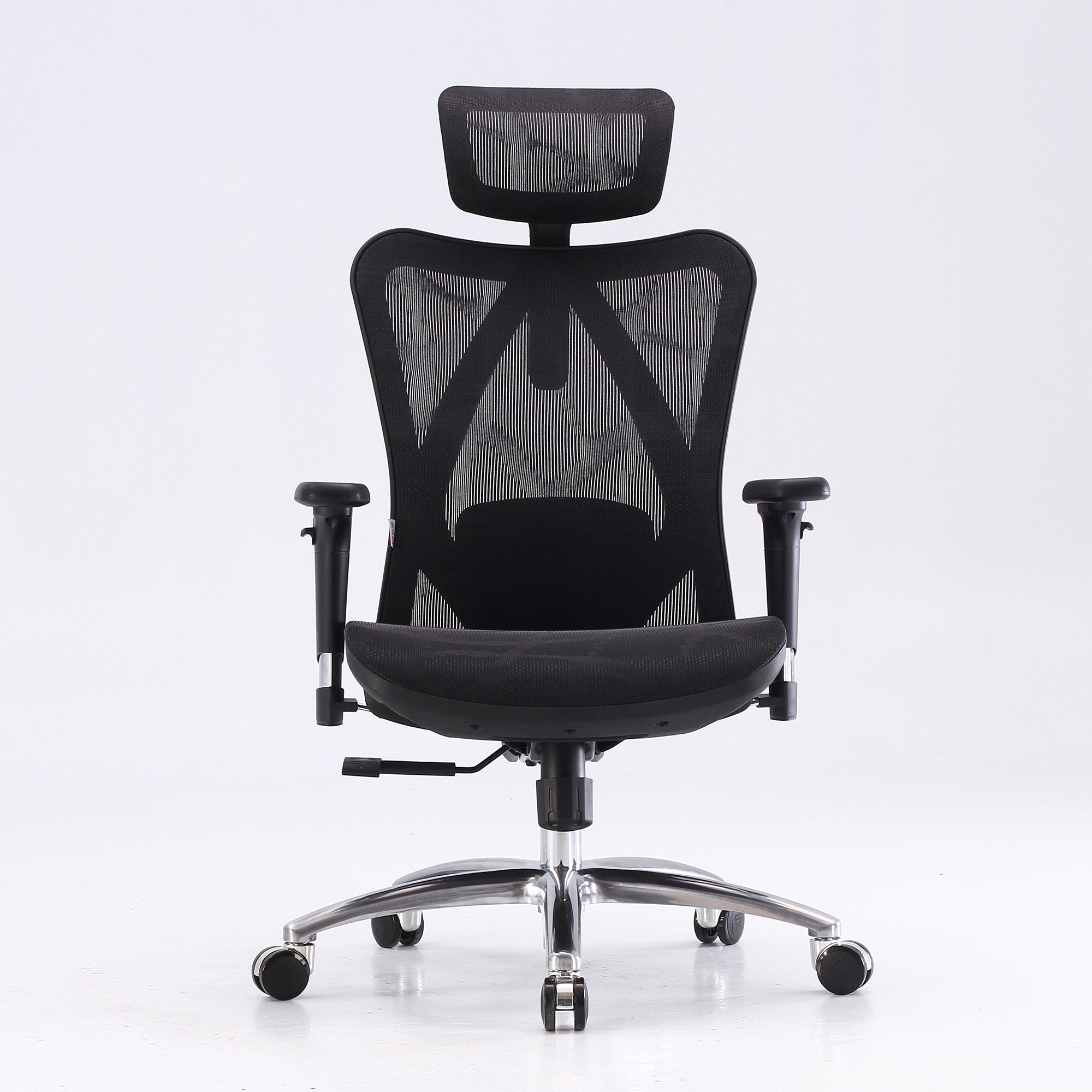
Lumbar support comes in two broad types on the Sihoo pages. Some chairs let you set the pad by hand. The M57 page describes dual adjustable lumbar support that moves vertically and horizontally. The V1 page describes a cushioned lumbar support adjustable in height and depth.
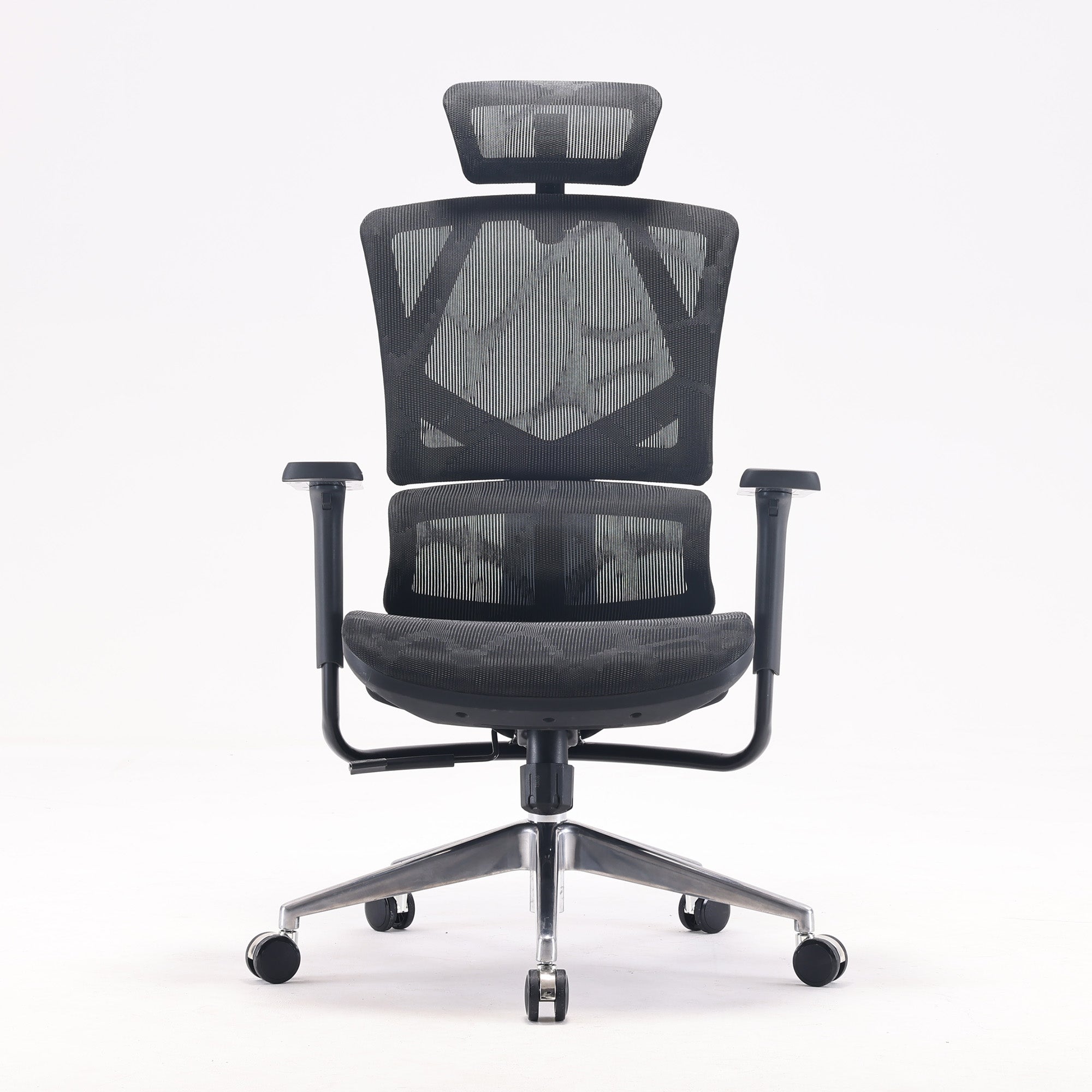
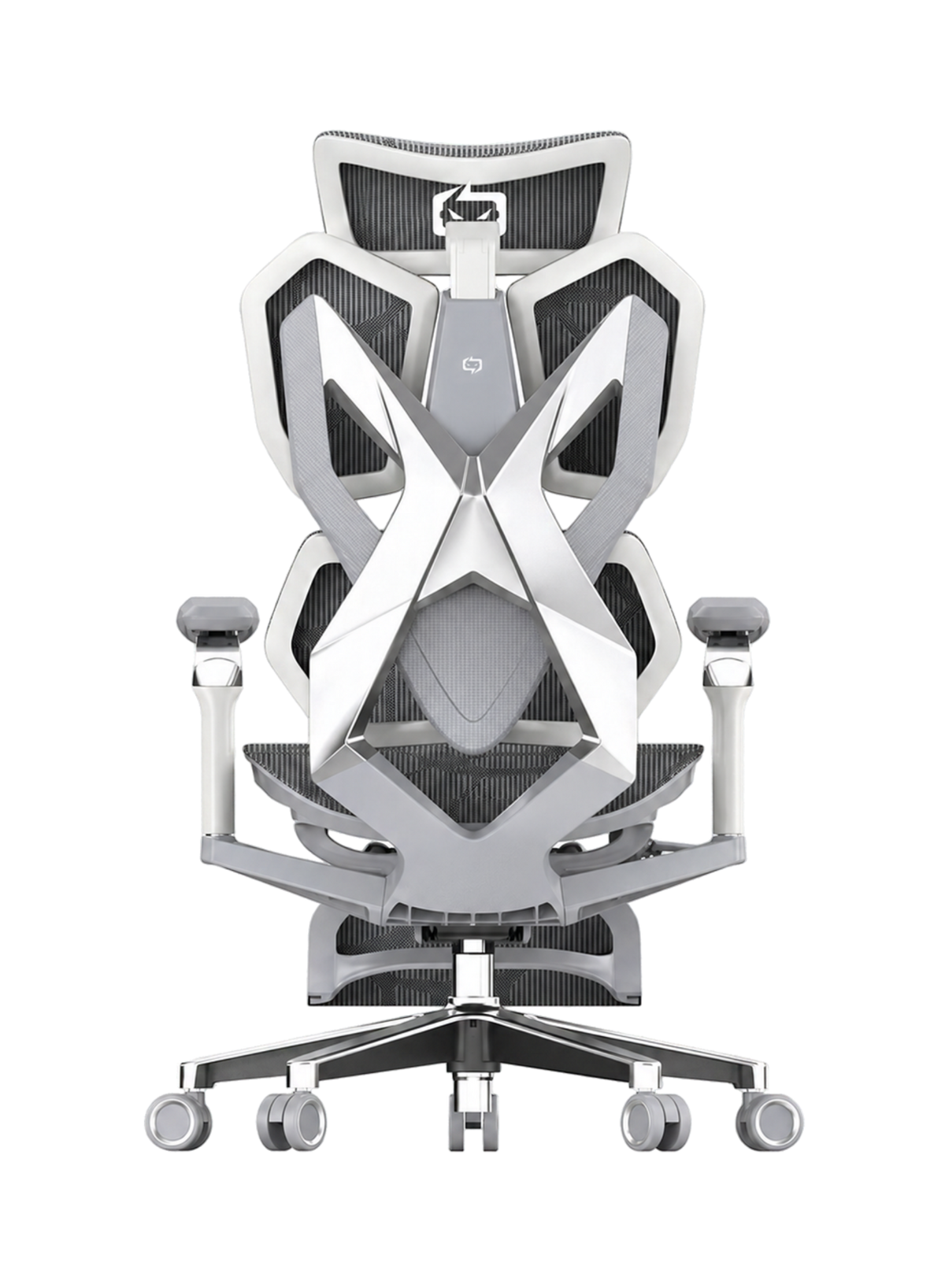
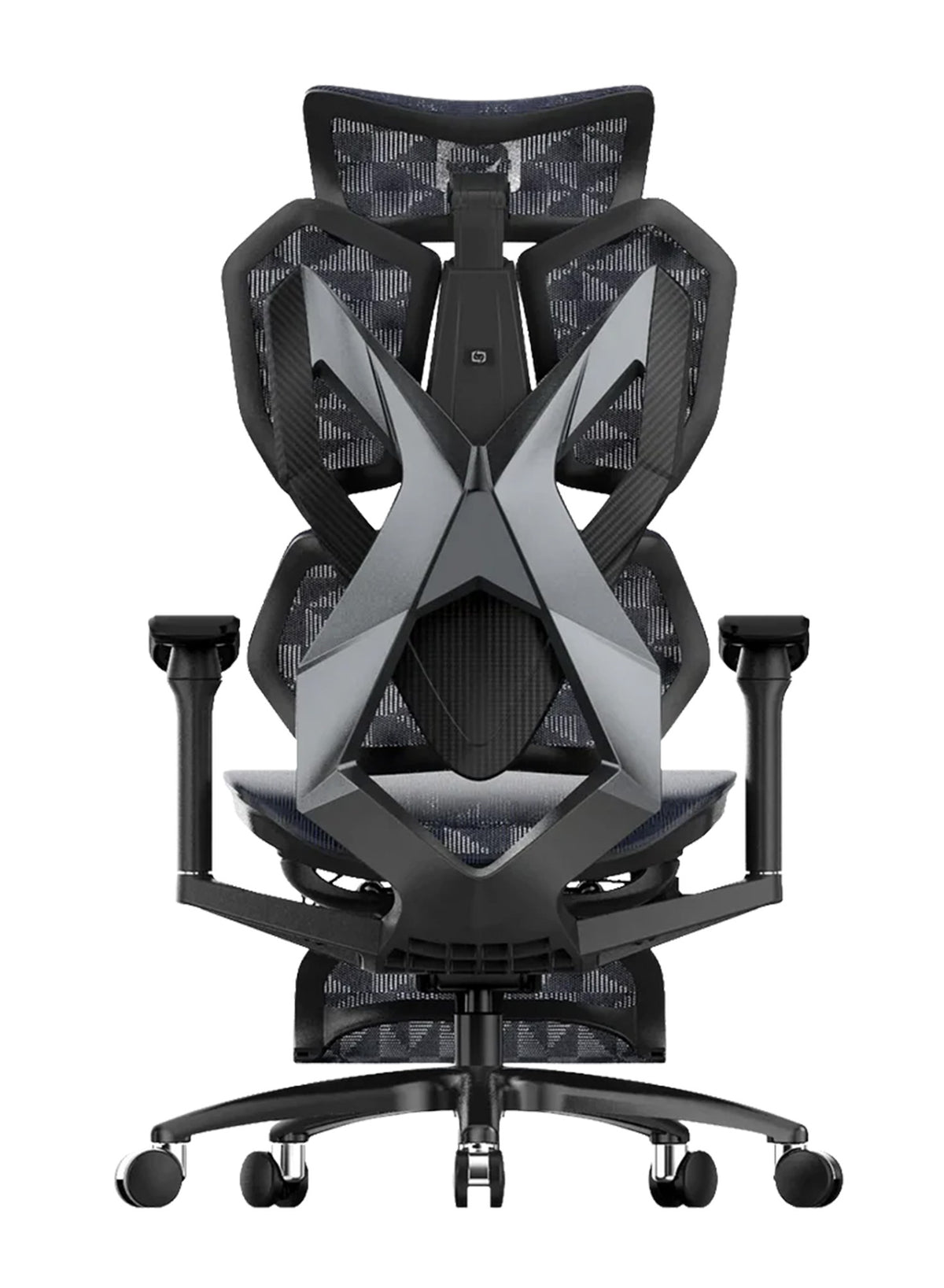
Other chairs adapt on their own. The Doro C100 page describes automatic, self-adaptive lumbar support that works without manual adjustments. The Doro C300 Pro page describes adaptive fibre lumbar support, and the Vito M90 page describes an adaptive two-section lumbar support. The Doro S100 page lists dual dynamic lumbar support.
So which is better? It depends on how you work.
If you like to set a chair once and forget it, an adaptive design saves effort. If you want to fine-tune the position, a manual pad gives you that control. Our lumbar support guide explains the three types in more depth.
We do not claim either type fixes back pain. A chair supports a posture. It does not treat a condition.
When a team shares a hot-desk or rotates through a home office, adaptive lumbar saves a setup step for each new person. Manual lumbar suits staff who each have their own desk and set it once.
Armrests matter most when your desk is also your dining table
Consider a kitchen table with a chair that has fixed armrests. They cannot slide under the table edge, so the sitter sits far back from the table. A chair with adjustable armrests gets around this.
The product pages describe these armrests.
The M57 has 3D adjustable armrests that move up, down and forward, and rotate. The V1 and Doro S100 have 4D armrests.
The Doro C100 has 4D cushioned armrests that sync with the backrest when you recline. The Doro C300 Pro has 6D PU armrests. The Vito M90 has 3D armrests linked to the backrest.
More directions of movement is not always better. A 3D armrest that clears your desk is more useful than a 6D armrest that does not. The test is simple: can you slide the armrest low enough to go under your desk, and can you place it close enough to take weight off your shoulders?
If you work from a small desk, check the width of the armrest gap on the product page or ask Sihoo for the figure. We have not published that spec for any model here because it was not on the pages we checked.
For a workplace, linked armrests that follow the backrest reduce the number of adjustments for each new user. That helps when a chair gets passed between people.

Daily sitting hours decide how much chair you need
Think of a typical working day at a home desk. Emails in the morning, a long call after lunch, and a late push before dinner. By the end the shoulders have crept up and the sitter has slid down.
Hours matter because posture drifts over time. Waongenngarm, Rajaratnam and Janwantanakul (2016, Safety and Health at Work, DOI 10.1016/j.shaw.2015.08.001) had 30 office workers sit for one hour in an upright, slumped or forward-leaning posture.
After an hour, discomfort had risen in the neck, shoulders, upper back, low back and buttocks in all three groups. Only the slumped group showed signs of fatigue in the internal oblique and transversus abdominis muscles. This was a small study, and it shows an association over one hour, not a long-term cause.
The practical reading is modest. Any posture gets uncomfortable over time, and slumping may add a particular kind of muscle fatigue. A chair that makes it easy to stay supported helps, but breaks and movement still matter.
A simple way to match chair to hours
This is our own rule of thumb, not a research finding. Under three hours a day: fix your current setup first. Three to six hours: a mid-priced chair with the right fit is usually enough. Six hours or more: pay more attention to seat depth, lumbar type and breathable mesh, because small mismatches add up.
If you have numbness, pain that travels down a leg, or pain that wakes you at night, please see a GP or physiotherapist. A new chair is not the right first step for those symptoms.
For teams, a quick hours survey tells you who needs a better chair first. The staff who sit longest are the best place to start.
Set a budget number before the sale starts
Imagine two shoppers. One decides on a figure in advance and checks only models near it. The other sees a big red price cut and buys the first chair that shows one. Only the first has a plan.
Prices change, so check sihoo.com.au for current pricing. When we looked on 26 October 2026, the product pages showed these prices.
|
Model |
Price seen 26 Oct 2026 |
Warranty on the page |
|---|---|---|
|
Sihoo M57 |
From $329 |
3 years |
|
Sihoo Vito M90 |
From $339 |
3 years |
|
Sihoo Doro C100 |
$459 |
Page shows both 5 and 3 years |
|
Sihoo Doro S100 |
$499 |
5 years |
|
Sihoo V1 |
From $529 |
3 years |
|
Sihoo Doro C300 Pro |
From $747 |
5 years |
Pages also show higher "was" prices. We do not use those here.
The ACCC said in media release 122/25 (10 November 2025) that its Black Friday sweep would check sale advertising. Its list included misleading was/now or strikethrough pricing and countdown timers that do not match the real sale length. It also named "up to X percent off" claims, site-wide sales with exclusions, and fine print that limits headline claims. That is a good reason to track a price yourself.
Note the price today, and judge any later deal against it.
Three other costs are worth noting. First, dispatch time: several Doro pages showed an extra 5 to 7 business days of dispatch when we checked. Second, warranty: confirm the term on the page for the exact model. Third, returns: read the terms before you pay and keep the box.
If you buy for a team, ask for a quote on larger orders through wholesale office chairs and compare it with the single-unit price.
Use the decision table to match your answers to a model
This table is the heart of the guide. Find the row that sounds most like you, then check the model against your own six answers.
|
If this describes you |
Look first at |
Why, from the product page |
Watch out for |
|---|---|---|---|
|
Under 6 hours a day, tight budget, no need for seat depth change |
Sihoo M57 |
Full mesh, 3D armrests, dual adjustable lumbar, rated to 150 kg |
Seat depth change not mentioned; fit data is in an image only |
|
Medium budget, want seat depth change and hands-off lumbar |
Sihoo Doro C100 |
Adjustable seat depth, automatic lumbar, 4D armrests |
Depth range not published |
|
Long legs, 6 or more hours a day, want manual lumbar |
Sihoo V1 |
Seat depth 44.5 to 49.5 cm, lumbar adjustable in height and depth, recline 90 to 140 degrees |
Prices start higher; confirm the weight limit on the page |
|
Mid-sized frame, wants a fixed seat and adaptive lumbar |
Sihoo Vito M90 |
46 cm fixed seat, adaptive two-section lumbar, designed for 165 to 188 cm |
No seat depth adjustment mentioned |
|
Higher budget, 6 or more hours, wants linked recline and 6D armrests |
Sihoo Doro C300 Pro |
Up to 4 cm seat depth change, three-position recline lock, 6D armrests |
Highest price on this list |
|
Shorter thighs, wants the smallest seat depth range |
Sihoo Doro S100 |
Seat depth 38.5 to 43.5 cm |
2.6 out of 5 from only 5 reviews, one says the chair was too large for their height |
|
Under 3 hours a day |
Your current chair |
A small fix costs less than a new chair |
See the next section |
Match each answer to a named Sihoo model
Now to the models themselves, with the honest limits for each. We checked every page on 26 October 2026, and ratings can change.
Sihoo M57: the default for most home desks
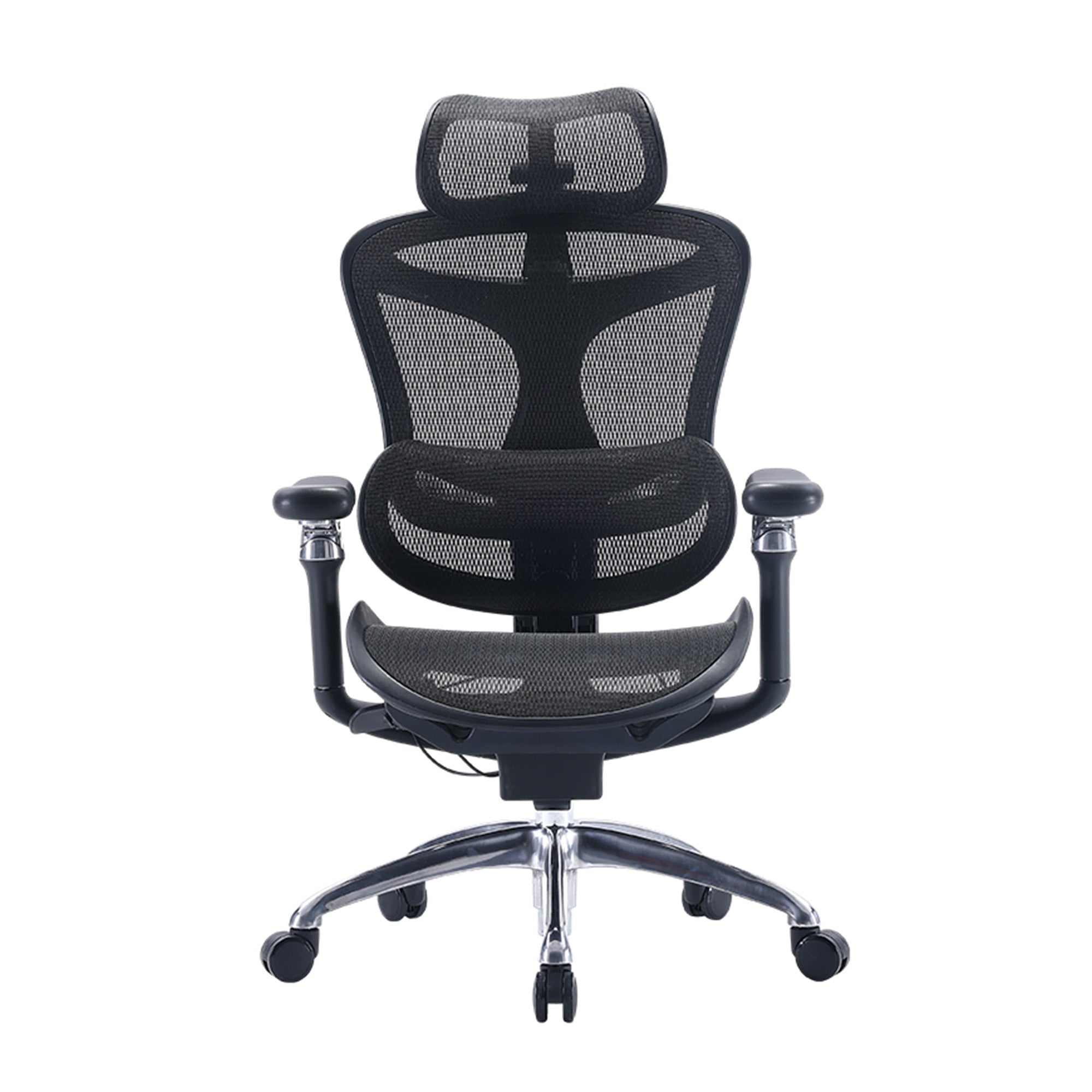
The M57 mesh chair shows a 4.6 out of 5 rating from 926 reviews, the largest review base of any model here.
It has a full mesh back and seat, 3D armrests, dual adjustable lumbar, up to 126 degrees of recline, and a 150 kg rating. Its limits are plain. The page does not mention seat depth adjustment, and it gives size data only in an image. If your seat depth target is unusual, choose another model.
Sihoo V1: for longer legs and longer days
The V1 sliding-seat chair has the widest sliding seat range in this list, 44.5 to 49.5 cm. The page also lists 4D armrests, a lumbar that adjusts in height and depth, and recline from 90 to 140 degrees. It rates 4.6 out of 5 from 74 reviews. The cost is higher than the M57, and the weight limit on the page, 136 kg, differs from older figures, so confirm it before ordering.
Sihoo Doro C100: for hands-off lumbar and a mid budget
The Doro C100 chair rates 4.7 out of 5 from 125 reviews. It offers adjustable seat depth, automatic lumbar and 4D armrests that follow the recline. Its limits are the missing seat depth range and a high-demand tag with extended dispatch. Read the page twice before you buy.
Sihoo Doro C300 Pro: when hours and budget are both high
The Doro C300 Pro chair lists up to 4 cm of seat depth change, a linked recline with three lock positions, 6D armrests and a 150 kg rating. It rates 4.6 out of 5 from 183 reviews. It costs the most of these six, and dispatch was extended when we checked. If your sitting day is under six hours, you probably do not need it.
Sihoo Vito M90 and Sihoo Doro S100: narrower fits
The Vito M90 chair has a fixed 46 cm seat and adaptive lumbar. It rates 4.5 out of 5 from 86 reviews. It suits those whose measurements land near 46 cm and who sit between 165 and 188 cm tall.
The Doro S100 chair has the shortest seat range here. Its page shows only five reviews, with two at 5 stars and three at 1 star. The low reviews mention back and neck discomfort, and one says the chair is too large for the sitter. Five reviews are too few to judge, but we would not skip that warning.
You should not buy a chair this sale if these apply to you
Sometimes the right answer is to wait. Here are the cases we would flag.
First, if you sit under three hours a day, fix the setup you have. Raise the screen to eye level, add a footrest, and set a timer to stand up. A new chair can wait.
Second, if your pain is sharp, spreading or getting worse, see a GP or physiotherapist before spending money. A chair is not a diagnosis.
Third, if you are under about 150 cm tall, or need a seat shallower than 38.5 cm, none of the six models here may fit. Try a chair in a showroom, or look at a brand that publishes shorter seat ranges.
Fourth, if you weigh over 150 kg, check the weight rating on any chair before you order, and consider a chair built for a higher limit.
Fifth, if you cannot return a chair easily, be careful about buying under time pressure. A countdown timer is not a reason to skip the measuring.
For a business, the same logic applies at scale. Do not place a bulk order until two or three staff have tested the same model for a week.

Conclusion
The best time to choose a chair is before the sale, not during it. Six answers, a tape measure and fifteen minutes will do more for your comfort than any price tag.
Start with the free fixes. Check your desk gap, measure your seat depth, and decide how many hours a day you sit. Then pick the lumbar and armrest style you will actually use. If the numbers say you need a new chair, you will know which one before the countdown timers start.
If you want a place to begin, browse the best ergonomic office chairs in Australia with your six answers beside you. For most home desks, the M57 is a sound start. The V1 and C100 suit those who need seat depth change. A different brand may suit very short or very heavy sitters.
Whatever you choose, read the warranty, dispatch time and returns terms before you pay. A deal is only good if the chair fits.
Sources Referenced
• Australian Bureau of Statistics, Working arrangements, August 2025 (released 12 December 2025), https://www.abs.gov.au/statistics/labour/earnings-and-working-conditions/working-arrangements/latest-release
• ACCC, "ACCC puts retailers on notice ahead of Black Friday sweep", media release 122/25, 10 November 2025, https://www.accc.gov.au/media-release/accc-puts-retailers-on-notice-ahead-of-black-friday-sweep
• Sydor M, Hitka M (2023), Chair Size Design Based on User Height, Biomimetics 8(1):57, DOI 10.3390/biomimetics8010057, https://www.mdpi.com/2313-7673/8/1/57
• Waongenngarm P, Rajaratnam BS, Janwantanakul P (2016), Internal Oblique and Transversus Abdominis Muscle Fatigue Induced by Slumped Sitting Posture after 1 Hour of Sitting in Office Workers, Safety and Health at Work 7(1):49-54, DOI 10.1016/j.shaw.2015.08.001, https://doaj.org/article/973108ddd1684b3e9946ecae73733674
• Cornell University Ergonomics Web, Ergonomic guidelines for computer workstations, https://ergo.human.cornell.edu/ergoguide.html (checked 26 October 2026)
• Sihoo Australia, product pages for M57, V1, Vito M90, Doro C100, Doro C300 Pro and Doro S100, sihoo.com.au, checked 26 October 2026
• Sihoo Australia blog, Lumbar Support for Office Chair: Adjustable, Dynamic or Fixed?, checked 26 October 2026
• Sihoo Australia blog, Oktoberfest Chair Sale: Will Your New Office Chair Fit Your Desk and Workspace?, checked 26 October 2026
Frequently Asked Questions
Start with six answers: desk height, seat depth, lumbar type, armrest type, daily hours and budget. Measure your desk gap and your buttock to knee length first. Then compare the numbers with each product page. If a page does not list a number you need, ask before you buy.
Only if a chair you have already checked is on sale. We cannot confirm any sale. Waiting makes sense when your current setup is bearable, and it makes less sense if you are in pain every day. Note today's price so you can judge a later deal.
Track the price yourself before the sale. The ACCC has flagged misleading was/now pricing, countdown timers that do not match the sale length, and "up to X percent off" claims as Black Friday concerns. Ignore the crossed-out price and ask whether the new price suits your budget.
No. A chair that fits your legs and desk beats a pricier one that does not. The Doro C300 Pro adds seat depth change, a linked recline and 6D armrests, which matter most for long days. For under six hours, an M57 may do the job.
Cornell University's ergonomics guide says to take a brief rest break every 30 to 60 minutes. It also says a static standing posture is even more tiring than a static sitting one, so movement matters. Move around more often if your body asks for it, and see a GP or physiotherapist if discomfort lingers.
Send each person the six questions and collect the answers. Group them by seat depth and hours. Then order a small trial of two or three models. This costs less than refitting a full order later.
No. People differ in height, leg length and hours. A single model rarely fits everyone. Two or three models usually cover a team, and seat depth is the spec that most often separates them.
Check the warranty term on the exact model page, the dispatch time, and the return terms. Ask for the quote in writing. Pilot the chair with a few staff for a week before the full order.
Shop products from this article


SIHOO’s Black Friday Sale is ON! Save up to 49% + EXTRA $50 off qualifying chairs over $700. Add an M18 or M57 to a qualifying Doro chair purchase for $15 less! Shop now. Pay in 4 with Afterpay.
SHOP NOWRecommended Posts


Best Sihoo Office Chairs Under $300 in Australia
Nov 09, 2026
