
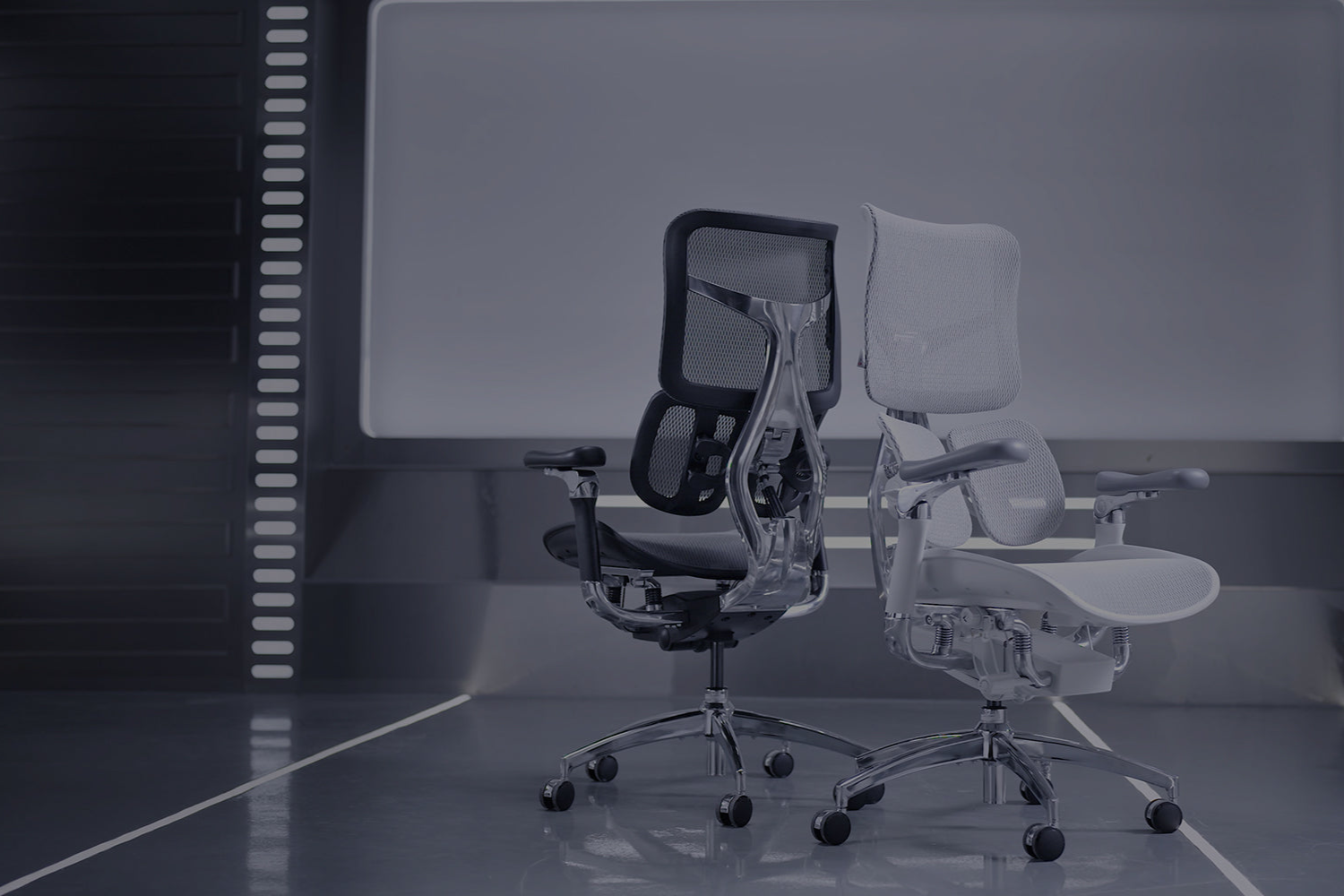
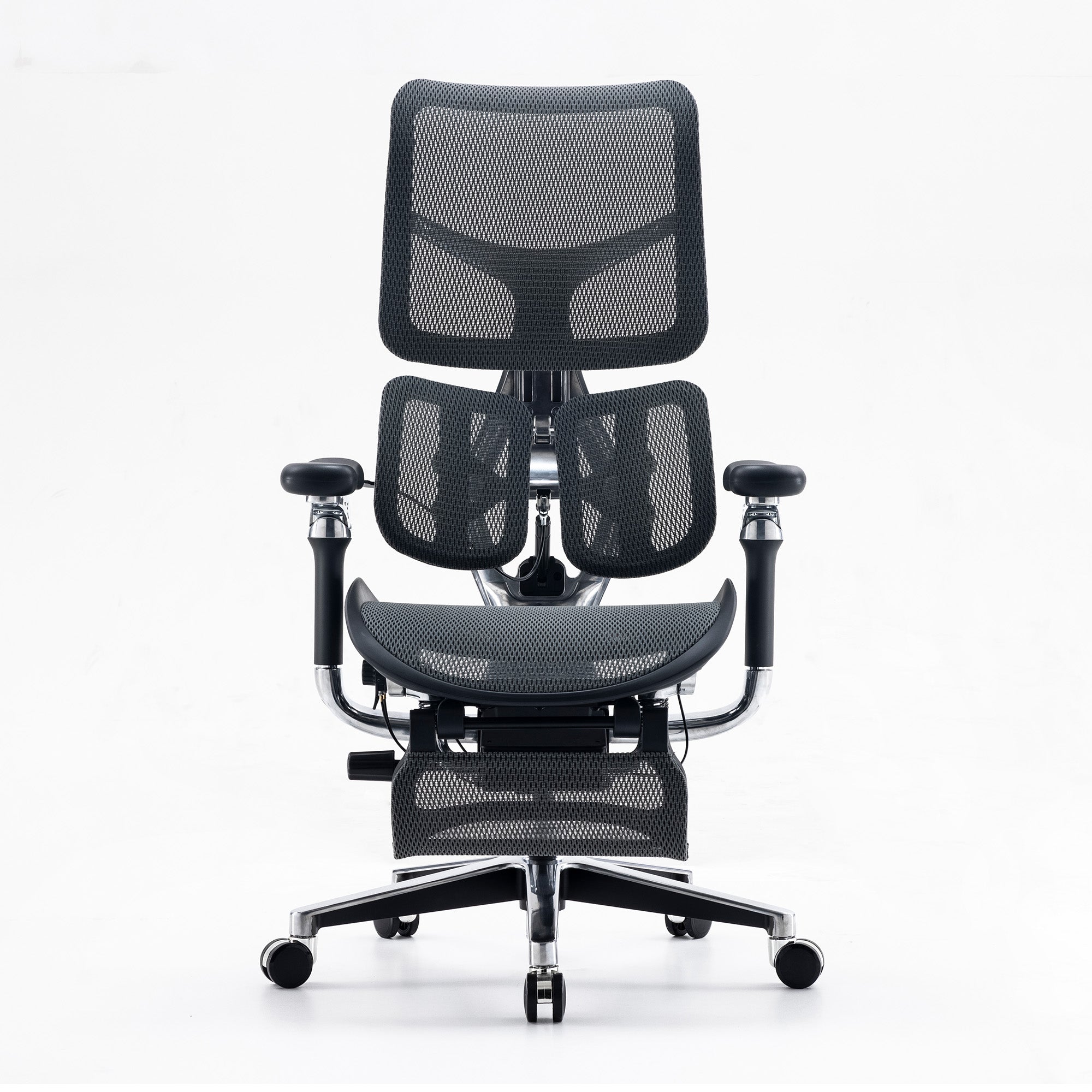
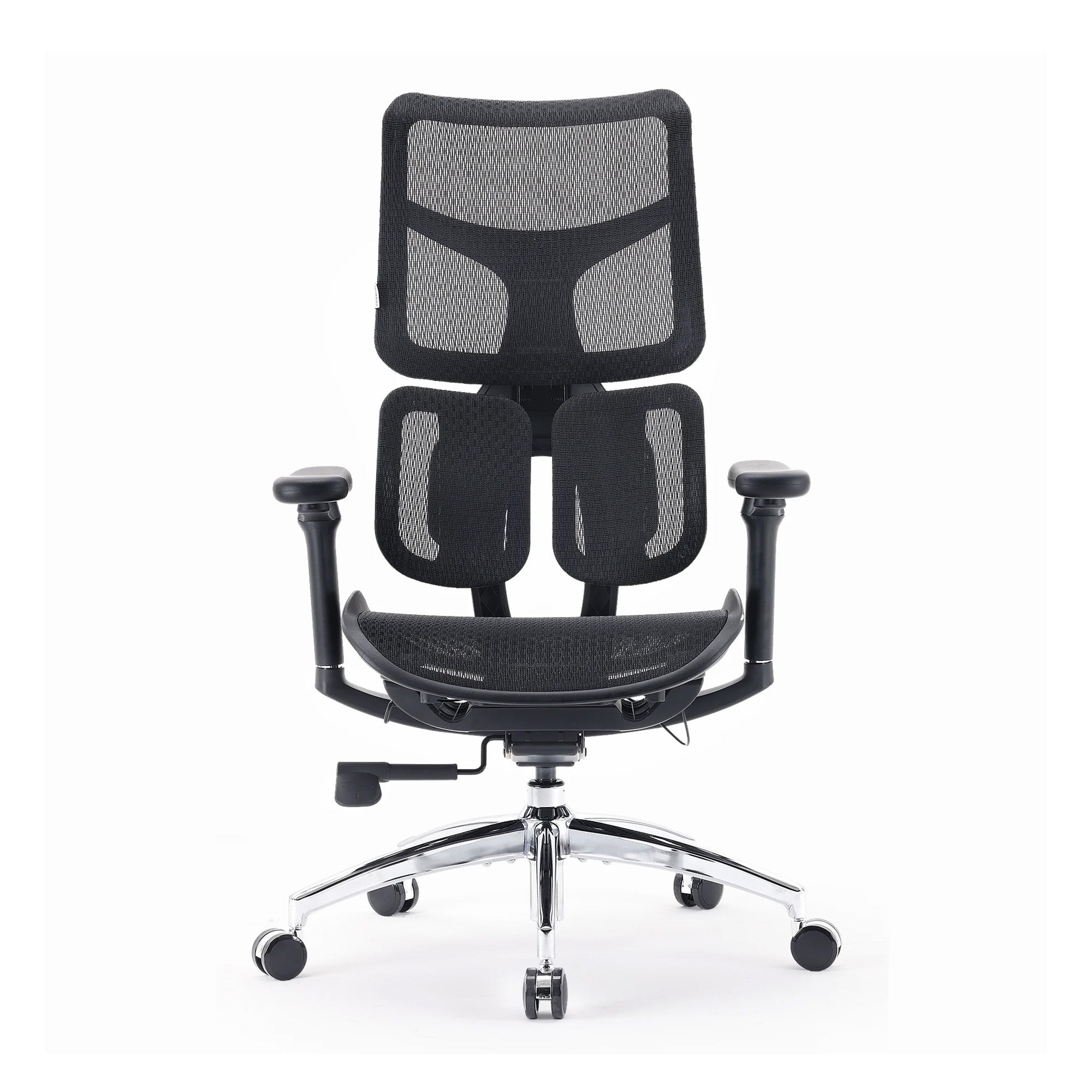
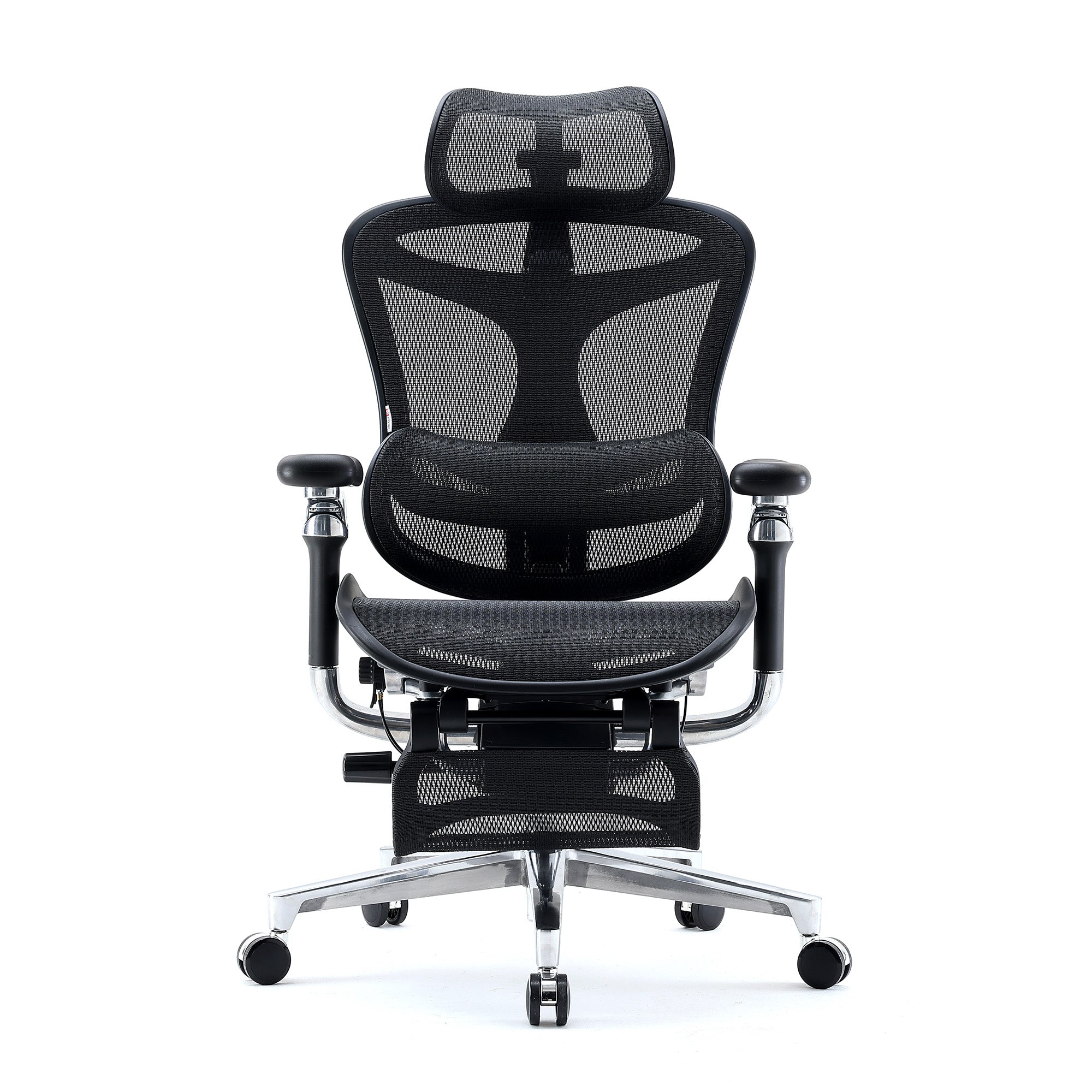
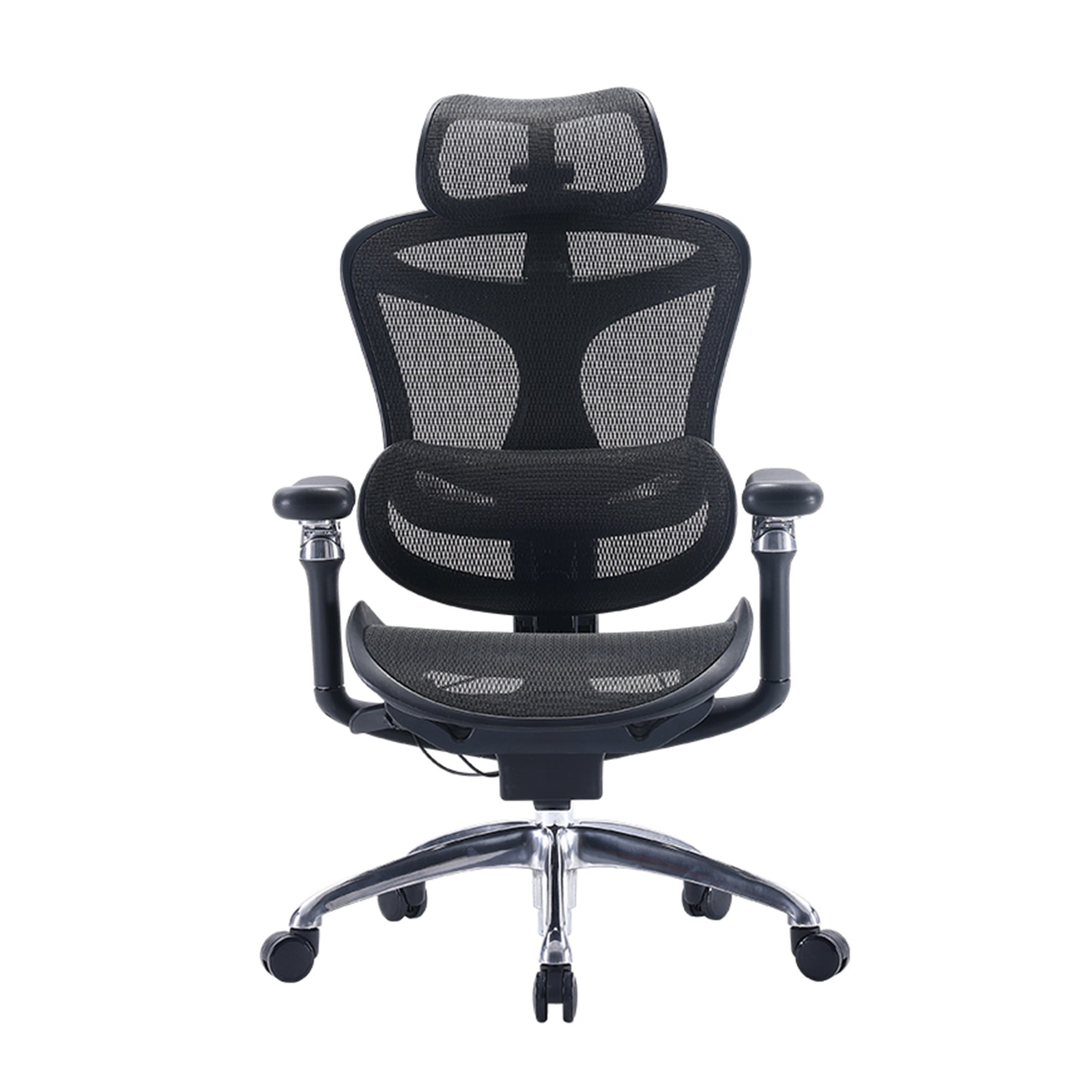
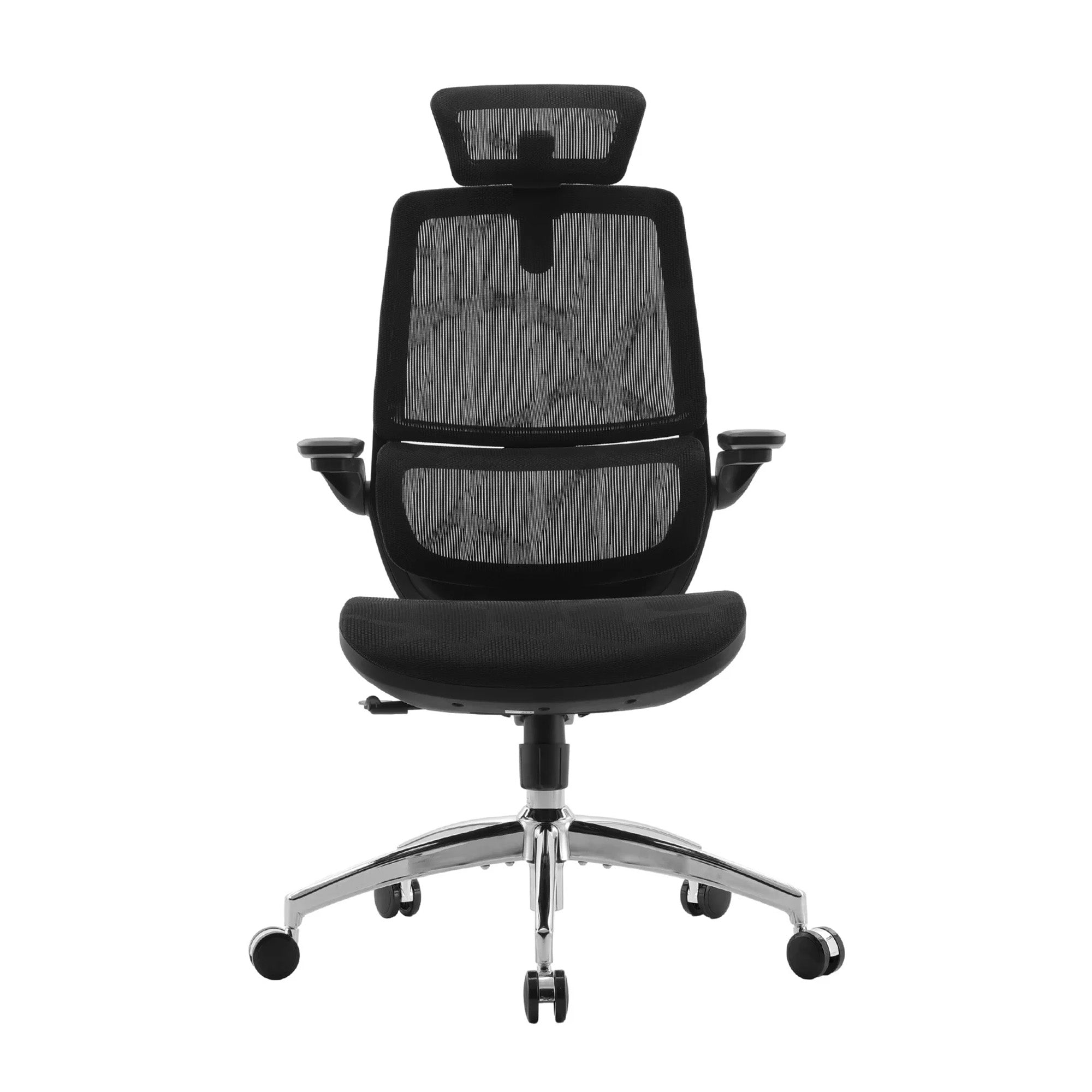
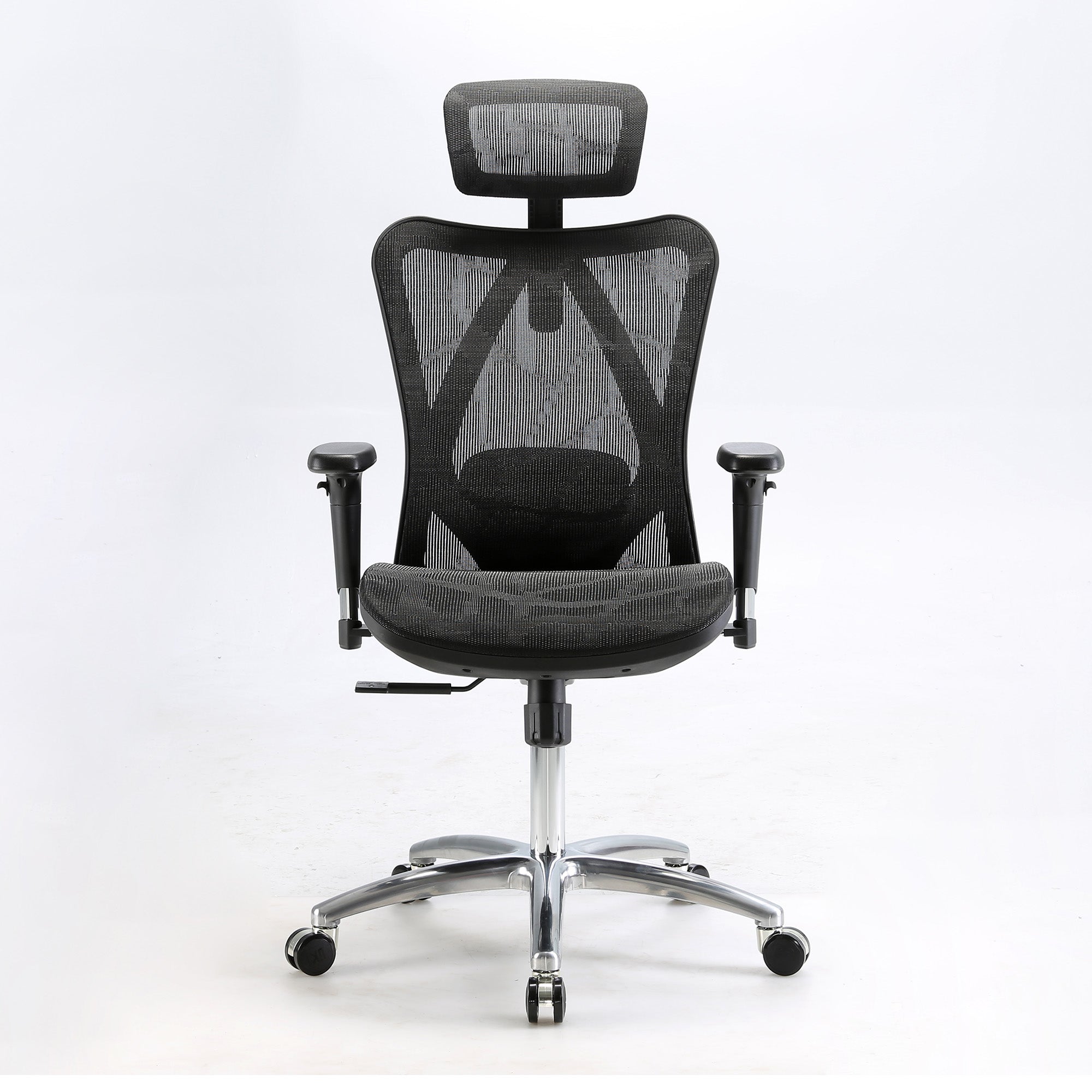
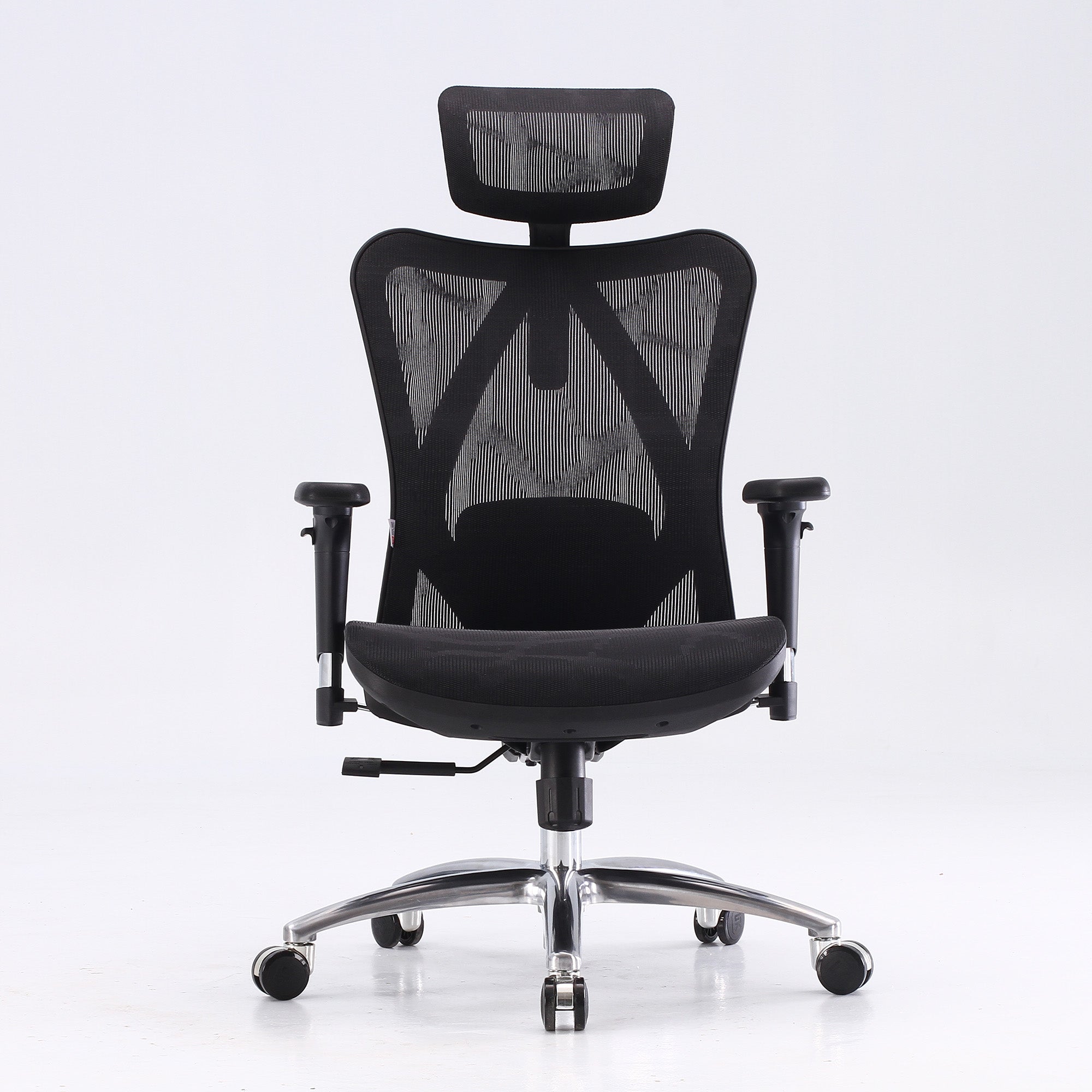
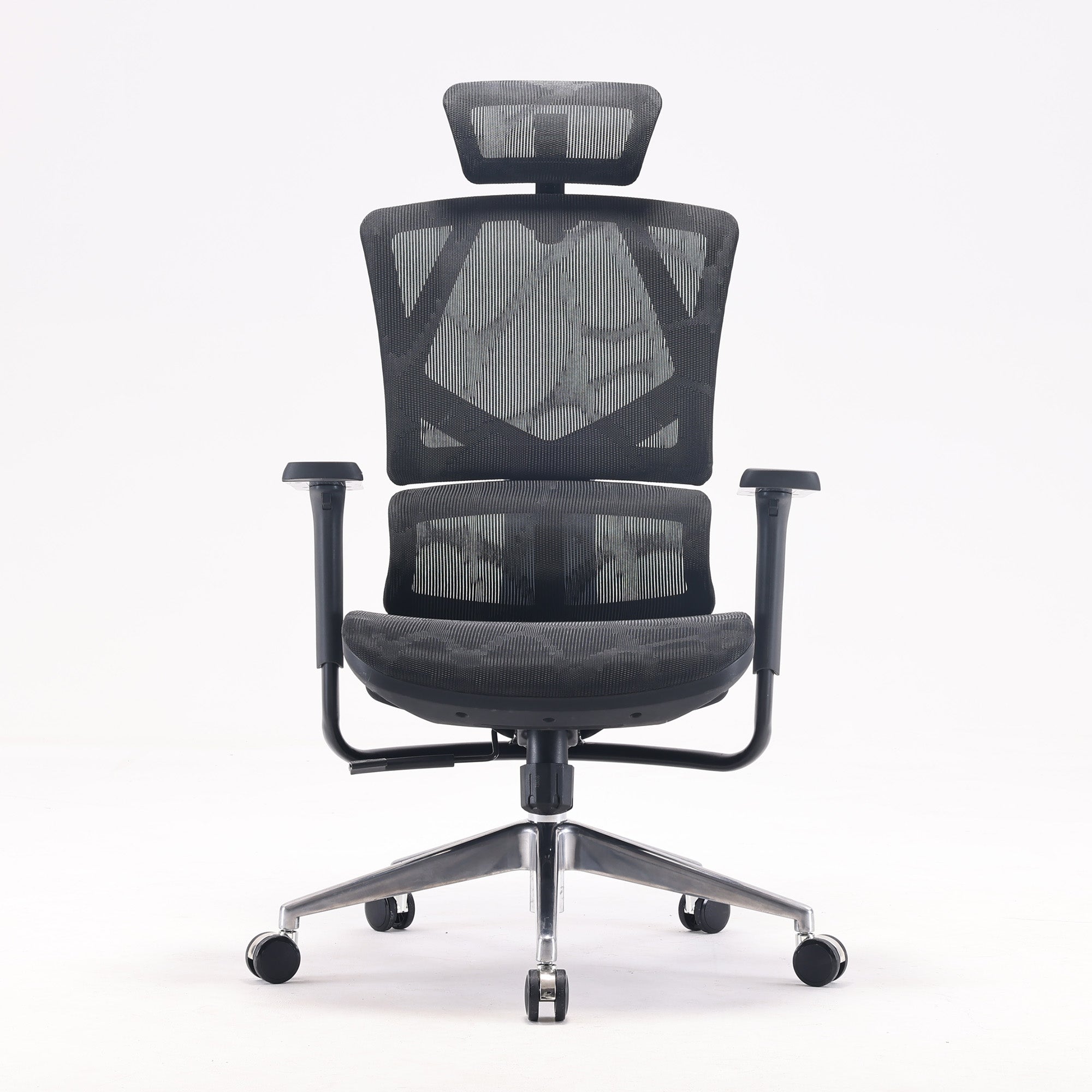
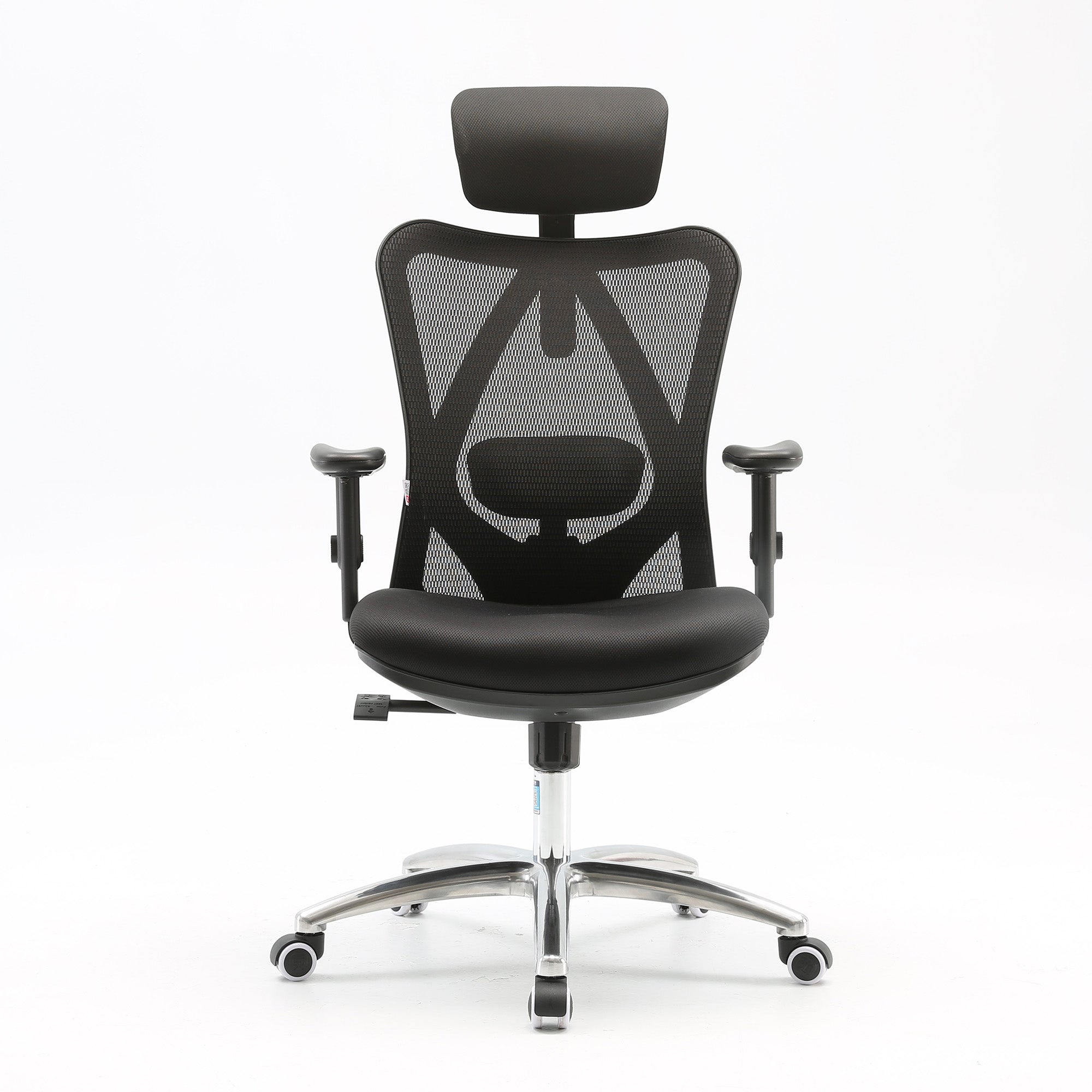
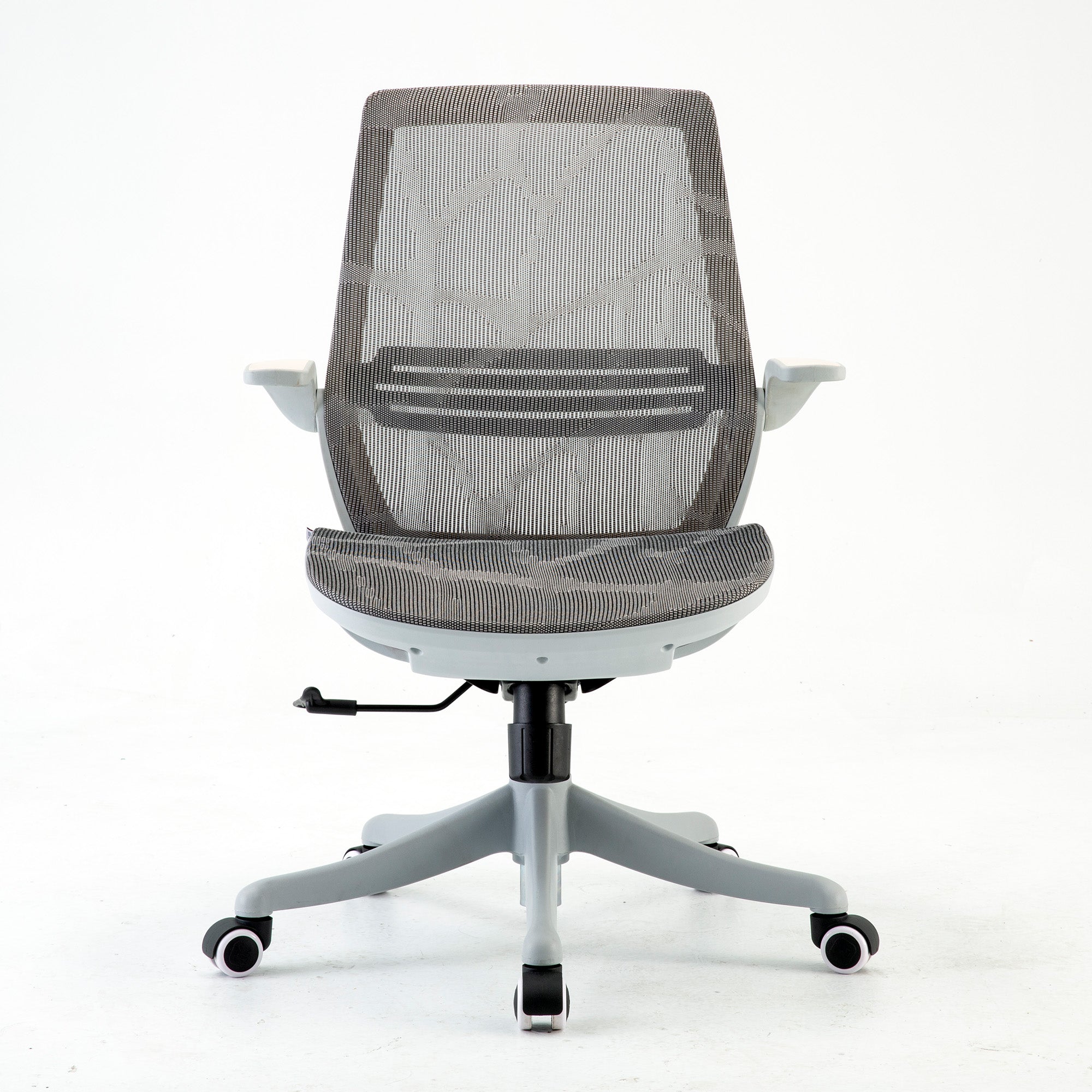
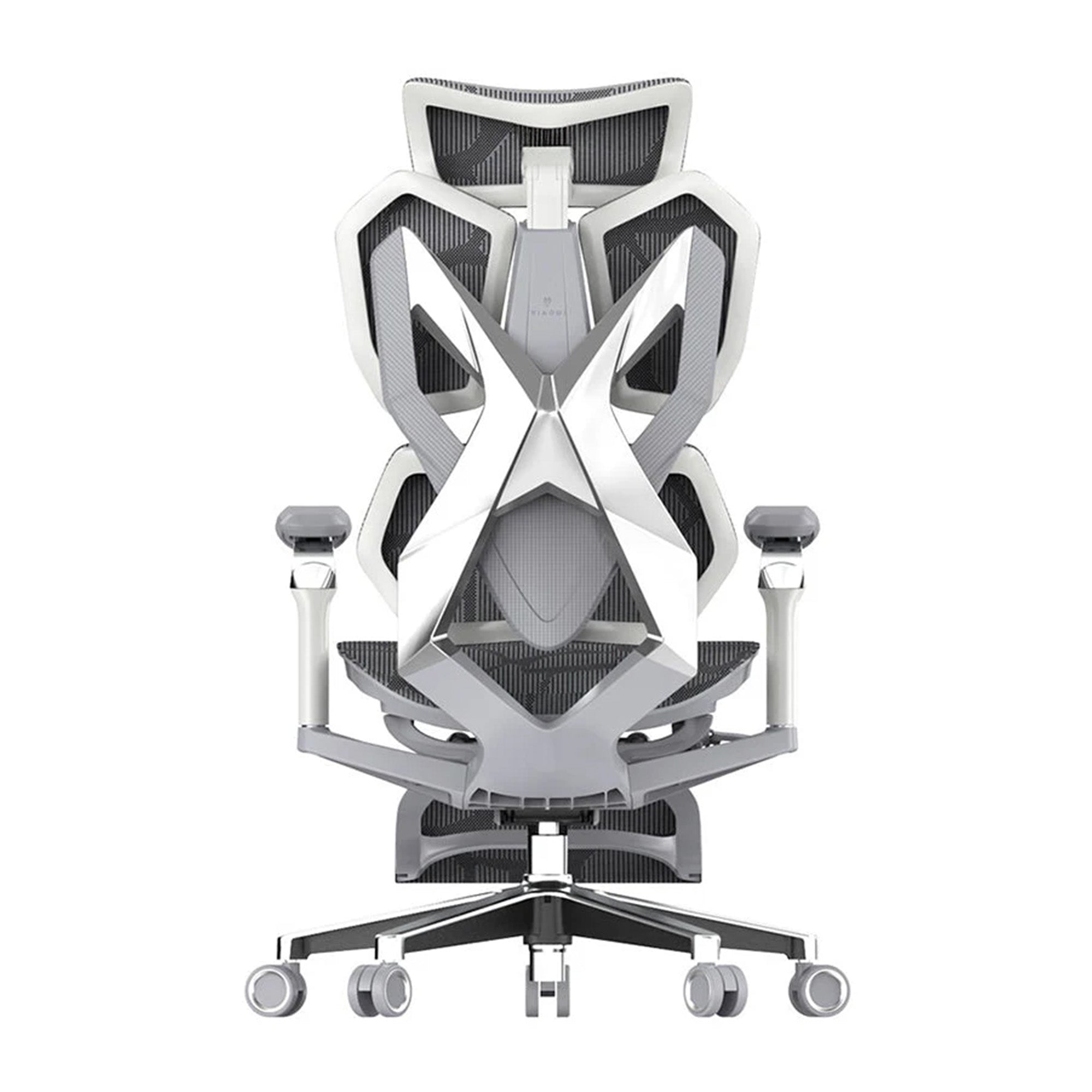

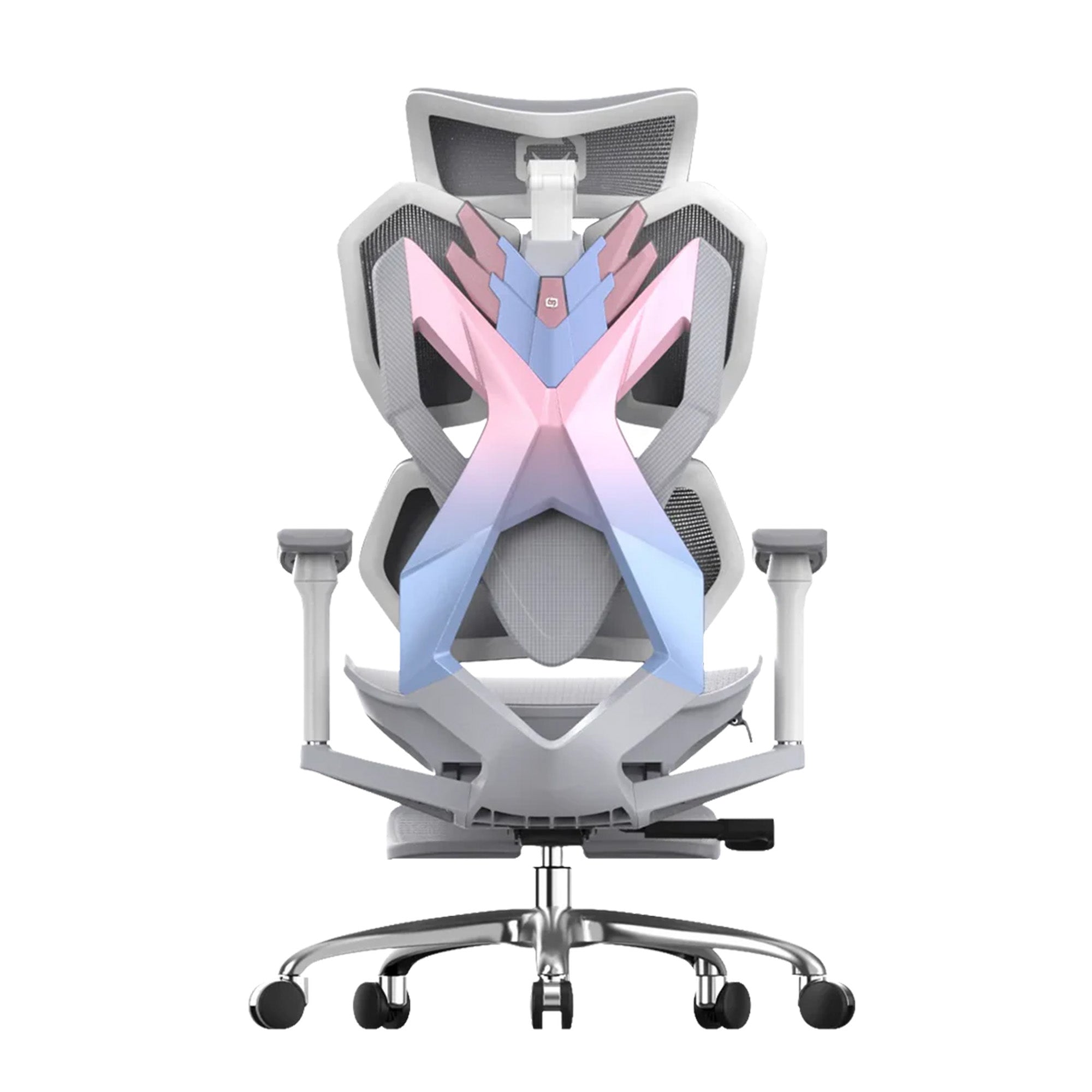
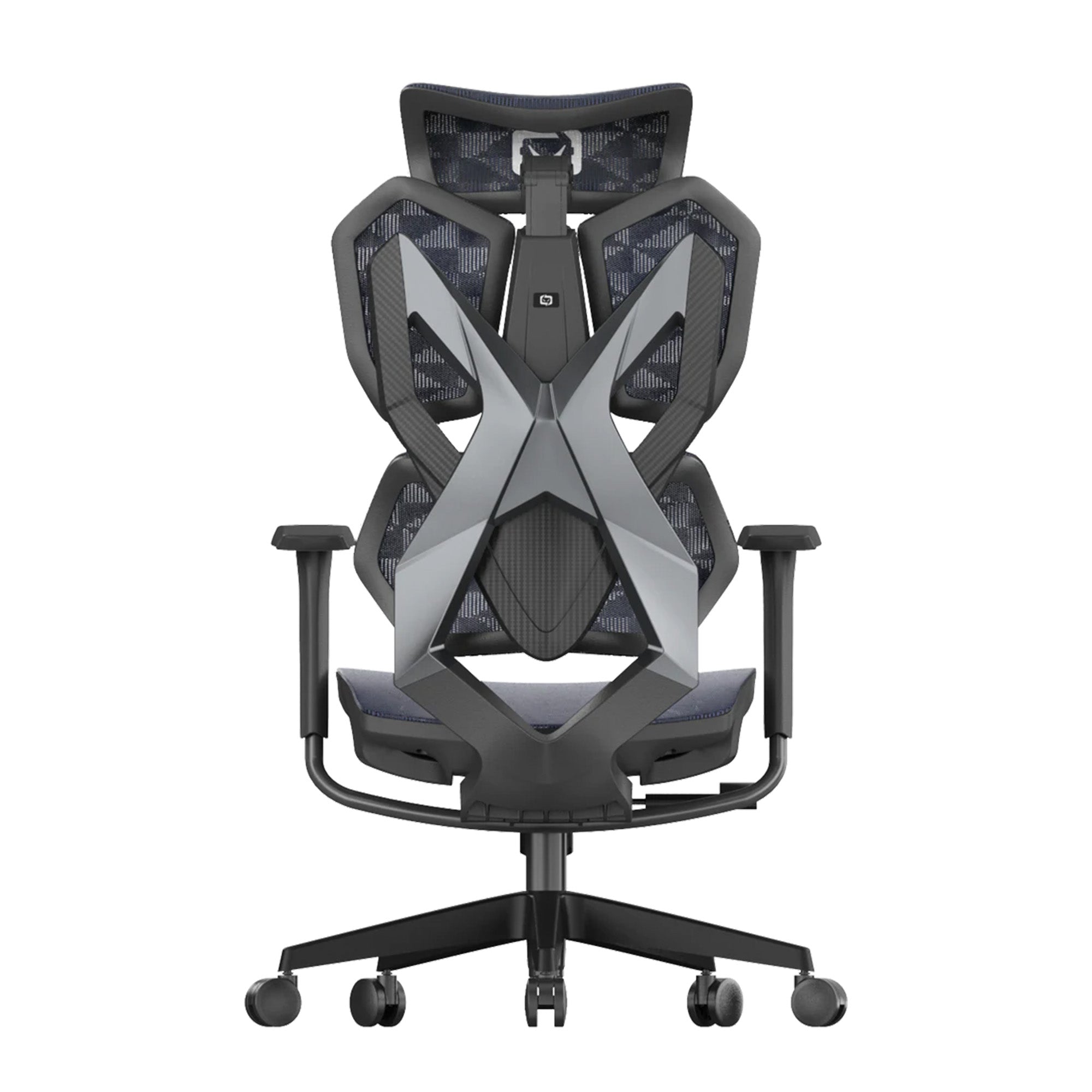

The spec sheet says seat height 42 to 53cm.
A procurement manager sits with that number and a list of 35 names. The number tells them nothing useful. It does not tell them whether the chair fits the 154cm admin coordinator who has been bringing a cushion from home for six months. It does not tell them whether it fits the 193cm developer whose knees have been pressing against the underside of the desk since he joined. It does not tell them anything about the twelve other people somewhere between those two extremes who will sit in whatever arrives and adapt to it without saying a word.
This is the standard experience of buying ergonomic chairs for a team. The specifications are real. The fit is assumed. The assumption is usually wrong for more people than anyone realises.
This guide is a decision framework, not a product catalogue. It gives procurement managers, HR professionals, and office managers the tools to translate their team's actual body measurements into chair specifications, identify who the standard chair will not fit, and make purchasing decisions that account for the full range of people in the room.
Why One Chair Size Does Not Fit Your Whole Team
The 40 Percent Problem
Office chairs are designed to accommodate the 5th to 95th percentile of the population. Industry analysis of BIFMA anthropometric data suggests that standard ergonomic chairs may fail to provide correct fit for a substantial proportion of users, with some estimates placing this figure above 40 percent. Most organisations do not know this when they place an order. They select a chair that fits well for the person who reviewed it, which is usually a person of average height, and assume the result generalises to the team.
It does not. A chair that fits an average-height user correctly will systematically fail shorter users on seat depth and fail taller users on backrest height and lumbar position. These are not minor comfort preferences. They are structural mismatches that generate the physical fatigue and postural load described in the research on prolonged sitting.
Height Is Not the Whole Picture
Two people at 172cm standing height can need completely different chairs if their torso-to-leg ratio differs. A person with a long torso and short legs needs a higher lumbar position and a shorter seat depth. A person with a short torso and long legs needs the reverse. Height alone does not predict either measurement. This is why the same chair can feel entirely different to two people of identical height, and why one person in a team of ten can find a chair perfect while the person next to them finds it actively uncomfortable.
A frequently cited finding in ergonomics workstation design literature, originating in a 1995 study of approximately 800 workers, found that around 33 percent of individuals have at least one key seated dimension, specifically popliteal height or elbow height, outside the standard 5th to 95th percentile design range, even if their overall standing height falls within the average band. Nearly one in three employees will have a dimension the chair was not designed for, regardless of whether their height is considered average.
The Australian Height Picture
According to the ABS Profiles of Health, Australia (2011-12), the most recent published measured height data, the average Australian male aged 18 and over stands at 175.6cm and the average Australian female at 161.8cm. Population heights have continued to increase slowly since that survey.
In a mixed-gender office team of 20 people, the realistic height range spans approximately 40cm, from around 155cm to 195cm. The standard office chair seat height range of approximately 40 to 53cm covers most of that range for seat height alone. Seat depth, lumbar position, backrest height, and armrest range do not follow the same coverage pattern. Each dimension has its own failure point at the extremes of the height distribution.
THE FIT GAP: Analysis based on BIFMA G1-2013 anthropometric data estimates a 14cm variance in seat depth requirements between the 5th and 95th percentile of adult users. A fixed-depth seat at the mid-range will be too deep for shorter users and borderline for taller ones. Source: BIFMA G1-2013 anthropometric analysis; Cornell University Ergonomics Web.

Step 1: Profile Your Team Before You Specify Anything
The Four Measurements That Actually Matter
Four measurements translate directly into chair specification requirements. None of them appear on a standard supplier spec sheet. All of them take under a minute per person to collect.
-
Popliteal height: floor to the back of the knee when the person is seated with feet flat. This determines the minimum seat height required. A seat set above this measurement places pressure on the underside of the thighs and restricts circulation.
-
Buttock-popliteal length: back of the seat to the back of the knee when seated. This is the seat depth requirement. A chair with a fixed depth longer than this measurement makes it impossible to use the backrest while maintaining correct knee clearance.
-
Lumbar height: floor to the natural inward curve of the lower back when seated upright. This determines where the lumbar support needs to contact the spine. If the support is fixed above or below this point, it provides no functional benefit regardless of how well the rest of the chair is adjusted.
-
Shoulder height seated: floor to the shoulder when seated. This gives a proxy for the backrest height coverage required. An employee whose seated shoulder height exceeds the backrest height is receiving no upper back support from the chair.
The Practical Shortcut
Not every organisation will run formal measurements. The practical minimum that gets you 80 percent of the specification accuracy is standing height and a self-reported torso-to-leg ratio. A simple survey question, "Do you consider your legs long, average, or short relative to your torso?", takes 30 seconds and identifies the users for whom seat depth adjustment is non-negotiable.
Standing height gets you the seat height calculation. The torso-to-leg ratio flags the users who need seat depth adjustment even if their height falls in the average range. Together, these two data points are enough to determine whether a single chair model can cover your team or whether a tiered specification is needed.
What the Distribution Tells You
Once you have standing heights and the self-reported torso-to-leg ratio for the team, three things become clear. First, whether the seat height range of any chair under consideration covers the full team. Second, which users are at the extremes and need specific attention before the order is placed, not after. Third, whether seat depth adjustment is a non-negotiable feature for your team distribution or a nice-to-have that can be traded against other specifications.
The employee who is 10cm shorter than the chair was designed for has usually already found a workaround. A folded jacket. A cushion from home. A habit of sitting forward with the backrest unused. They will not mention it unless directly asked, because adapting to a chair that does not fit them has become their normal. Collecting height and torso data before the order is placed is the only way to find these people before the new chairs arrive and the same workarounds begin again.
The workarounds themselves are worth documenting. If you walk the office before placing an order and photograph every adaptation employees have made to their current chairs, you have a precise map of where the existing setup is failing. That process is described in detail in the guide to common office setup mistakes that reduce efficiency.

Step 2: Translate Body Measurements into Chair Specifications
Seat Height: The Calculation and the Australian Context
The Canadian Centre for Occupational Health and Safety, one of the most widely referenced ergonomics institutions in English-speaking countries, states that optimal seat height is approximately one quarter of standing body height. This is a practical rule of thumb, not a precise formula, but it produces a reliable starting estimate for the minimum seat height required for any given user.
Applied to the Australian height distribution, the calculation produces the following reference ranges.
|
Standing height |
Est. popliteal height |
Min. seat height needed |
Standard chair covers? |
Action if not covered |
|
Under 155cm |
~37cm |
37cm |
Partially — footrest needed |
Footrest + chair at lowest setting |
|
155 to 165cm |
~38 to 40cm |
38 to 40cm |
Yes, at lowest range |
V1 seat depth adjustment critical |
|
165 to 175cm |
~41 to 43cm |
41 to 43cm |
Yes — standard range |
M57, M59, Vito M90 |
|
175 to 185cm |
~44 to 46cm |
44 to 46cm |
Yes — mid to upper range |
Vito M90, Doro C100, Doro C300 |
|
185 to 195cm |
~47 to 49cm |
47 to 49cm |
At upper limit |
Doro C300, Doro C500, M76 |
|
Over 195cm |
49cm+ |
49cm+ |
May exceed standard range |
Doro S300, M76 — verify ceiling |
Calculations based on CCOHS one-quarter-of-height rule applied to ABS Australian height data (2011-12). Individual variation applies. Torso-to-leg ratio can shift the effective popliteal height by 2 to 4cm from the estimated figure.
Seat Depth: The Specification Most Buyers Ignore
Seat depth is the most commonly incorrect specification in mixed-team office environments and the least likely to be checked before an order is placed.
Cornell University's ergonomics notes recommend a seat depth adjustment range of 14 to 18.5 inches (35 to 47cm) for adjustable seats to accommodate the majority of adult users. For a fixed-depth seat, the recommended depth is 16.5 inches (42cm). Research published in the Biomimetics journal (PMC, February 2023) confirms the consequence of getting this wrong: a seat too deep makes it impossible to use the backrest, because the front edge contacts the back of the knees before the user can sit back fully. The employee loses lumbar contact. The chair provides no back support despite having a lumbar feature built in.
For shorter users, this is not an occasional discomfort. It is the permanent condition of sitting in a chair that was not designed for their leg length. The fix is seat depth adjustment, which allows the seat pan to slide forward, effectively shortening the seat for users with shorter legs while maintaining full depth for taller users.
Lumbar Support: Adjustability Type Matters More Than Position
Three types of lumbar support exist in commercial office chairs and they produce meaningfully different outcomes for a mixed-height team.
Fixed lumbar: positioned at a single point on the backrest. Suits users whose lumbar height matches the factory-set position. For everyone else, the support contacts the wrong area of the spine or does not contact it at all. In a team with a 40cm height spread, a fixed lumbar support correctly positioned for the average user will be wrong for the shorter and taller ends of the distribution.
Manually adjustable lumbar: moves up and down and sometimes in and out. Suitable for a mixed team if employees are trained to use it correctly. The practical limitation is that most employees never adjust it after the initial setup. Research from multiple ergonomics studies confirms this: a high proportion of chair users never adjust their lumbar support after first use. A manually adjustable system is only as good as the training and habits that accompany it.
Adaptive or dynamic lumbar: adjusts automatically to the sitting angle, body weight, and movement of the user. No manual intervention required. For hot-desk environments and teams where mixed users rotate through shared chairs, an adaptive system is the most reliable option because it does not depend on any individual remembering to readjust a setting.
The adjustment sequence that makes any lumbar system perform correctly is covered step by step at how to properly adjust your ergonomic chair. Worth distributing to every team member when new chairs arrive, regardless of which model is chosen.
Armrests: The Shoulder Load at Both Ends of the Height Spectrum
Armrest height creates a mirror problem across the height distribution. Set too high, which is the more common error, the armrests push the shoulders upward, loading the trapezius muscles continuously from the first hour of the day. Set too low, the arms hang unsupported, and the neck and shoulder muscles carry the weight of the forearms across every working hour.
For a team with significant height variation, 3D armrests at a minimum (up, down, forward, back, rotate) provide enough range to serve most users. 4D armrests, which add lateral inward and outward adjustment, address shoulder width variation that height alone does not capture. Wider-shouldered users need armrests further apart. Narrower-shouldered users need them closer. For a mixed team, 4D is the specification that closes this gap.
Weight Capacity: Check It Last, But Do Not Skip It
Most buyers do not check weight capacity until after a complaint. Standard budget chairs often rate at 100 to 120kg. The Sihoo V1 is rated to 120kg. The M57 and Vito M90 are rated to 150kg. The Doro series rates at 150kg and above. The M76 accommodates a wider frame overall.
For a team where any member exceeds 120kg, the V1 is excluded from consideration regardless of its other features. For teams where members exceed 150kg, the Doro S300 and M76 are the relevant options. Confirm weight capacity before specifying, not after.

Step 3: The Full Specification Matching Table
The table below maps height ranges to the five specification dimensions that determine fit, the key risk if each dimension is wrong, and the Sihoo models that address each profile. Use it alongside your team height distribution to identify which model or models cover your range.
|
Height range |
Seat depth priority |
Lumbar type |
Armrest type |
Key risk if wrong |
Sihoo match |
|
Under 160cm |
Critical — sliding adjustment needed |
Adjustable height essential |
3D minimum |
Seat too deep, lumbar contact lost, feet off floor |
V1 (seat slider), footrest |
|
160 to 170cm |
Adjustable preferred |
Adjustable or adaptive |
3D minimum |
Seat depth borderline without adjustment |
M57, M59, V1 |
|
170 to 180cm |
Standard range adequate |
Adaptive recommended |
3D or 4D |
Lumbar misposition if manual and unadjusted |
Vito M90, Doro C100 |
|
180 to 190cm |
Deeper seat preferred |
4D adjustable |
4D recommended |
Backrest too short, lumbar sits too low |
Doro C300, Doro C500 |
|
Over 190cm |
Deep seat required |
Dynamic lumbar essential |
4D with wide range |
Chair fails across most dimensions simultaneously |
Doro S300, M76 |
Calculations based on CCOHS one-quarter-of-height rule and ABS Australian anthropometric data. Torso-to-leg ratio variation can shift seat depth requirements by up to 4cm from the height-estimated figure. Confirm individual fit through a trial period before committing to a full order.
Step 3b: The Three Most Common Australian Team Configurations
Configuration A: Mostly Average Height, Dedicated Workstations
Team height range 165 to 180cm. Dedicated desks. Four to six hours of seated work per day. Standard roles.
This is the configuration where a single chair model works well. The height range falls within the comfortable adjustment window of most mid-range ergonomic chairs. The priorities are: adjustable lumbar, seat height covering 41 to 46cm, 3D armrests, and full mesh construction for Australian office conditions.
The Sihoo M57 covers this profile at $329 per seat. For roles with six or more hours of daily sitting, the Vito M90 at $379 adds an adaptive lumbar system that maintains correct lower back support automatically as posture shifts through the day, which makes a measurable difference to end-of-day fatigue levels across the team.
Configuration B: Wide Height Spread, Mixed Roles
Team height range 155 to 195cm. Dedicated desks or semi-dedicated. Mixed daily hours across roles.
A single model will not cover this spread without compromising fit at one or both ends. The recommended approach is a two-tier specification: one model as the standard chair covering the central range, and a second model specified for users at the height extremes.
Standard specification for the 165 to 185cm range: Vito M90 or Doro C100. Both provide adaptive lumbar coverage and a backrest height that suits the central distribution of most Australian mixed-gender teams.
Supplementary specification for users under 165cm: Sihoo V1. The sliding seat depth mechanism is the feature that separates the V1 from other chairs in this range for shorter users. It allows the seat pan to be shortened so that the user sits back against the lumbar support while still maintaining knee clearance. Without seat depth adjustment, a shorter user in a standard-depth chair will either lose lumbar contact or develop pressure behind the knees. Neither is acceptable for daily use.
Supplementary specification for users above 185cm: Sihoo Doro C300 or Doro C500. Both provide a taller backrest with higher lumbar coverage, 4D armrests, and a seat height ceiling that reaches the upper range without the chair performing at its limits for a user of 190cm or above.
For a practical walkthrough of how to run this kind of tiered specification process, the office ergonomics checklist for businesses covers the workstation assessment process that precedes any procurement decision.
Configuration C: Hot-Desking Environment, Rotating Users
No dedicated chairs. The same workstations rotate between users of different heights, proportions, and working hours throughout the week.
This configuration has the most demanding specification requirements because the chair must serve the full height distribution without individual configuration. The priority shifts from matching a chair to a person to selecting a chair that can be correctly adjusted in under two minutes by any person in the team.
The Sihoo Doro C500 is the strongest specification for this configuration. It offers the widest adjustment range across the Sihoo range, including height, lumbar, and armrest settings, and an adaptive lumbar system that removes the dependency on manual repositioning. Pair the chair with a laminated two-minute adjustment protocol posted at each workstation covering the five key settings in order.
The adjustment protocol is the part most hot-desking environments skip. The chair is only as ergonomic as the adjustment the person sitting in it has made. A Doro C500 in factory-default position provides no more lumbar support than a chair costing $80. Two minutes of adjustment before each session changes that entirely.

Step 4: What No Single Chair Can Solve
When the Spread Is Too Wide
If your team spans 155cm to 195cm, no single chair model provides a correct ergonomic fit for every person across all five specification dimensions simultaneously. This is not a product limitation. It is a physical reality of a 40cm anthropometric spread.
A chair whose seat height range covers the full spread will not have a seat depth adjustment range that simultaneously serves both ends. A backrest sized for a 195cm user will be too tall for a 155cm user. An armrest range suited to the taller end of the team will sit too high for the shorter end. These are engineering constraints, not quality failures.
Acknowledging this upfront is more useful than pretending a single specification solves it. The organisations that get this right are the ones that identify their height outliers before the order is placed and make a deliberate decision about whether to specify a second model, add accessories, or accept that a small percentage of the team will not be optimally served by the primary chair specification.
The Accessories That Close the Gap
Three accessories address the most common fit failures without requiring a different chair model.
-
Footrest: required for users below 155cm at any desk, and for users between 155cm and 165cm at desks that cannot be lowered sufficiently. Addresses the floor-contact problem that arises when the chair must be raised to meet a fixed desk height.
-
Monitor arm: required for users above 185cm at standard desk heights. As height increases, the eye level relative to the desk surface increases, and the monitor that is correctly positioned for an average-height user becomes too low. A monitor arm corrects this independently of the chair.
-
Seat cushion or footrest combination: for users at the lower extreme where the chair cannot reach the correct height for both the desk and the floor simultaneously. A footrest under the feet and a seat riser under the cushion are interim solutions pending a proper height-adjustable desk.
When Two Models Is the Right Answer
The question of whether to specify one model for everyone or two models for different profiles comes down to a straightforward cost comparison. On one side: the additional per-seat cost of a second model for users at the height extremes, typically a difference of $50 to $200 per seat. On the other side: the WHS liability, productivity loss, and early replacement cost of approximately 15 to 20 percent of the team sitting in chairs that do not fit them correctly.
A team of 30 people where six individuals are significantly outside the optimal range for the primary chair specification is not a small problem. It is six employees accumulating daily physical load that generates fatigue, reduces afternoon output, and eventually produces either a WHS claim or a replacement purchase made under pressure rather than as a planned procurement decision.
The case for treating the physical environment as an operational investment rather than a comfort expense is made in full in how to build an ergonomic office setup for teams, including the three-phase framework that produces sustainable results across a mixed team.

Making the Procurement Decision
The Minimum Specification for Any Commercial Order
Any chair specified for extended commercial use in Australia should meet AS/NZS 4438, the Australian and New Zealand standard for height-adjustable swivel chairs. This is the baseline below which the chair cannot be correctly fitted to a user through adjustment.
The four non-negotiable features are: seat height adjustment, adjustable lumbar support of any type, armrests adjustable in at least height, and a seat depth of 42 to 44cm for a fixed-depth chair, or sliding adjustment for a team with height variation below 165cm. Below these specifications, the chair is not ergonomic in any functional sense regardless of how it is marketed.
For chairs in shared or high-rotation environments, AFRDI Level 6 certification is the relevant higher benchmark covering durability under sustained multi-user daily use.
Questions to Ask a Supplier Before Ordering at Volume
Six questions worth asking before any commercial chair order is placed.
-
What is the actual minimum seat height at its lowest adjustment, measured from floor to seat surface?
-
Is seat depth adjustable, and if so, what is the full adjustment range?
-
Is the lumbar support manually adjustable, adaptive, or fixed?
-
What is the weight capacity of this chair under commercial use conditions?
-
What does the warranty cover for commercial use, and does it differ from the residential warranty?
-
Is a trial period available before a full order is committed?
How to Run a Chair Trial
A chair trial is worth running for any order above ten seats. Select three to five users representing the height extremes of your team distribution: one user at or below 160cm, one at or above 185cm, and two to three from the central range. Trial the primary specification model with all five for a minimum of two weeks.
At the end of the trial, collect structured feedback covering five dimensions: seat height fit, seat depth comfort, lumbar support effectiveness, armrest position, and end-of-day fatigue level. The feedback from the height-extreme users is more diagnostic than the feedback from the central-range users, because fit failures manifest most clearly at the edges of the distribution.
A trial adds two to four weeks to the procurement timeline. It eliminates the risk of a full order arriving and immediately producing the complaints that a trial would have identified in the first week.
Wholesale Office Chairs and Volume Ordering
For businesses ordering chairs at volume, pricing, delivery coordination, and fit-out support are available for orders of any size. Organisations sourcing wholesale office chairs through Sihoo Australia can discuss tiered specifications across different models for mixed teams, bulk pricing across the M-series and Doro series, and delivery arrangements for larger fit-outs. Contact the team at support@sihoo.com.au or 1300 002 580.
Conclusion
The most common mistake in office chair procurement is not buying a bad chair.
It is buying a good chair for the wrong person. A chair that fits an average-height reviewer correctly, ordered in identical units for a team of 35 people who span a 40cm height range, will produce the right outcome for perhaps half of them. The other half will adapt. They will find their workarounds. They will not say anything. And in twelve months, the procurement manager will be looking at the same problem again.
The framework in this guide does not require a specialist or an external consultant. It requires a tape measure, a simple survey, and thirty minutes of applying the calculations above to the team's actual measurements before the order is placed. The result is a specification that accounts for the people in the room rather than the average person who is not.
A tiered specification costs more per order. It costs less than the alternative.
Better Comfort Starts Now.
Frequently Asked Questions
Yes. Sihoo Australia supports mixed-model orders for businesses with tiered team specifications. For organisations sourcing wholesale office chairs for teams across different roles and body type profiles, the commercial team can assist with model selection, volume pricing across mixed specifications, and delivery coordination. Contact support@sihoo.com.au or 1300 002 580 to discuss your team's requirements.
Select three to five users representing your height extremes and your central range. Trial the primary specification for a minimum of two weeks. Collect structured feedback at the end covering seat height, seat depth, lumbar effectiveness, armrest position, and end-of-day fatigue. Weight the feedback from height-extreme users more heavily than central-range users, because fit failures are most visible at the distribution edges. If the trial reveals fit failures at either extreme, adjust the specification before the full order rather than after it arrives.
AS/NZS 4438 compliance is the Australian minimum standard for commercial height-adjustable swivel chairs. Within that standard, the functional minimum for a mixed team is: seat height adjustment range covering the team's full popliteal height distribution, adjustable lumbar support, and armrests adjustable in at least height. For teams with users below 165cm, seat depth adjustment is a non-negotiable addition to this list. For shared environments with high rotation, AFRDI Level 6 certification is the appropriate higher benchmark for durability.
It depends on the height spread. For a team where the full range falls between 165 and 180cm, a single well-specified model works reliably. For teams with a range exceeding 30cm, or where any team members fall below 160cm or above 190cm, a tiered specification almost always produces a better outcome than a single model. The procurement simplicity of one model is a real benefit. It should not be purchased at the cost of a meaningful proportion of the team sitting in chairs that do not fit them.
A two-tier specification is the most reliable approach. Identify the height distribution of your team using a simple survey before placing the order. Specify a primary model for the central 70 to 80 percent of the distribution, typically 165 to 185cm, with adjustable lumbar and 3D armrests. Then identify the users at the height extremes: those below 165cm who need seat depth adjustment, and those above 185cm who need extended backrest height. Specify a second model for each group or address the gap with accessories. The cost of specifying two models is lower than the ongoing cost of 20 to 30 percent of the team in chairs that do not fit them.
Four measurements are worth taking. Sit on a firm flat surface with your feet flat on the floor. Measure from the floor to the back of your knee: this is your popliteal height and your minimum seat height requirement. Measure from the back of your seat to the back of your knee: this is your buttock-popliteal length and your seat depth requirement. Measure from the floor to the natural inward curve of your lower back: this is where the lumbar support needs to contact your spine. Measure from the floor to your shoulder: this is the backrest height your chair needs to cover. These four numbers, compared against any chair's published specifications, tell you whether the chair fits before you sit in it.
Check the seat depth first. Sit fully back in the chair with your back against the backrest. There should be two to three fingers of clearance between the front edge of the seat and the back of your knees. If there is no clearance, the seat is too deep for your leg length and you cannot use the backrest without losing knee circulation. If your chair has a seat depth adjustment, slide it forward until the clearance is correct. If it does not, a footrest that keeps your feet supported while you sit forward slightly is the interim fix. Then check the lumbar support position: it should contact the inward curve of your lower back specifically, not the mid or upper back.
Three features matter most. First, seat depth adjustment: a shorter person in a standard-depth chair cannot reach the backrest without the front edge cutting into the back of the knees. The Sihoo V1 has a sliding seat mechanism specifically designed for this. Second, a seat height that reaches below 42cm at its lowest setting: many chairs cannot go low enough for users under 160cm at a standard desk height. Third, a footrest: for users below 155cm, a footrest is often necessary regardless of the chair, because the chair's lowest setting still leaves the feet unsupported at the correct seat height.
Backrest height is the first priority. A backrest that ends at or below your shoulder blades provides no upper back or neck support and leaves the upper spine unsupported across the working day. Look for chairs whose backrest height covers your full back to shoulder level or above. Seat height range is the second priority: confirm the chair's maximum seat height covers your popliteal height before purchasing. For users above 185cm, the Sihoo Doro C300, Doro C500, and M76 all provide extended backrest coverage and seat height ranges suited to taller frames.
Seat depth. Almost every buyer checks seat height and almost nobody checks seat depth. Yet seat depth is the specification that determines whether the user can actually use the backrest and lumbar support the chair was purchased to provide. A chair with excellent lumbar support that is too deep for the user effectively has no lumbar support at all, because the user cannot reach it without blocking circulation behind the knees. For guidance on how to evaluate your current chair against this and the other key specifications, the guide to the best office chairs for long hours of sitting covers what to look for in practical terms.
Shop products from this article


Save up to 49% this Click Frenzy Sale. Pay in 4 interest-free instalments with Afterpay.
SHOP NOWRecommended Posts


