
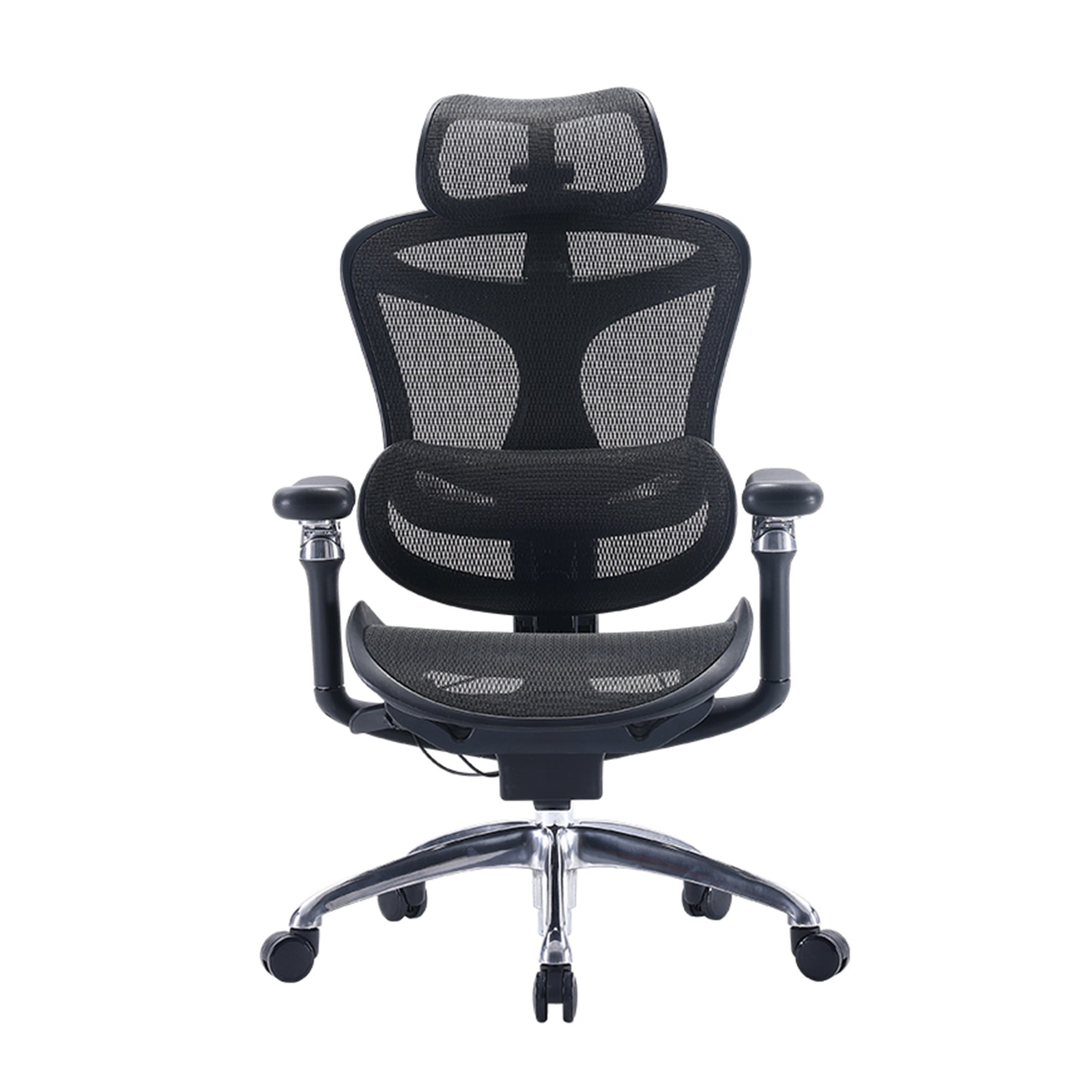
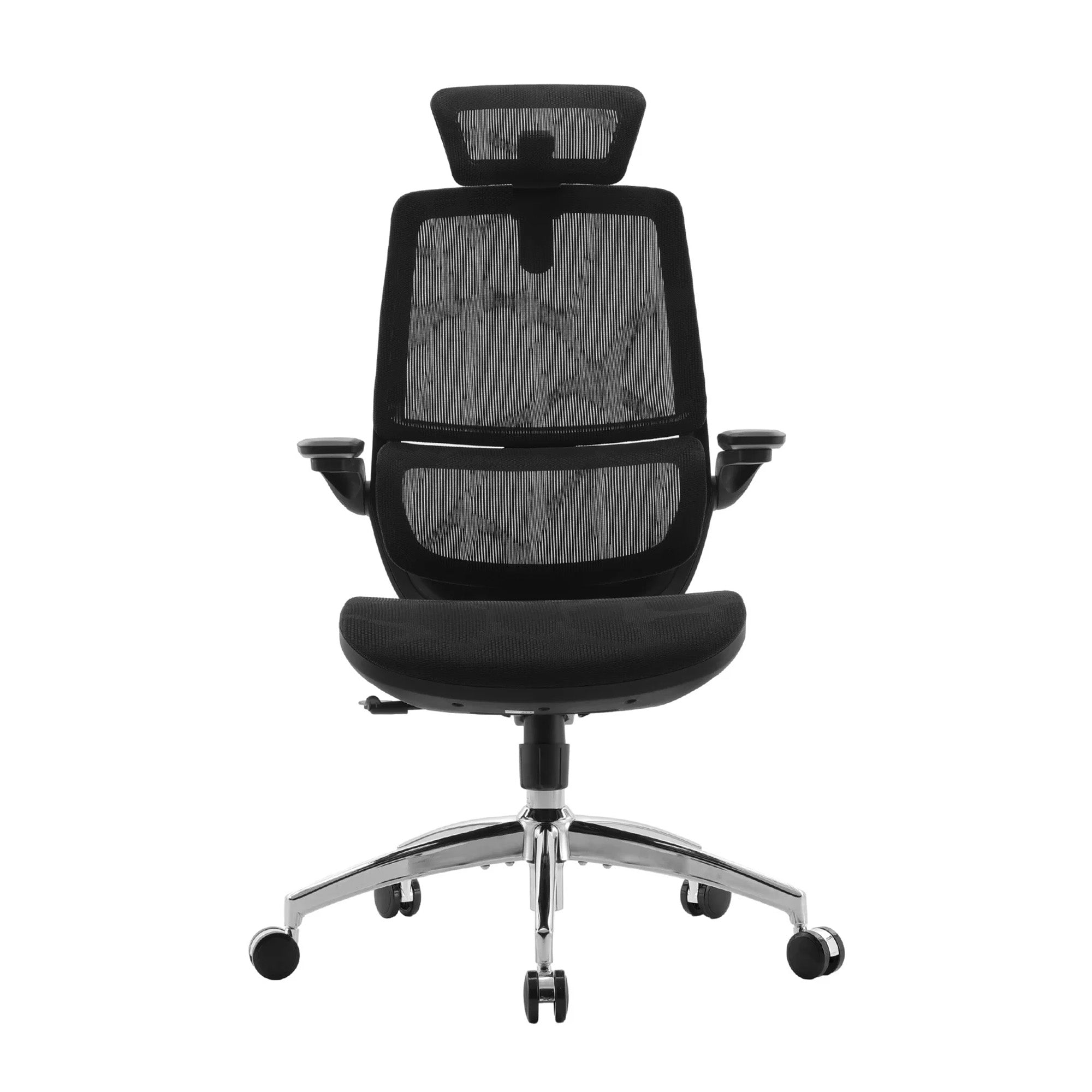
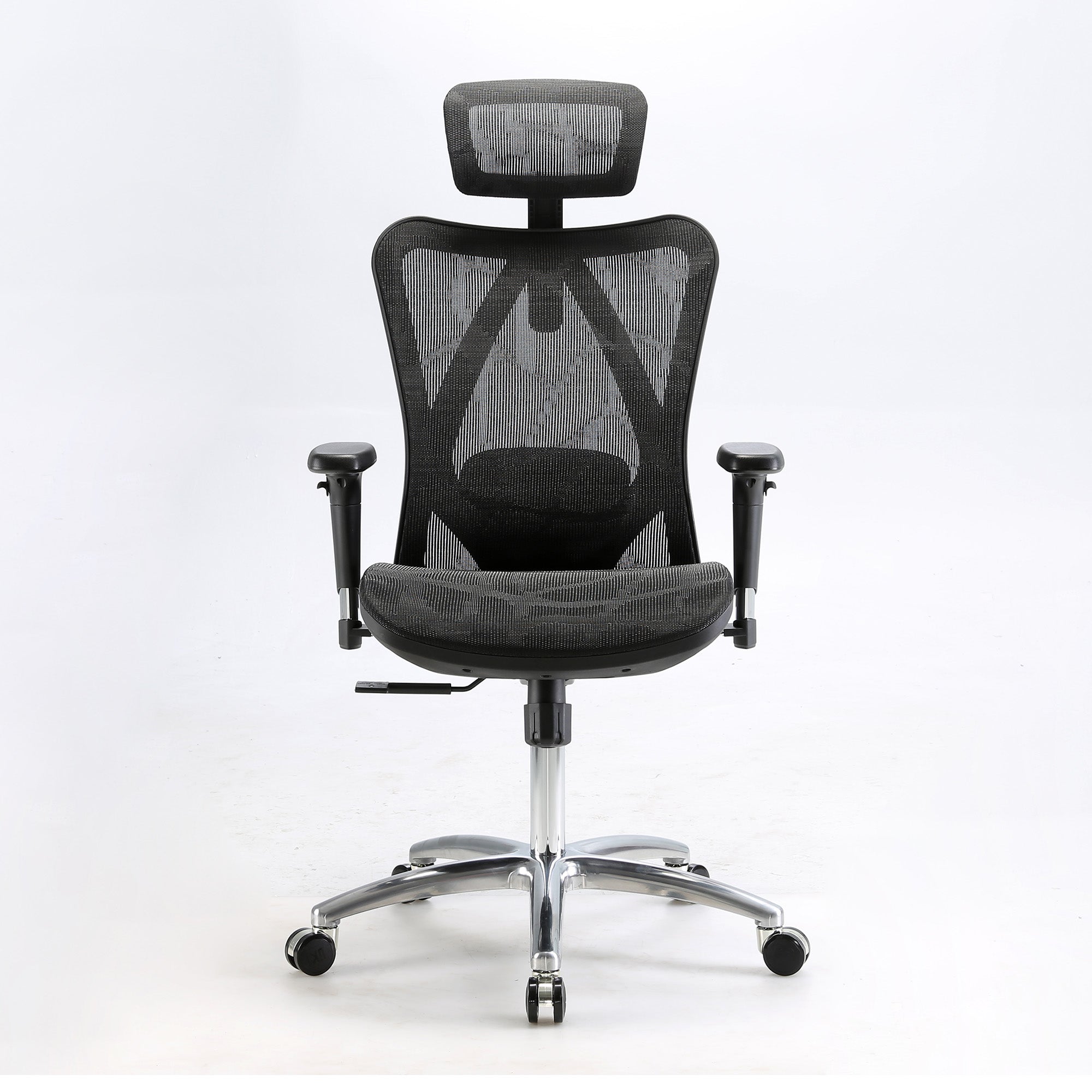
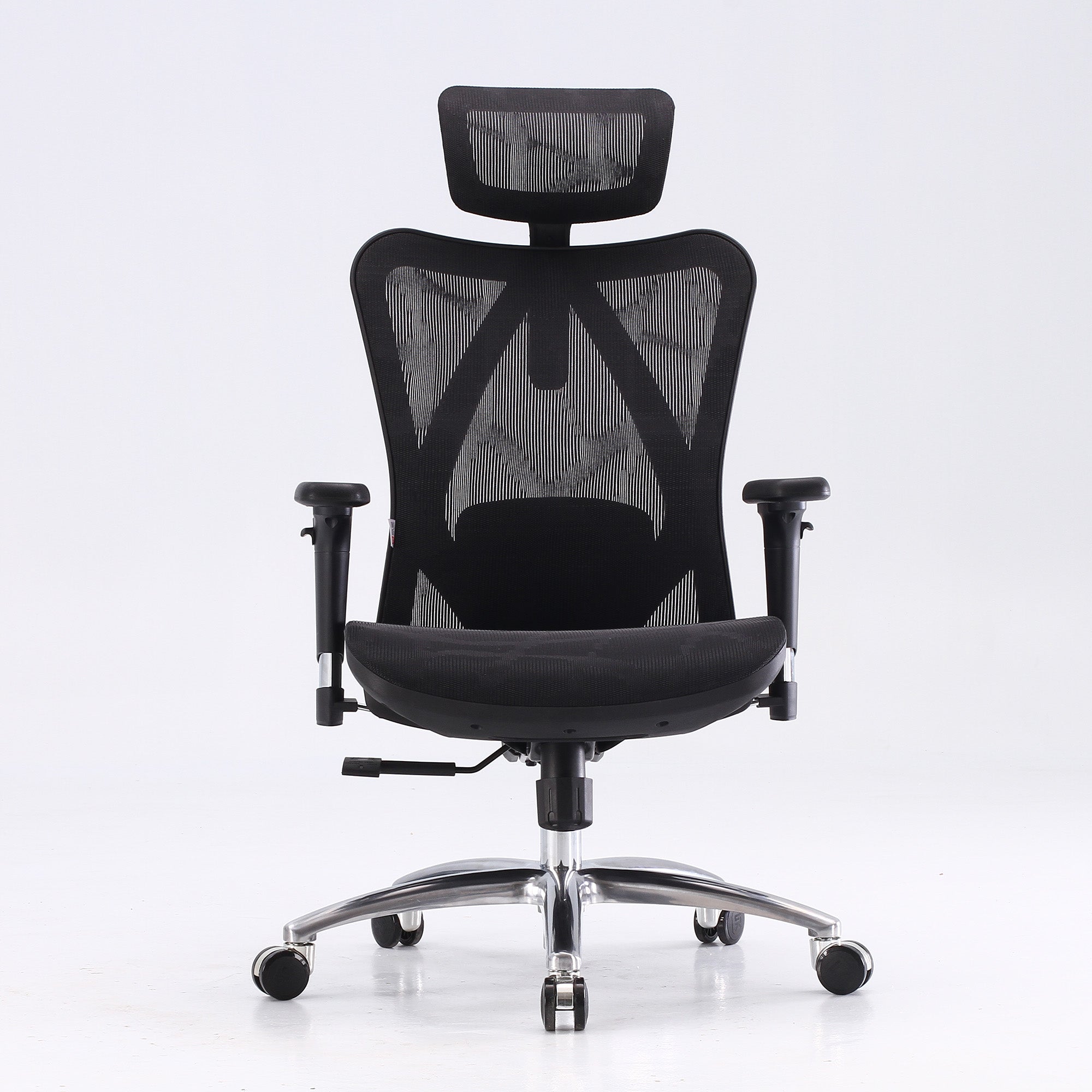
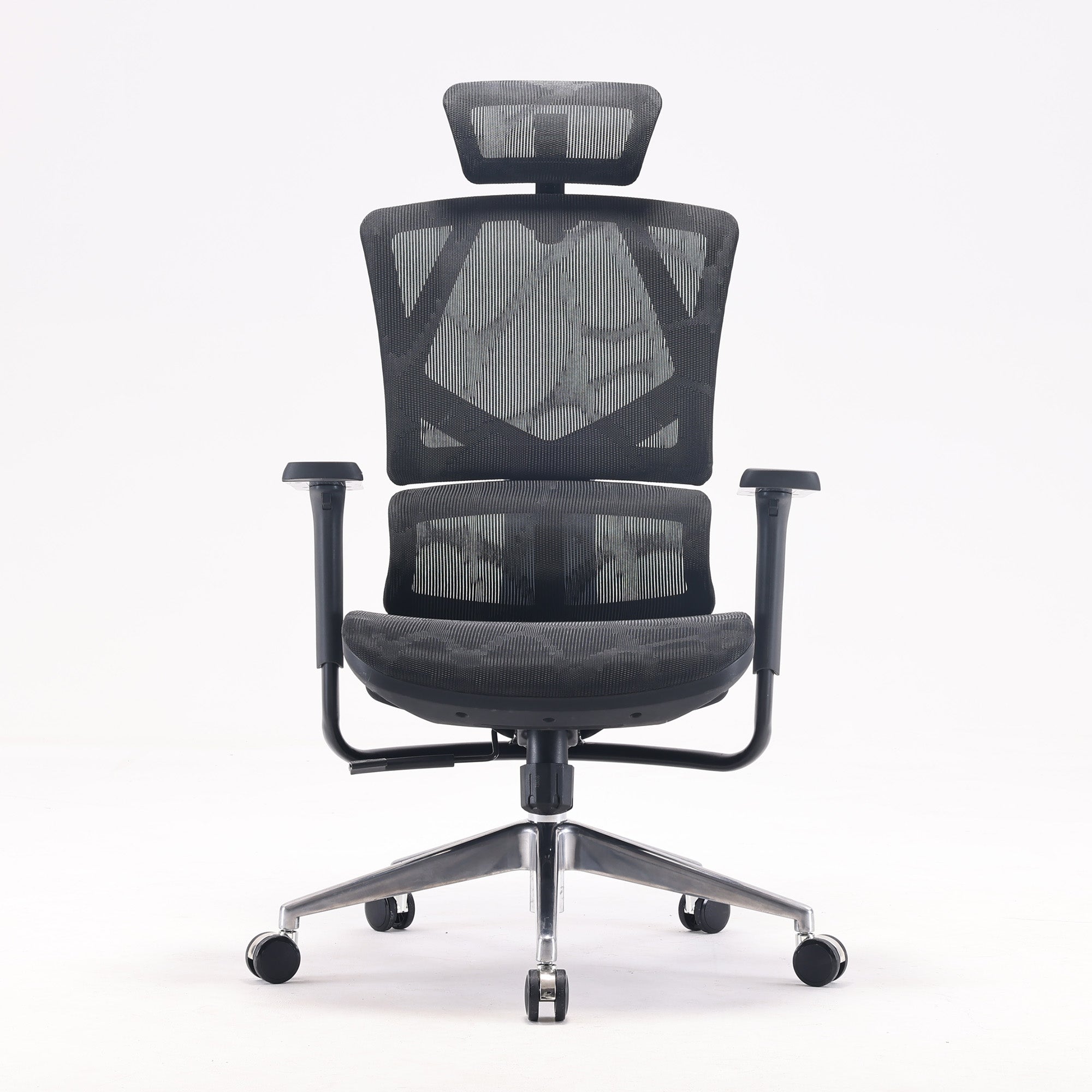
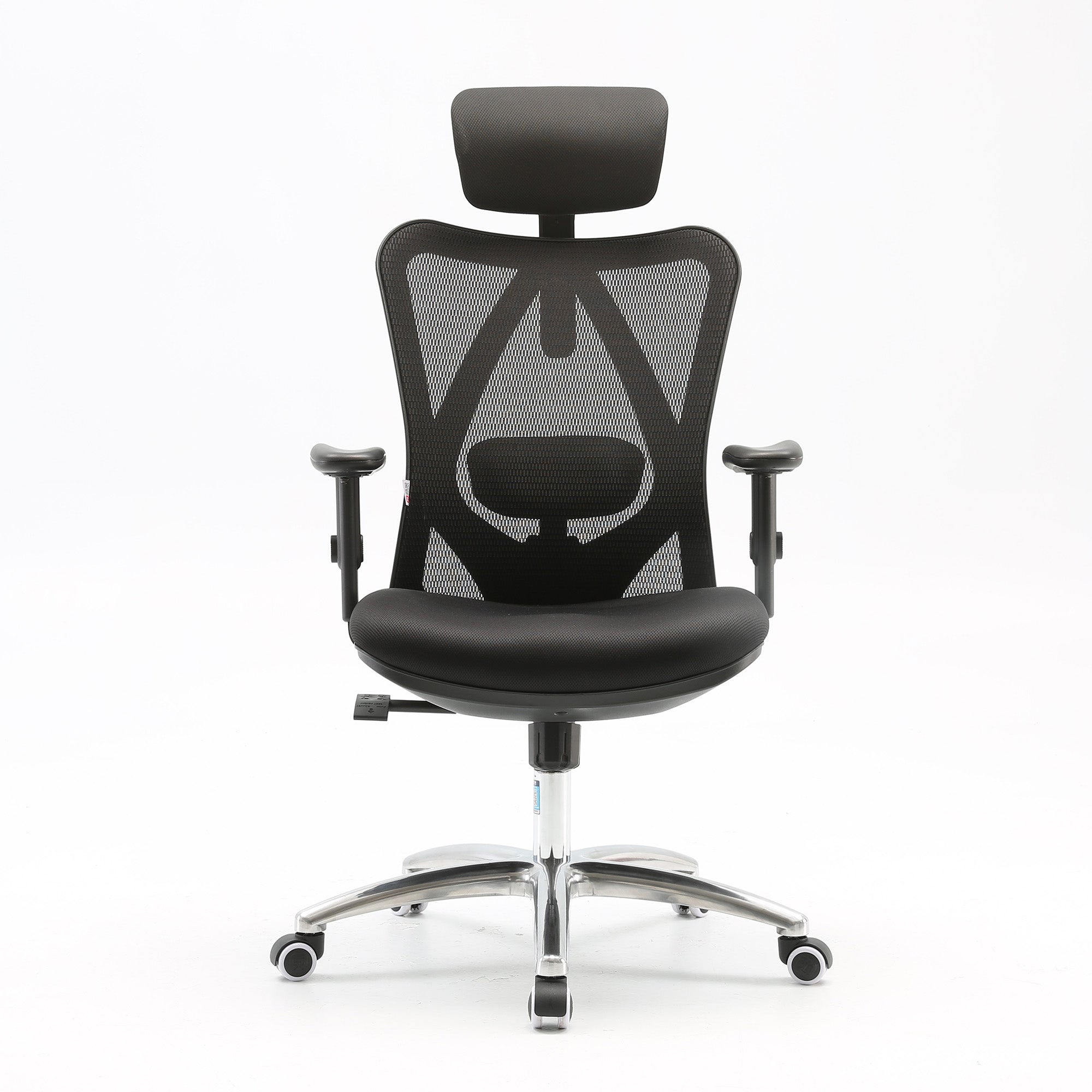

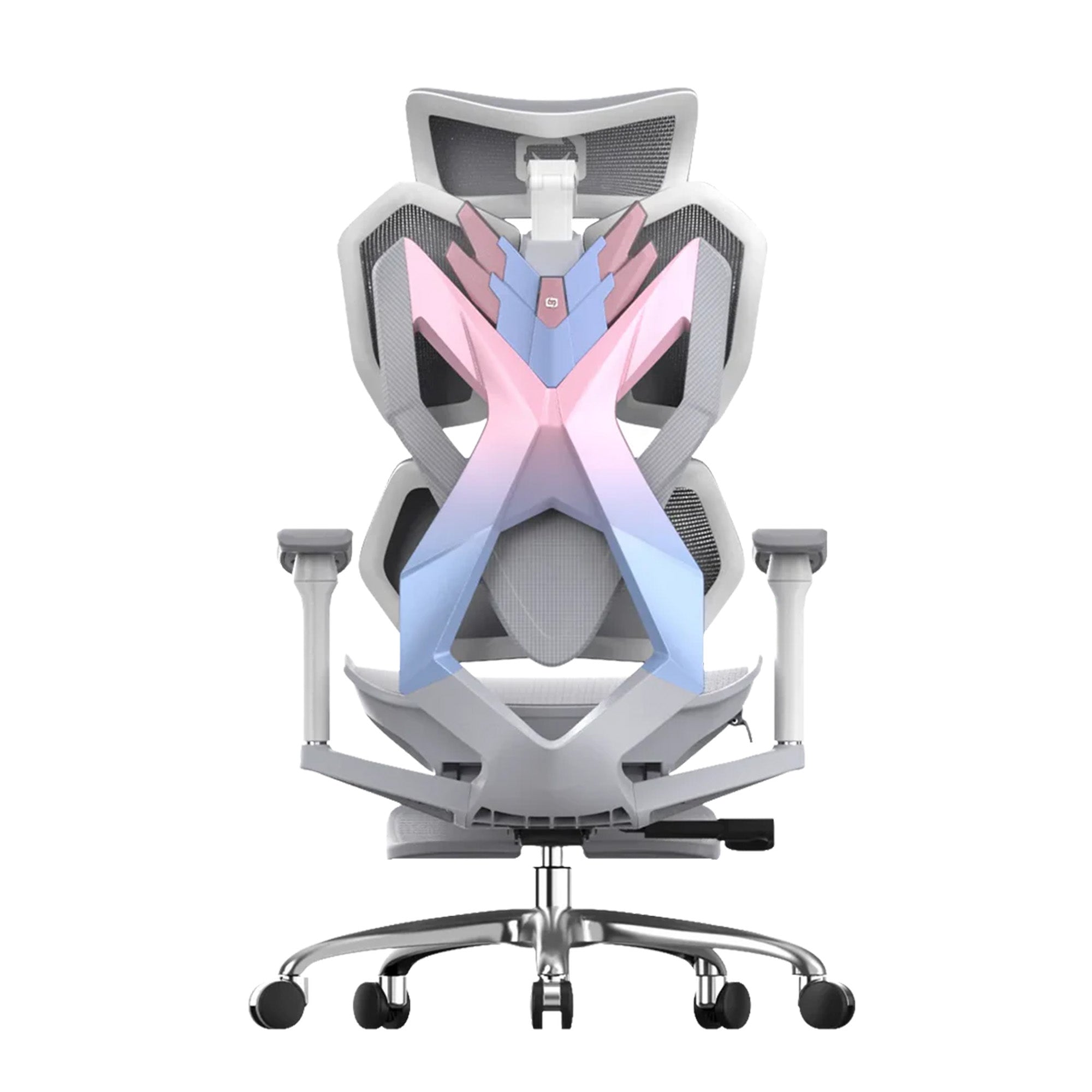
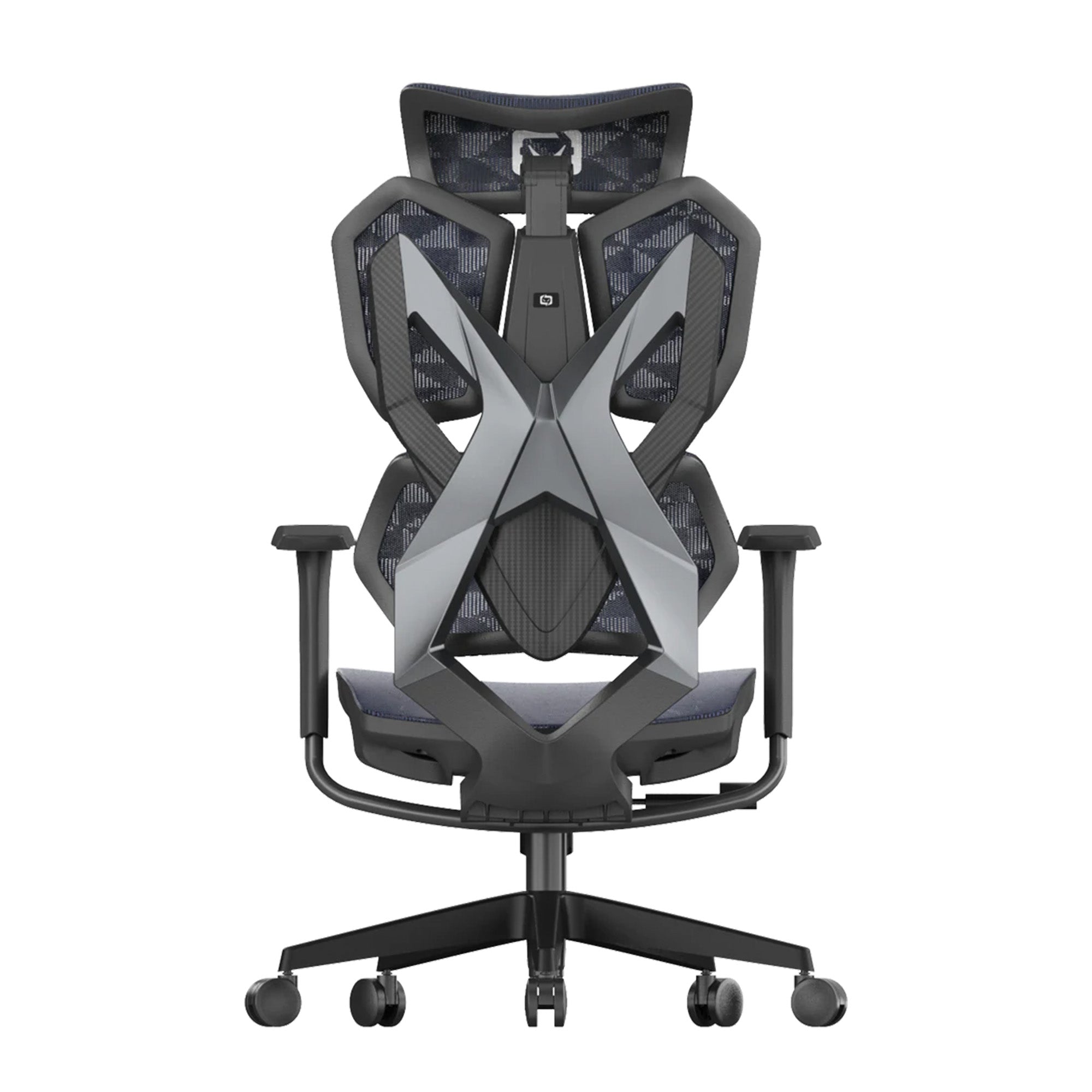

Fifty dollars is not much for a chair that lasts five years.
The price gap between the Sihoo M18 at $279 and the Sihoo M57 at $329 works out to roughly two dollars a month over the lifespan of either chair. That is not the decision most people think they are making when they compare these two models, but it is the actual one. The real question is whether the M57's specific upgrades matter for the way you actually use a chair. For some people they do. For others, the M18 is the better buy — not because it is cheaper, but because paying more for features you will not use in the way you sit is not a bargain.
This guide covers the five specific differences between the M18 and M57 that actually affect how the chair feels in daily use, who each model genuinely suits, and three things about the M18 that most comparison guides miss entirely. All prices and specifications are confirmed from sihoo.com.au as of June 2026.
The Short Answer If You Are in a Hurry
When to Buy the M18
Buy the M18 if you sit for under four hours a day, you work in a cool or climate-controlled environment, you do not change arm positions frequently during the day, and your height is between 167 and 188cm. At these parameters, the M18 delivers everything the M57 delivers at $50 less.
When to Buy the M57
Buy the M57 if you sit for four or more hours daily, you work in a home without consistent air conditioning (relevant for most of Australia outside Canberra in winter), you use your arms in varied positions across the day such as typing, phone use, and document review, or if you are shorter than 167cm or taller than 188cm. The M57 serves a wider height range and its full mesh seat makes a noticeable difference in Australian summer conditions.
THE SINGLE MOST IMPORTANT DIFFERENCE: The M18 has a foam seat. The M57 has a full mesh seat. In Australian summer conditions — Brisbane, Sydney, Perth, Adelaide — a foam seat retains heat and moisture across a sitting session in a way that mesh does not. For anyone in a home office without reliable air conditioning, this difference alone can justify the M57.

The Five Differences That Actually Matter in Daily Use
Difference 1: The Seat Material — Foam vs Full Mesh
This is the difference that catches the most buyers off-guard after purchase, and it is the one most comparison guides bury under a list of specifications.
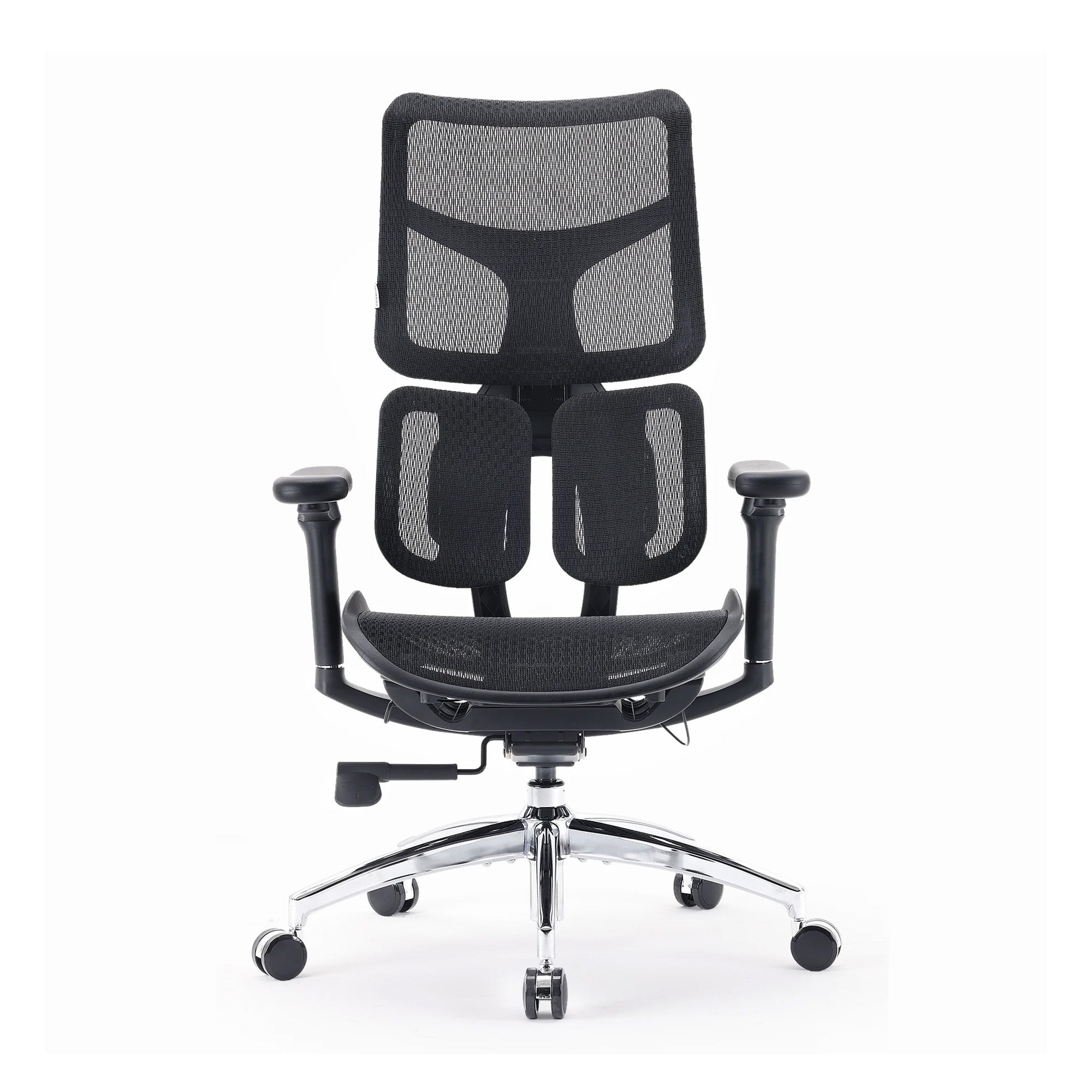
The M18 uses a high-density foam seat with a W-shaped cushion design. The foam feels noticeably softer and more cushioned in the first few minutes of sitting. For a short session, this is comfortable. Across a four-to-five hour session in a warm room, the foam begins to retain body heat. By the third or fourth hour, the surface temperature of the seat is noticeably warmer than it was when you sat down. In Australian summer conditions, particularly in cities where ambient home temperatures regularly reach 28 to 33 degrees Celsius in the absence of air conditioning, this becomes a sustained thermal discomfort that compounds with the physical fatigue of extended sitting.
The M57 uses a full mesh seat. Mesh allows airflow through the seat surface continuously. The temperature at the seat surface remains consistent across the session regardless of ambient temperature. For an Australian home office where the air conditioning runs intermittently or not at all, full mesh is a functional specification rather than an aesthetic preference.
The other long-term consideration: foam compresses over years of commercial daily use. High-density foam in a chair used five days a week for eight hours a day loses a measurable proportion of its compression resistance within two to three years. The seat that felt cushioned in year one is measurably flatter by year three. Mesh, provided it is high-tensile rather than low-cost, maintains its structural properties longer under sustained daily load.

Difference 2: The Armrests — 2D vs 3D
This is the difference that generates the most post-purchase frustration among M18 buyers who needed 3D armrests and did not check before ordering.
The M18 has 2D armrests: they adjust up and down. That is the full range of movement. For a user who sits in a standard typing position with both arms at the same height throughout the day, 2D armrests are adequate. For a user who rotates between typing, mouse use, phone calls, and document reading, 2D armrests require the user to choose a single height that is a compromise across all of these activities rather than a correct position for any of them.
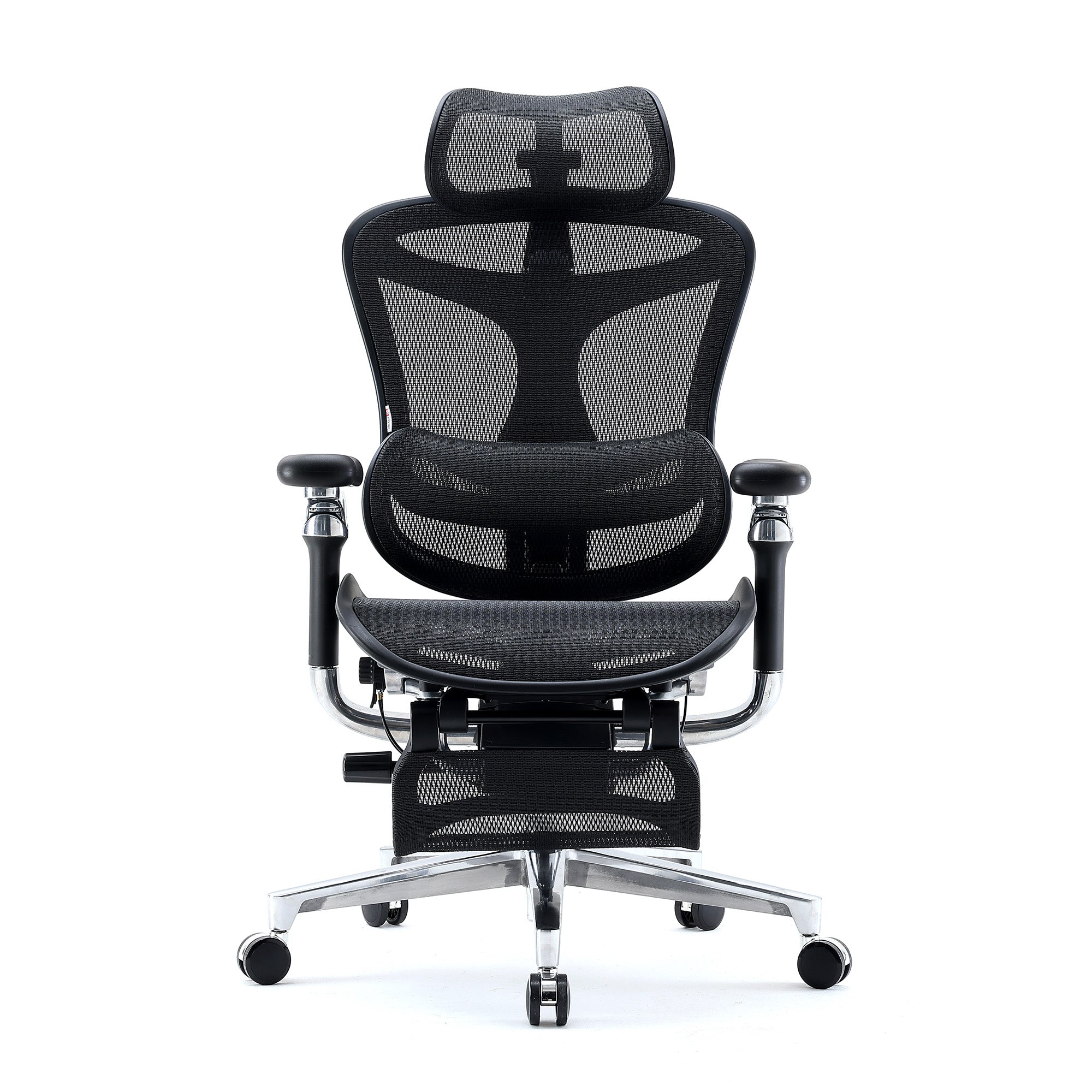
The M57 has 3D armrests: they adjust up and down, pivot horizontally (swing in and out), and slide forward and back. For a user whose arm position changes across tasks, this means the armrests can be correctly positioned for each activity rather than averaged across all of them. Correctly positioned armrests take the weight off the shoulders and neck. Arms that are constantly reaching or adjusting their position relative to incorrectly positioned armrests contribute to the upper back and neck tension that arrives by mid-afternoon.
The practical test: think about your last working day. Did you use the phone, switch between keyboard and documents, or change your sitting angle frequently? If yes, 3D armrests serve you. If you type from one position for most of the day, 2D is sufficient.
Difference 3: The Height Range — Who Fits Which Chair
This is the difference most important for buyers outside the standard height range, and the one most comparison articles do not state precisely enough to be useful.
The M18 is specified for users between 167cm and 188cm (approximately 5'6" to 6'2"). The seat height range of 40.5 to 48.5cm from the floor is calibrated for this height band. A user at 162cm will find the minimum seat height still too high for their feet to sit flat on the floor without a footrest. A user at 192cm will find the maximum seat height insufficient for their legs to be at the correct 90-degree angle.
The M57 covers a slightly wider range: approximately 155cm to 185cm. Its seat height range of 42 to 52cm from the floor extends the ceiling compared to the M18, making it more suitable for taller users, and the seat dimensions accommodate a wider range of lower body proportions.
If you are outside the 167-188cm range, the M18 may not physically fit you correctly regardless of its other merits. A community comment from Slickdeals illustrates this precisely: a user at 6'6" (198cm) asked whether the M18 would work for them. The answer from another community member was direct: "Probably not. Review here says might not be ideal for anyone over 6'2"." This is the kind of information that matters before purchase and is rarely stated clearly in product listings.
Difference 4: The Lumbar Adjustment Range
Both chairs have adjustable lumbar support with height and depth movement. The functional difference is modest: the M57's lumbar adjustment range is slightly wider, meaning it reaches a lower and higher position than the M18's system.
For most users in the 167 to 185cm height range, both systems will reach the correct position at the inward curve of the lower back. For shorter or taller users near the edges of either chair's recommended height range, the M57's wider adjustment range provides more flexibility to find the correct position.
The more important variable is whether the user actually adjusts the lumbar on delivery day. Neither chair's lumbar system produces benefit if it is left at the factory default position. The factory default is a mid-range setting that fits nobody precisely. Fifteen minutes of adjustment on the day the chair arrives produces the improvement the chair was designed to provide.
Difference 5: The Seat Height Ceiling
The M57's seat height ceiling of 52cm is higher than the M18's 48.5cm. For users above 185cm, the additional 3.5cm of seat height ceiling changes whether the chair can be set correctly for their leg length at all. For users within the standard height range, this difference is irrelevant.

The Full Specification Comparison
|
Specification |
Sihoo M18 ($279) |
Sihoo M57 ($329) |
|
Seat material |
High-density foam with W-shaped cushion. Softer initial feel. |
Full mesh. Breathable throughout the session. |
|
Backrest material |
Mesh |
Mesh |
|
Lumbar support |
Adjustable height and depth — bidirectional |
Adjustable height and depth — bidirectional, slightly wider adjustment range |
|
Armrests |
2D — height adjustment only |
3D — height, horizontal pivot, forward/back |
|
Headrest |
Yes — height and 45-degree angle adjustment |
Yes — height and angle adjustment |
|
Seat height range |
40.5 to 48.5cm from floor |
42 to 52cm from floor |
|
Recommended height range |
167cm to 188cm (5'6" to 6'2") |
155cm to 185cm |
|
Weight capacity |
150kg |
150kg |
|
Recline |
Up to 126 degrees, lockable |
Up to 126 degrees, lockable |
|
Warranty |
3 years |
3 years |
|
Price (June 2026) |
$279 |
$329 |
Specifications from sihoo.com.au product pages, confirmed June 2026. Prices shown are standard retail — EOFY sale pricing may differ.

Three Things Most M18 vs M57 Comparisons Do Not Tell You
1. The M18 Is Not Ideal for Australian Summer Home Offices Without Aircon
Every comparison article mentions that the M18 has a foam seat and the M57 has mesh. Almost none of them address the practical implication for Australian conditions specifically.
A foam seat in a Melbourne, Sydney, Brisbane, or Perth home office in January without consistent air conditioning is a different experience from a foam seat in a British or North American office review. Australian summer ambient temperatures in un-airconditioned rooms regularly sit between 26 and 34 degrees Celsius during working hours. At these temperatures, a foam seat generates and retains body heat in a way that significantly affects comfort from the third hour onward.
If your home office has reliable air conditioning that runs continuously during work hours, this difference is less significant. If your home office has a ceiling fan, a split system that you turn on and off, or no climate control at all, the M57's full mesh seat is the more comfortable choice across a full working day in the warmer months of the year. This is the Australian-specific consideration that most comparison guides, written for a global audience, do not address.
2. The M18 Lumbar May Not Reach Shorter Users Correctly
The M18's lumbar adjustment range, while functional for users in the middle of its recommended height band, can fall short of the correct lumbar position for users below 167cm or above 188cm. Research published in Biomimetics (PMC, February 2023) confirmed that seat dimensions including lumbar position must align with user body proportions for the chair to provide meaningful spinal support. A lumbar support that cannot reach the inward curve of the lower back for a specific user provides no mechanical benefit regardless of how well the rest of the chair is specified.
For users at the shorter end of the M18's range, the lumbar may sit in the mid-back rather than the lower back at its minimum height setting. The M57's wider adjustment range addresses this more reliably for users across a broader height distribution.
3. Neither Chair Has Seat Depth Adjustment — This Matters for Users Under 165cm
Neither the M18 nor the M57 has a sliding seat depth adjustment. Both chairs have a fixed seat depth that suits users in their recommended height ranges. For users below 165cm, a chair with a fixed seat depth may be too deep to allow correct simultaneous lumbar contact and knee clearance.
If you are below 165cm and trying to choose between these two models, the honest answer is that neither is the ideal specification for your body. The Sihoo V1 at $529 has a sliding seat depth mechanism that directly addresses this. The M57 is a better choice than the M18 for a shorter user between 155 and 165cm because of its wider height adjustment range, but the V1 is the chair that actually solves the seat depth problem.
The Decision Guide: Which One for Your Situation
|
Your situation |
M18 ($279) |
M57 ($329) |
|
Daily sitting hours |
Up to 4 hours |
4 to 6+ hours |
|
Height |
167 to 188cm |
155 to 185cm — wider range |
|
Australian climate (no aircon) |
Foam seat retains heat. Less comfortable after 2-3 hours in summer. |
Full mesh seat stays cool throughout. Better suited to variable-temperature home offices. |
|
Arm position during work |
Standard typing or mouse use — 2D height adjustment covers this |
Variable arm positions — coding, phone use, document review — 3D handles all of these |
|
Primary use |
Occasional WFH, student, moderate home use |
Regular WFH, full-time office, daily sustained desk work |
|
Budget priority |
The $50 saving matters to you |
The $50 difference is worthwhile for the armrest and seat material upgrade |
Decision guide based on confirmed product specifications and real-world usage patterns observed across Australian home office and WFH users.
What Both Chairs Do Well
The Specification Both Models Deliver
Comparing the M18 and M57 can obscure the more important fact: both chairs represent a significant improvement over the dining chairs, basic task chairs, and unspecified office chairs that most Australians are upgrading from. The features both chairs share are the ones that produce the most meaningful ergonomic improvement for a first-time buyer.
- Adjustable lumbar support: Both chairs provide height and depth adjustable lumbar. Both are a significant improvement over a chair with a fixed or absent lumbar. The difference between the two lumbar systems is meaningful primarily at extended daily hours. The difference between either lumbar system and no lumbar support is large from the first hour.
- Mesh backrest: Both chairs use mesh on the backrest, providing airflow across the upper and lower back. The seat material difference (foam vs mesh) is the more important specification for Australian conditions.
- Height adjustment: Both cover the majority of Australian adult heights within their recommended ranges. Both allow the seat to be set so that feet are flat on the floor with knees at approximately 90 degrees.
- Headrest: Both chairs include an adjustable headrest, though the M18's is slightly more constrained in its range. For users who recline during calls or reading, either headrest provides meaningful neck support during the reclined position.
- 150kg weight capacity: Both chairs are rated to 150kg, making them suitable for the full range of Australian adult body weights without the weight restriction that applies to some other models (the V1 is rated to 120kg).
- 3-year warranty: Both carry a three-year warranty, which is the standard warranty tier for Sihoo's entry-level range.
What to Do When Your Chair Arrives
The Adjustment That Determines Whether Either Chair Works
The most common reason an M18 or M57 buyer reports that the chair is not comfortable is that it was never correctly adjusted after delivery. Both chairs arrive at factory default settings. The default lumbar height is a mid-range position. The default seat height is not set for your specific height. The default armrest height is at maximum. None of these defaults are correct for any specific person.
The five-minute sequence that changes this: set seat height until feet are flat and knees at 90 degrees. Check the gap between the seat front edge and the back of your knees (two to three finger-widths is correct). Reposition the lumbar support until it contacts the inward curve of your lower back specifically (not mid-back or upper back). Lower the armrests until the shoulders are completely relaxed. Adjust the recline tension until the backrest responds to your weight naturally.
The full adjustment walkthrough for either model is at how to properly adjust your ergonomic chair. Ten minutes on delivery day. This single step produces more improvement than the specification difference between the two models for most users.
If Neither Model Is Quite Right
When to Consider a Different Sihoo Model
Under 165cm: Neither the M18 nor the M57 has seat depth adjustment. The Sihoo V1 at $529 is the model with a sliding seat depth mechanism that allows shorter users to sit with full lumbar contact and correct knee clearance simultaneously. For users below 165cm, the V1 is the functional recommendation over either model compared here.
6+ hours daily with lower back sensitivity: Both the M18 and M57 have manually adjustable lumbar systems. For sustained daily sitting at six or more hours with existing lower back sensitivity, the adaptive lumbar of the Sihoo Vito M90 at $379 maintains correct lumbar contact through posture changes without manual readjustment. For the additional $50 over the M57, the M90 provides meaningfully better lumbar support at extended daily hours.
Above 185cm: Both models reach their upper height limits at approximately 185 to 188cm. For users above this height who find the backrest ending below the shoulder blades, the Sihoo Doro C300 at $679 provides the extended backrest height that taller frames require.
For a full breakdown of which Sihoo model suits each use case, height range, and daily hours profile, the complete Sihoo chair guide matched to your use case covers every model in the current range.
Conclusion
The M18 and the M57 are not interchangeable. They are built for different users.
The M18 is the right chair for a user who sits under four hours daily, works in a climate-controlled environment, does not need variable arm positions, and fits within the 167 to 188cm height range. At those parameters, it delivers everything the M57 delivers at $279. The foam seat is comfortable for shorter sessions. The 2D armrests are adequate for standard typing use. The lumbar adjustment range reaches the correct position for most users in this height band. The chair does its job.
The M57 is the right chair for a user who sits four or more hours daily, works in a home without consistent air conditioning (which describes most Australian home offices during summer), uses their arms in varied positions, or falls outside the M18's narrower height recommendation. The full mesh seat stays comfortable across longer sessions in warm conditions. The 3D armrests adjust to the actual arm position required for each task. The seat height ceiling is higher for taller users. For $50 more across a five-year chair lifespan, the M57 is the better specification for this profile.
If you are between these two and genuinely unsure: think about where you live, how warm your workspace gets in summer, and how many hours daily you sit. Those three factors determine which model serves you better more reliably than any other comparison point.
Browse the full range of best ergonomic office chairs in Australia and use your daily hours and your climate as your first filter.
Better Comfort Starts Now.
Frequently Asked Questions
For most Australian WFH workers sitting four or more hours daily in a home without consistent air conditioning, yes. The full mesh seat on the M57 is the primary difference for Australian conditions: it stays cooler than the M18's foam seat across a long session in a warm room. The 3D armrests are a meaningful addition for users who change arm positions across tasks. If you sit under four hours daily in a climate-controlled environment and your height is within 167 to 188cm, the M18 delivers the same ergonomic essentials for $50 less.
The foam seat does retain more heat than mesh across a sustained session. In a room with reliable air conditioning running throughout the working day, the difference is noticeable but manageable. In a home office that relies on a ceiling fan or intermittent split system during Australian summer, the foam seat becomes uncomfortable from the third to fourth hour onward. This is the most common negative in community feedback from users in warmer climates. The M57's full mesh seat is a practical improvement for this specific scenario.
The M57 for most taller users. The M18 is specified for 167 to 188cm (approximately 5'6" to 6'2"). The M57 covers a slightly wider range with a higher seat height ceiling of 52cm versus the M18's 48.5cm. For users above 188cm, neither model is ideal — the Sihoo Doro C300 at $679 provides the extended backrest coverage that tall users need. The M18 is specifically noted as not recommended for users above 6'2" in multiple independent reviews.
With difficulty, for both. Neither chair has seat depth adjustment. For a user below 165cm, the fixed seat depth may prevent them from sitting back against the lumbar support while maintaining clearance behind the knees. They end up either sacrificing lumbar contact by sitting forward, or accepting pressure behind the knees by sitting fully back. The Sihoo V1 at $529 has a sliding seat depth mechanism that directly resolves this. For users below 165cm choosing between M18 and M57, the M57 is the better option of the two due to its wider height adjustment range, but the V1 is the model that actually addresses the underlying problem.
2D armrests adjust in two dimensions: up and down. This is the M18. 3D armrests adjust in three dimensions: up and down, pivot horizontally (swing in toward the desk or out away from the body), and slide forward and back. This is the M57. For a user who types in the same position all day, 2D armrests are sufficient — height is the main adjustment needed. For a user who switches between keyboard, mouse, phone, and document review, 3D armrests allow the support to be positioned correctly for each activity rather than set as a compromise across all of them. Incorrectly positioned armrests load the shoulders and contribute to upper back tension.
The answer depends on where the pain is and how long you sit daily. The M57 is a better choice than the M18 for most back pain cases due to its wider lumbar adjustment range and mesh seat. For lower back pain specifically, the full guide to the best office chair for back pain matched to your pain type covers six different pain types and the specific chair feature that addresses each one.
"Big and tall" in the M18 marketing refers to its 150kg weight capacity, not to an unlimited height range. The recommended user height is specifically 167 to 188cm. The "big" refers to the weight capacity. The "tall" refers to the upper end of the recommended height range, which is 188cm or approximately 6'2". This naming can be misleading. Users above 188cm who purchase the M18 based on "big and tall" marketing consistently report that the seat height ceiling and backrest height do not serve frames above this threshold.
Shop products from this article


Save up to $700, plus an extra $30 off with code EOFY30 on selected ergonomic chairs.
SHOP NOWRecommended Posts


